
Last Updated on May 12, 2026 by Admin
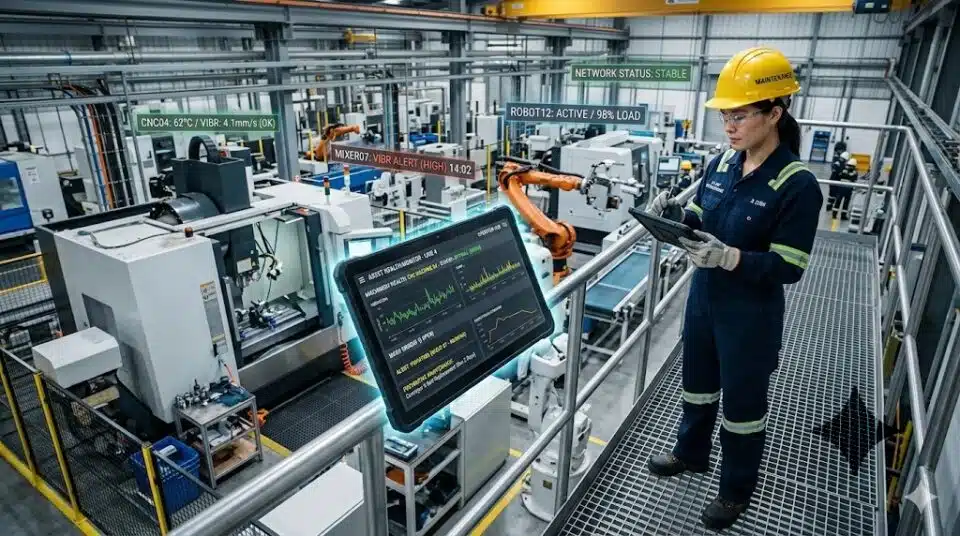
Manufacturing plants don’t fail all at once. More often, it’s a slow decline. A bearing starts to wear, a motor runs slightly hotter than usual, or a machine begins to vibrate just enough to go unnoticed. Then one day, production stops. Unplanned downtime rarely comes out of nowhere. It builds quietly.
ConstructionCareerHub App is LIVE — built ONLY for construction careers. Don’t apply with a weak resume.
Get ATS-ready Resume Lab + Interview Copilot + Campus Placement Prep (resume screening, skill gaps, interview readiness) — in minutes & Other advanced features.
Explore Smarter Construction Career Tools →Quick check. Big impact. Start now.
That’s where preventive maintenance software becomes essential, not as an add-on, but as a core operational tool. It helps shift maintenance from reactive fixes to structured, data-driven planning. For plant managers and maintenance teams, that shift can mean the difference between consistent output and recurring disruptions.
Table of Contents
Moving from reactive to preventive maintenance
Many facilities still operate in a reactive mode. Equipment is repaired when it breaks. On paper, it may seem cost-effective. In practice, it leads to higher long-term expenses, lost production time, and unnecessary strain on staff.
Preventive maintenance software introduces structure. It allows teams to schedule maintenance tasks based on time intervals, usage cycles, or condition-based triggers. Instead of waiting for failure, the system prompts action before issues escalate.
This approach reduces emergency repairs and helps standardize maintenance workflows across the plant.
Centralizing maintenance data and workflows
One of the more immediate benefits of preventive maintenance software is visibility.
Maintenance records, asset histories, and work orders are stored in a single system. This eliminates scattered spreadsheets and manual logs that are often difficult to track or update consistently.
With centralized data, teams can:
- Monitor equipment performance over time
- Track recurring issues and identify patterns
- Access maintenance history instantly
- Improve coordination between departments
The result is not just better organization, but more informed decision-making.
Improving equipment reliability and lifespan
Equipment reliability is closely tied to how well maintenance is managed.
When maintenance is scheduled consistently and based on actual usage data, components are serviced at the right time. Not too early, which wastes resources, and not too late, which risks failure.
Preventive maintenance software helps strike that balance. It ensures that lubrication, inspections, and part replacements happen when needed. Over time, this extends the lifespan of machinery and reduces the frequency of major breakdowns.
For manufacturing plants operating on tight production schedules, this reliability is critical.
Reducing downtime and operational costs
Downtime is one of the most expensive challenges in manufacturing. Even short interruptions can disrupt production targets and supply chain commitments.
By identifying potential issues early, preventive maintenance software reduces the likelihood of unexpected failures. Planned maintenance can be scheduled during low-production periods, minimizing disruption.
There’s also a cost advantage. Emergency repairs often involve expedited parts, overtime labor, and lost output. Preventive maintenance, while requiring upfront planning, tends to be more predictable and cost-efficient over time.
Supporting compliance and audit readiness
Many manufacturing sectors operate under strict regulatory requirements. Maintenance documentation is often part of compliance audits.
Preventive maintenance software simplifies this process. It automatically logs maintenance activities, timestamps work orders, and maintains detailed records for each asset.
This level of documentation makes it easier to demonstrate compliance during audits. It also reduces the administrative burden on teams who would otherwise need to compile records manually.
Integrating with existing systems
Modern manufacturing environments rely on multiple systems, from ERP platforms to inventory management tools.
Preventive maintenance software is often designed to integrate with these systems. This allows for better coordination between maintenance, production, and procurement.
For example, when a part is scheduled for replacement, the system can trigger inventory checks or purchase requests. This reduces delays and ensures that maintenance tasks are not held up due to missing components.
Choosing the right preventive maintenance software
Not all solutions are built the same. The right platform depends on the scale of your operations, the complexity of your equipment, and the level of detail you require.
When evaluating options, it’s worth considering:
- Ease of use for maintenance teams
- Customization of maintenance schedules
- Reporting and analytics capabilities
- Integration with existing systems
- Scalability as operations grow
For a closer look at how these capabilities translate into real-world applications, reviewing an industrial preventive maintenance software solution can provide a clearer understanding of implementation, scalability, and long-term operational impact.
Final thoughts: consistency over complexity
Preventive maintenance software doesn’t eliminate every risk. Equipment still wears out. Unexpected issues can still occur.
What it does offer is consistency. A structured approach to maintenance that reduces uncertainty and improves operational stability.
For manufacturing plants, that consistency translates into better performance, lower costs, and fewer disruptions. Over time, those incremental improvements add up, often in ways that are more impactful than large, one-time investments.
Related Posts:
- Cracks in Buildings: Understanding the Causes, Prevention, and Repair Methods
- CNC Milling In Construction: 14 Benefits And Applications
- Beyond the Recommendation: What Makes an Excellent Plant Maintenance Electrician
- Recycling in Construction: A Green Gateway to Sustainable Progress
