

Last Updated on May 19, 2026 by Admin
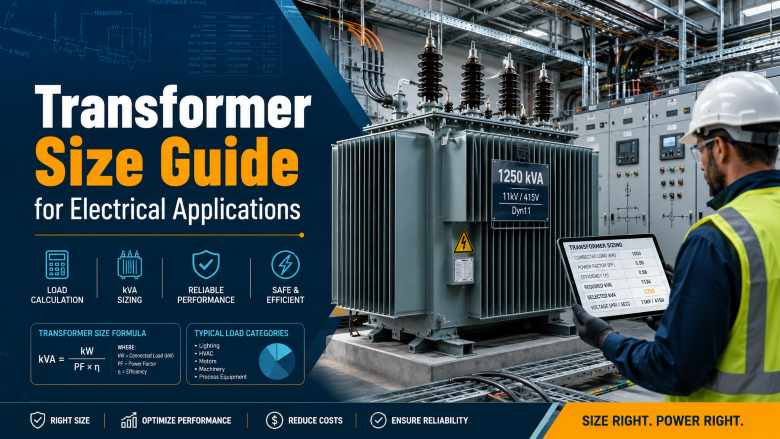
An electrical transformer is critical to commercial and industrial power distribution systems as it affects safety, operational efficiency and long-term energy costs. Proper sizing helps facilities maintain stable voltage levels and support reliable equipment performance.
ConstructionCareerHub App is LIVE — built ONLY for construction careers. Don’t apply with a weak resume.
Get ATS-ready Resume Lab + Interview Copilot + Campus Placement Prep (resume screening, skill gaps, interview readiness) — in minutes & Other advanced features.
Explore Smarter Construction Career Tools →Quick check. Big impact. Start now.
However, incorrect transformer sizing can contribute to overheating, unnecessary expenses and premature system wear that increases maintenance demands over time. Well-planned transformer selection strategies help organizations improve infrastructure reliability while supporting future operational expansion.
Table of Contents
Why Transformer Sizing Matters
Proper sizing helps maintain electrical system reliability and protects connected equipment from voltage fluctuations and unnecessary operational strain. Oversized transformers often increase installation and energy costs through lower operating efficiency. Meanwhile, undersized units can create overload conditions and costly downtime. Good planning practices also help utilities properly size and utilize transformer capacity while prolonging service life.
Accurate sizing decisions support more predictable operating expenses and help facilities avoid unnecessary power losses over time. Compliance with the national electrical code (NEC) and local electrical code requirements further strengthens safety and system reliability across commercial and industrial applications. Strategic transformer planning also prepares electrical infrastructure for future expansion and rising energy demands.
Core Factors That Determine Transformer Size
Transformer sizing depends on several interconnected factors that influence system performance and long-term reliability. Engineers typically evaluate total connected load alongside actual demand load to determine how much power the system consistently requires under real operating conditions. Application type also matters, since single- and three-phase systems have different load handling capabilities and infrastructure requirements.
Continuous and noncontinuous loads further affect sizing calculations, especially in facilities with fluctuating operational demands. Harmonic-producing equipment and nonlinear loads from modern electronic devices may increase heat generation and reduce efficiency if not properly addressed within an electrical transformer system.
Environmental conditions such as temperature and altitude additionally influence transformer cooling performance and operating capacity. Many organizations also include future expansion planning and reserve capacity in their calculations to support scalability without requiring major infrastructure upgrades later.
Step-by-Step Electrical Transformer Sizing Process
A structured sizing process helps construction and electrical professionals select transformer systems that align with operational demands and long-term infrastructure goals. Careful planning also reduces the risk of unnecessary energy losses and costly upgrades throughout the lifespan of the electrical system.
1. Assess Total Electrical Load
Engineers typically begin the transformer sizing process by reviewing equipment schedules, panel loads and overall system demand. This assessment helps them understand how much power the facility requires under normal operating conditions. Accurate planning also involves distinguishing connected load from actual operating load.
Precise load assessment is critical for maintaining reliable electrical infrastructure across the broader power grid. The U.S. grid system consists of more than 3,300 utilities and 160,000 miles of high-voltage transmission lines, which makes careful capacity planning essential for stable, efficient and dependable distribution. Thorough demand analysis also helps organizations select transformer capacities that support current operational requirements and future infrastructure expansion.
2. Calculate Required kVA Capacity
Calculating the proper electrical transformer capacity requires accurate sizing formulas for single- and three-phase systems to ensure stable and efficient power distribution. Engineers also apply demand and diversity factors to account for the reality that not all connected equipment operates simultaneously at full load.
These adjustments create more realistic power estimates while reducing the risk of oversizing or undersizing the transformer system. After completing the calculations, professionals round up to the nearest standard transformer size to provide adequate operating capacity, improve reliability and support future load growth. Careful analysis further supports more predictable maintenance requirements and better overall system performance.
3. Evaluate Operational Conditions
Installation conditions significantly influence transformer sizing and cooling performance across commercial and industrial environments. Indoor and outdoor installations often require different enclosure types and protection levels depending on exposure to weather and operational demands. Ventilation and cooling considerations are also necessary because restricted airflow and excessive heat buildup can reduce transformer efficiency and shorten equipment lifespan.
High-temperature or corrosive environments may further require specialized materials or enhanced cooling systems to maintain safe and stable operation under challenging conditions. Environmental factors can also affect transformer derating requirements, especially in facilities exposed to extreme operating temperatures or airborne contaminants.
4. Plan for Future Growth
Planning for future expansion helps commercial and industrial facilities maintain reliable power distribution as operational demands continue to grow over time. Many organizations evaluate electrical transformer capacity with long-term scalability in mind to avoid infrastructure limitations that could disrupt future development or equipment additions.
Partnering with experienced transformer specialists, like Sunbelt Solomon, also helps organizations assess load requirements and application-specific performance needs more accurately. Effective planning balances scalability with operating efficiency so facilities do not overspend on unnecessary capacity while maintaining room for growth. Careful transformer sizing strategies further help organizations avoid infrastructure retrofits and operational downtime later in the project life cycle.
Application-Specific Transformer Sizing Considerations
Transformer sizing requirements often vary significantly depending on operational demands and equipment sensitivity involved in the application. Mixed-use developments typically require balanced power distribution to support lighting systems, elevators and tenant operations efficiently. However, industrial manufacturing plants and heavy equipment facilities often face higher load demands and fluctuating operational conditions that place additional stress on transformer systems.
Renewable energy systems and electric vehicle charging infrastructure also introduce load patterns that require careful planning to maintain efficient power delivery. Data centers and mission-critical operations depend on highly reliable transformer capacity to support continuous uptime and sensitive digital infrastructure. Healthcare facilities and environments with sensitive electronic equipment further require stable voltage regulation to maintain uninterrupted operations.
Choosing the Right Transformer Type
Choosing between dry-type and liquid-filled systems depends on the operational environment and cooling requirements of the facility. Each electrical transformer type offers different advantages in terms of heat dissipation and installation flexibility across industrial applications.
Dry-type transformers are common indoors because they offer lower fire risk and reduced maintenance demands. Meanwhile, liquid-filled units often provide stronger cooling performance and higher efficiency under heavier loads. Indoor and outdoor installation suitability also depends on environmental exposure and ventilation conditions within the facility.
Since transformers typically can be expected to operate for 20 to 30 years or more, selecting a unit based only on its initial purchase cost is often uneconomical over the long term. Maintenance requirements, safety considerations and life cycle operating expenses influence which transformer solution delivers the best long-term value and reliability.
Common Transformer Sizing Mistakes
One of the most common transformer sizing mistakes involves oversizing equipment based on unrealistic peak demand assumptions. Sunbelt Solomon highlights this risk by explaining, “An oversized unit will lead to unnecessary capital and operating costs. In contrast, an undersized transformer has a high chance of overheating and failing, which can lead to costly downtime when you need to repair or replace it.”
Improper sizing decisions can reduce efficiency and create avoidable reliability issues throughout the lifespan of the system. Many facilities also overlook harmonics generated by modern electronic equipment and nonlinear loads that can increase heat buildup. Failing to account for motor starting loads and inrush current further creates additional stress on electrical infrastructure, especially in industrial environments with heavy machinery and large mechanical systems.
Best Practices for Transformer Selection
Selecting the right electrical transformer requires more than matching voltage and power requirements. Operational demands and future scalability all influence whether a transformer solution delivers strong performance and cost-effective operation over time.
- Conduct detailed load assessments: Evaluate connected load and future expansion requirements before finalizing transformer capacity.
- Consider environmental conditions: Account for temperature, dust and corrosive environments that may affect transformer performance and lifespan.
- Plan for future scalability: Select transformer systems that support long-term facility growth without creating excessive unused capacity.
- Compare life cycle costs: Evaluate maintenance demands and expected service life rather than focusing only on initial purchase costs.
- Verify compliance requirements: Ensure transformer systems align with NEC and local electrical code standards for safety and operational reliability.
Emerging Trends Affecting Transformer Sizing
Electrification initiatives and rising energy demand place additional pressure on industrial electrical systems to operate more reliably. Energy efficiency regulations and sustainability goals also encourage organizations to invest in transformer solutions that support long-term environmental objectives.
Sunbelt Solomon emphasizes this broader industry focus by stating, “When people work with us, they know that they’re working with a responsible business that cares about building a sustainable future. That’s why when it comes to both our customers and our suppliers, we stress the importance of adhering to the highest possible ethical standards.” Predictive maintenance technologies further help facilities track transformer performance in real time and identify potential issues earlier.
Frequently Asked Questions on Electrical Transformers
The following questions about lead times and technical support help organizations make more informed infrastructure decisions.
What is the typical lead time for a custom-sized transformer?
Transformer production timelines often vary based on unit size, voltage requirements and customization needs. Stock units generally ship faster than custom transformer orders, while supply chain conditions and project scheduling considerations can influence delivery and installation timelines.
What are the options when financing a transformer purchase?
Many organizations use equipment financing and leasing programs to manage the up-front costs associated with transformer purchases and large-scale electrical infrastructure upgrades. Utility incentives and energy efficiency rebates also help commercial facilities reduce long-term project expenses while supporting more cost-effective infrastructure investments.
Is there technical support available for transformer installations?
Many transformer manufacturers and distributors provide technical support services that help organizations manage installation, commissioning and long-term equipment maintenance. Ongoing guidance from experienced specialists also helps facilities address operational issues early and maintain safe performance standards.
Building Smarter Long-Term Transformer Strategies
Proper electrical transformer sizing supports stronger system reliability and improved long-term energy efficiency. Successful transformer planning also requires balancing current load demands with future scalability to accommodate modernization and rising power requirements. Project planners and electrical professionals benefit from approaching transformer selection as a long-term infrastructure investment that influences operational performance and overall facility resilience for decades.
Related Posts:
- Best Options for Buying Transformers for Renewable Energy Projects
- The 5 Best Transformer Rental Companies in New York
- Transformers: The Ins and Outs of Transformers and Maintenance
- How to Become a Predictive Maintenance Engineer in Construction in 2026 (Skills, Salary & Tools)
