

Last Updated on January 4, 2026 by Admin
Are you considering a project management career in 2026? You’re looking at one of the most in-demand professions globally. According to PMI’s latest Talent Gap Report, the global economy will require 25 million new project management professionals by 2030, with approximately 2.3 million people needed annually to bridge the growing talent shortage.
The U.S. Bureau of Labor Statistics projects 6% employment growth for project management specialists between 2024 and 2034—faster than the average for all occupations. In the construction sector specifically, demand for project professionals is projected to grow by 50% to 66% from 2025 to 2035, making it one of the fastest-growing sectors for project leadership.
This comprehensive guide covers everything you need to know about building a successful project management career—from required qualifications and certifications to salary expectations and career progression paths. Whether you’re a fresh engineering graduate or an experienced professional considering a career change, this guide will help you navigate your path to becoming a successful project manager.
Table of Contents
What is Project Management (PM)?
Project management is the practice of leading a team to achieve specific goals within defined constraints of scope, time, budget, and quality. The Project Management Institute (PMI) defines it as “applying knowledge, skills, tools, and techniques to project activities to meet requirements.”
In 2026, project management has evolved from a tactical execution role to a strategic leadership position. Modern project managers sit at the intersection of strategy, leadership, and innovation—coordinating complex initiatives involving AI systems, sustainable infrastructure, and multinational supply chains.
Key benefits of effective project management include:
- Clear Focus and Strategic Alignment: Ensures every project contributes to organizational goals
- Resource Optimization: Maximizes efficient use of time, budget, and human capital
- Risk Management: Identifies and mitigates potential problems proactively
- Quality Control: Maintains standards throughout the project lifecycle
- Stakeholder Communication: Facilitates clear coordination among all parties
- Competitive Advantage: Delivers products and services more efficiently than competitors
Related: Explore our 11 Best Project Management Online Courses for 2026 to start building your PM skills today.
Is Project Management a Good Career in 2026?
Absolutely yes. Project management consistently ranks among the most rewarding career paths based on job demand, salary potential, and growth opportunities. Here’s why 2026 is an excellent time to pursue a PM career:
Exceptional Job Demand
- PMI estimates 7 million project management-oriented jobs will be needed globally by 2027
- The U.S. will see approximately 77,000 annual job openings for project management specialists through 2033
- Construction industry PM demand is growing 50-66% faster than other sectors
- The information and publishing sector is expecting 2% growth in PM roles by 2030
Competitive Salaries
- PMP-certified professionals earn 33% more than non-certified peers (PMI Salary Survey 2025)
- S. project managers earn median salaries of $100,238 – $115,000 annually
- Construction project managers average $97,768 – $118,557 per year
- 66% of PMP holders reported salary increases within one year of certification
Industry Versatility
Project management skills transfer across virtually every industry—from construction and IT to healthcare, finance, manufacturing, and renewable energy. This versatility provides job security and career flexibility that few other professions offer.
Learn more: Construction Management Career: A Complete Guide for 2026
Why Project Management?
Project Management is crucial for several reasons across various industries and disciplines:
- Organization and Planning: It brings structure and order to complex projects, breaking them down into manageable tasks and stages. Good project management ensures that these tasks are completed on time and within budget.
- Resource Allocation: It helps in the efficient use of resources, including time, money, and human resources, ensuring that each is utilized effectively to maximize productivity.
- Risk Management: Project management identifies potential risks and problems before they occur, allowing for proactive mitigation and contingency planning.
- Quality Control: It maintains standards of quality throughout the project’s lifecycle, ensuring that the outcomes meet or exceed stakeholder expectations.
- Communication: Project management facilitates clear communication among all stakeholders, including team members, clients, and suppliers, which is essential for coordination and successful project execution.
- Achieving Strategic Goals: It aligns project goals with the strategic objectives of an organization, ensuring that every project contributes to the broader mission and vision.
- Customer Satisfaction: By delivering projects on time, within budget, and to the required quality standard, project management helps in achieving customer or stakeholder satisfaction, which is vital for business success and reputation.
- Change Management: It allows for flexibility and adaptability, enabling teams to respond to changes without derailing the project, whether these changes come from within the organization or from external factors.
- Documentation and Learning: Proper project management ensures that there is a trail of documentation that can be referred to in the future. This not only provides legal protection but also aids in learning from past projects to improve future ones.
- Competitive Advantage: Organizations that excel in project management can often outperform competitors by bringing innovative products and services to market more efficiently and reliably.
Project management is essential for delivering successful projects. It enables organizations to be more predictable in their project outcomes, which is critical in today’s fast-paced and competitive business environment.
The most important benefits of project management are;
- Clear Focus and Objectives
- Quality Control
- Control Costs
- Managing Quality
- Risk Management
- Consistent communication
- Effective resource allocation
- Higher productivity
- Improved customer satisfaction
- More flexibility:
- Higher risk tolerance
- Improved morale
- Better planning
- Quality control
- Learning by Experience
Related Courses:
- 11 Best Project Management Online Courses For 2025 Updated
- Construction Project Management
- Google Project Management: Professional Certificate
- All You Want To Know About PMP Certification In 2025
Project Management Principles?
A principle can be defined as an underlying fundamental law or concept. Therefore, project management principles are the basic rules that should be followed to manage projects successfully.
The Project Management Book of Knowledge (PMBOK) does not currently contain an official list of principles for successful projects. However, PMI’s annual pulse survey can help highlight what successful project managers and companies are following. Here are the nine principles of project management:
- Formal project management structure
- Invested and engaged project sponsor
- Clear and objective goals and outcomes
- Documented roles and responsibilities
- Strong change management
- Risk management
- Mature value delivery capabilities
- Performance management baseline
- Communication plan
Project Management Courses:
- Results-Based Project Management
- Construction Project Management
- Project Management by Rochester Institute of Technology
- Engineering Project Management
Project Management Methodologies
Modern project managers must be proficient in multiple methodologies to adapt to different project requirements. Here are the primary approaches used in 2026:
- Waterfall (Predictive): Sequential phases ideal for construction and manufacturing projects with well-defined scope
- Agile: Iterative approach with 24.6% adoption rate, growing in construction tech applications
- Scrum: Sprint-based framework for rapid delivery cycles
- Kanban: Visual workflow management (7.62% market share in PM software)
- Lean/Six Sigma: Waste reduction and quality improvement focus
- PRINCE2: Process-based framework popular in UK and government projects
- Hybrid: Combining predictive and agile approaches—increasingly common in complex projects
Learn More: Critical Path Method (CPM) in Construction | PERT in Project Management
Project Management Objectives?
Project objectives are goals, plain and simple. These are the business objectives that you want the project to accomplish. Within PM, it is of utmost importance that a project’s objectives are stated clearly as these will impact every decision in the project lifecycle.
In brief, project management objectives are the successful development of the project’s procedures of initiation, planning, execution, regulation, and closure, as well as the guidance of the project team’s operations towards achieving all the agreed-upon goals within the set scope, time, quality and budget standards.
While preparing the project, look the project into the following perspectives. It helps to give a much better understanding of the whole process.
- The successful development and implementation of all project procedures.
- Productive guidance, efficient communication, and qualified supervision of the project’s team.
- The achievement of the project’s main goal within the given constraints. The most
- Optimization of the necessary allocated inputs
- Production of a complete project that follows the client’s exclusive needs and objectives.
- How does the project fit into the organization?
- How will the project evolve?
- What skills are required to manage the project successfully?
What Are Project Management Techniques?
Project management techniques have helped change the way project managers tackle different projects. Using a specific method can help you finish a task more easily. Here are nine project management techniques to help any project manager complete their next project.
Project management techniques make managing projects more accessible and more effective. And used in tandem with PM software, they help save time and reduce costs. They can be applied to any project, regardless of the field or industry.
There are many techniques to choose from. The best that every project manager should know is to control their projects and steer them to successful ends.
- Classic technique
- Agile Project Management
- Work Breakdown Structure (WBS)
- Gantt Chart
- Scrum
- Process-Based Project Management
- Traditional Project Management
- Kanban
- Extreme Project Management (XPM)
- Critical Chain Project Management
- Required Path Method (CPM)
- Project Management
- PERT (Program Evaluation and Review Technique) Project Management
- Rational Unified Process (RUP)
- Waterfall/ Linear Project Management
Project Management Courses:
- Engineering Project Management: Project Financing
- Construction Project Management
- Engineering Project Management: Mastering Project Complexity
What Is the Project Management Body Of Knowledge (PMBOK)?
PMBOK stands for Project Management Body of Knowledge. It is the entire collection of processes, best practices, terminologies, and guidelines accepted as standards within the project management industry.
Because the body of knowledge is constantly growing as practitioners discover new methods or best practices, it must be updated and disseminated.
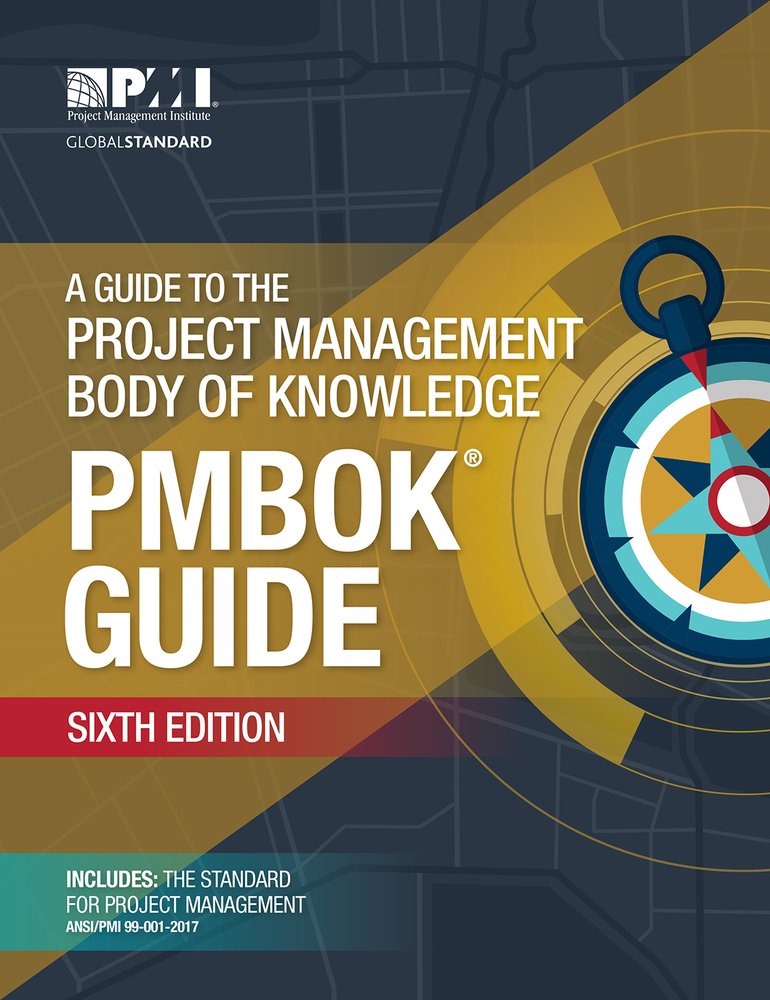
This effort is overseen by the Project Management Institute (PMI), the global not-for-profit member association of PM professionals that captures and publishes the PMBOK within the book, A Guide to the Project Management Body of Knowledge (PMBOK Guide).
The first edition of the PMBOK Guide was published in 1996. It is now in its sixth edition, which was published in 2017.
A guide to the Project Management Body of Knowledge (PMBOK Guide)
What Is a Project Management Network Diagram?
A Project Network diagram is one of the many ways to represent the project schedule. It is the most powerful way to analyze logical relationships between activities and milestones.

These are used for developing a project management schedule and are also called Project Schedule Network Diagrams or Logical Network Diagrams.
Some of the other popular methods to represent the project schedule are:
- Bar Charts (popularly known as Gantt Charts)
- Milestone Charts
- Project Calendars
Related Courses:
- Data Science for Construction, Architecture and Engineering
- Sustainable Construction Management
- Project Delivery Methods and Contracts in Construction Management
- Façade design and engineering: complexity made simple
Project Manager Vs. Product Manager
Product managers drive the development of products. They prioritize initiatives and make strategic decisions about what gets built. They are often considered to be the CEO of a product line. On the other hand, project managers often oversee the execution of plans that have already been developed and approved.
It’s common for people to confuse product managers and project managers, even within industries, like software, that employ both. Just ask any product manager (PM) or project manager (also PM), and they’ll tell you they’ve been referred to like the other more times than they can count. But the responsibilities are very different.
What are the PHASES of project management LIFECYCLE?
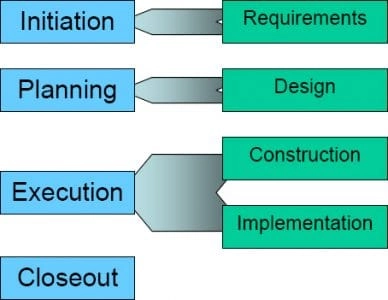
Project managers seeking to understand their process and work according to best practices are often guided by the PMI standards of practice, which outlines the project management life cycle.
The life cycle of any project can get confusing. There are a lot of activities going on in different phases of a project. Plus, those phases tend to overlap.
This is where many people might get confused. To clarify, we first need to explain the difference between the delivery process and the PM process.
The delivery process is what your team members are primarily engaged in. Usually, that’s the nuts and bolts of the project in action. That’s distinct from the project manager’s process for running a project from start to finish. The PM life cycle is outlined in PMI’s Project Manager’s Body of Knowledge (PMBOK®).
- Initiation
- Planning
- Execution
- Closure
Project Management Career
Is Project Manager A Good Career Option?
Why is project management a career option? Project management jobs are highly in demand in 2025, and careers in project management are the best option for new engineering graduates. A project manager is high in demand in various industries. Businesses today face aggressive competition so, they need a structured approach to plan, organize, control, and manage their resources (& internal capabilities) to deliver timely results. And these results should be aligned to business goals and the latest business challenges. If you are good with team management and know-how to assess time spent on a specific task and know how to make effective decisions for any problem that appears, you should give it a try to PM.
The recent PMI report on PMP job growth Project management – Job Growth and Talent gap, 2017 – 2027 Project management career paths have become lucrative in the dynamic business environment.
Project Management Courses:
- Results-Based Project Management
- Construction Project Management
- Project Management by Rochester Institute of Technology
- Engineering Project Management
Project Manager Job Description
What Does a Project Manager Do?
Project managers are accountable for planning, executing, and closing projects. They design project goals, determine success metrics, and ensure delivery within scope, budget, and timeline constraints. PMI describes the project manager’s role as a “change agent”—someone who inspires shared purpose within the team while navigating complex stakeholder relationships.
Daily responsibilities include:
- Defining project scope, objectives, and deliverables
- Developing project schedules, budgets, and resource allocation plans
- Leading and motivating cross-functional teams
- Communicating with stakeholders and managing expectations
- Identifying, assessing, and mitigating project risks
- Tracking progress and implementing corrective actions
- Managing project documentation and reporting
- Ensuring quality standards and compliance requirements
Project Manager Job Titles
The project management field offers diverse specializations and career paths:
Industry-Specific Titles:
- Construction Project Manager
- IT Project Manager
- Engineering Project Manager
- Software Project Manager
- Healthcare Project Manager
- Architectural Project Manager
Career Progression Titles:
- Project Coordinator (Entry Level)
- Assistant/Junior Project Manager
- Project Manager
- Senior Project Manager
- Program Manager
- Portfolio Manager
- PMO Director
How to Become a Project Manager
Educational Requirements
Most project management positions require a bachelor’s degree in a relevant field such as engineering, construction management, business administration, or information technology. However, the path to becoming a project manager has become more flexible in recent years.
Typical qualifications include:
- Bachelor’s Degree: Engineering, Construction Management, Business, or related field
- Professional Experience: 3-5 years minimum for mid-level positions
- Certifications: PMP, CAPM, or industry-specific credentials
- Technical Skills: Proficiency in PM software (Microsoft Project, Primavera, etc.)
- Soft Skills: Leadership, communication, problem-solving, negotiation
Related Posts:
- Top Project Management Courses and Institutes in India 2026
- The PMP Certification Guide For 2025: All You Need to Know About PMP
- Free PMP Practice Exam Questions: 50 Sample Test Practice Questions
- All you need to know about Project Management
- FREE Project Management Diploma 4-Week Online Course
Project Manager Qualifications
- Full-time bachelor’s or Masters’ Degree In Engineering and Technology.
- At least five years experience For Engineering Degree Holder
- Familiarity with Project Management Practices and Tools
- PMP Certification (For Better Positioning)
- Technical skills, Problem-solving, Management skills, Commercial awareness
- Advanced time management and analytical skills
- Working knowledge of Microsoft Excel and Project Management Software and apps.
- Excellent client-facing communication skills
Possess personnel management, time management, monitoring, critical thinking, inductive reasoning, and information ordering skills; strong communication, analytical, decision-making, and leadership skills; able to use enterprise resource planning software, database user interface and query software, PM software, and pattern design software; able to conduct systems analysis.
Project Manager Career Path
The typical career progression in project management follows these stages:
- Project Coordinator (0-2 years): Support larger initiatives, update schedules, handle administrative tasks
- Junior Project Manager (2-4 years): Manage smaller projects or portions of larger ones
- Project Manager (4-7 years): Lead projects end-to-end, manage teams, deliver results
- Senior Project Manager (7-10 years): Oversee multiple complex projects, mentor junior PMs
- Program Manager (10+ years): Manage portfolios of related projects with strategic significance
- PMO Director/VP (15+ years): Guide organizational project strategy and governance

The specific job descriptions for the above profiles can vary from company to company. Still, the foundational PM skills you’ll gain are transferable between companies and even entirely different industries.
Related Course:
- Managing Major Engineering Projects
- Engineering of Structures: Tension
- Engineering: Building with Nature
- Engineering of Structures: Compression
Top Project Management Certifications for 2026
About 97% of organizations believe that project management knowledge is critical to success. Professional certifications validate your expertise and significantly boost earning potential.
PMP Certification (Project Management Professional)
The PMP certification from PMI remains the gold standard in project management credentials. With over 1 million certified professionals worldwide, it’s recognized in more than 200 countries.
PMP Eligibility Requirements (2026):
- With a Bachelor’s Degree: 36 months of project leadership experience + 35 hours PM education
- With High School Diploma: 60 months of project leadership experience + 35 hours PM education
- Exam Fee: $405 for PMI members / $555 for non-members
PMP Salary Premium:
- PMP-certified professionals earn a 33% higher median salary than non-certified peers
- Average PMP salary in the USA: $120,000 – $135,000
- Average PMP salary in India: ₹20,00,000 – ₹30,00,000
Comprehensive Guide: All You Need to Know About PMP Certification in 2026
Other Valuable Certifications
- CAPM (Certified Associate in Project Management): Entry-level PMI certification
- PgMP (Program Management Professional): For managing multiple related projects
- PMI-ACP (Agile Certified Practitioner): For agile project management
- PRINCE2 Foundation/Practitioner: Popular in the UK and Europe
- CSM (Certified ScrumMaster): For Scrum methodology expertise
- Google Project Management Certificate: Entry-level online credential
Project Manager Salary 2026: Complete Breakdown
Project management offers competitive compensation across all experience levels and industries. Here’s the latest salary data for 2025-2026:
Construction Project Manager Salary (USA)
|
Experience Level |
Salary Range |
Source |
|
Entry Level (0-2 years) |
$57,804 – $75,000 |
PayScale 2025 |
|
Mid-Career (3-7 years) |
$83,599 – $106,711 |
ZipRecruiter 2025 |
|
Senior (7+ years) |
$105,795 – $137,000 |
BLS/Glassdoor 2025 |
|
With PMP Certification |
$115,000 – $135,000 |
PMI Salary Survey |
|
National Average |
$97,973 – $118,557 |
Indeed/Salary.com |
Highest-Paying Industries for Project Managers
- Manufacturing: $166,834 median total pay
- Energy, Mining & Utilities: $161,086 median total pay
- Information Technology: $137,751 median total pay
- Construction: $126,894 median total pay
- Finance & Insurance: $118,899 median total pay
Source: Glassdoor Construction Project Manager Salary Report, November 2025 & Salary Data from the Coursera article.
International Salary Comparison
- United States: $100,238 – $135,000
- Canada: $98,328 CAD
- United Kingdom: £46,423 – £61,593
- Australia: $80,208 AUD
- Germany: €65,805
- India: ₹12,36,500 – ₹30,00,000
- UAE/Saudi Arabia: $80,000 – $100,000
Related Posts:
- The 6 Essential Project Management Skills Every PM Needs
- Project Management Strategies for Renewable Energy Construction Projects
- List of the Key Project Management Concepts and Practices
- What are the Newest Construction Project Management Tools in 2025?
Top Construction Companies Hiring Project Managers in the USA (2026)
The U.S. construction industry generated over $600 billion in contractor revenue in 2024 (ENR Top 400 Contractors Report). Here are the leading companies actively hiring project management professionals:
|
Company |
2024 Revenue |
Key Sectors |
|
Turner Construction |
$20.2 billion |
Commercial, Healthcare, Education, Sports |
|
Bechtel Corporation |
$15.9 billion |
Infrastructure, Energy, Government |
|
Kiewit Corporation |
$14.0 billion |
Transportation, Water, Power |
|
Fluor Corporation |
$16.3 billion |
Oil & Gas, Mining, Infrastructure |
|
MasTec Inc. |
$11.6 billion |
Energy, Communications, Renewables |
|
AECOM |
$16.1 billion |
Design, Consulting, Construction Mgmt |
|
Skanska USA |
$6.9 billion |
Commercial, Civil, Healthcare |
|
HITT Contracting |
$8.0+ billion |
Data Centers, Federal Projects |
Complete List: Top Construction Companies in the World | Top 25 Civil Engineering Companies in the US
Essential Project Manager Skills for 2026
The World Economic Forum’s Future of Jobs Report 2025 identified analytical thinking, leadership, and project management among the top 10 skills of the decade. Here are the critical competencies employers seek:
Technical Skills
- Project scheduling and resource allocation
- Budget management and cost control
- Risk assessment and mitigation
- PM software proficiency (Microsoft Project, Primavera P6, Procore)
- Data analysis and reporting
- BIM coordination (for construction PMs)
Power Skills (Soft Skills)
- Leadership and team motivation
- Communication and stakeholder management
- Problem-solving and critical thinking
- Conflict resolution and negotiation
- Adaptability and change management
Emerging 2026 Competencies
- AI Literacy: 87% increase in demand for AI/big data skills by 2030
- Digital Transformation: 44% of organizations are investing in digitalization
- Sustainability Knowledge: Green building and decarbonization requirements
- Remote Collaboration: Managing distributed teams effectively
Related Reading: The 6 Essential Project Management Skills Every PM Needs
Project Management Tools and Software
The PM software market is projected to reach $12.02 billion by 2030, growing at a 10.67% CAGR. Here are the essential tools every project manager should know:
- Microsoft Project: 30,277 companies use it (14.08% market share)
- Jira: 52,427 companies—dominant in agile environments
- Primavera P6: Industry standard for construction and engineering
- Procore: Construction-specific project management
- Asana: 99% market share—excellent for collaboration
- com: Visual project tracking and automation
Complete Guide: Newest Construction Project Management Tools in 2026
Final Thoughts: Your Project Management Career in 2026
A project management career offers exceptional opportunities in 2026 and beyond. With 25 million new PM professionals needed by 2030, competitive salaries ranging from $97,000 to $135,000+ in the U.S., and the flexibility to work across virtually any industry, now is an ideal time to pursue this path.
The construction industry, in particular, offers tremendous growth potential. Major companies like Turner Construction, Bechtel, and Kiewit are actively seeking qualified project managers to lead infrastructure, data center, and renewable energy projects driven by federal investments and digital transformation.
Key takeaways for aspiring project managers:
- Invest in certification: PMP holders earn 33% more than non-certified peers
- Build diverse experience: Work across different project types and methodologies
- Embrace technology: AI literacy and digital tools are increasingly essential
- Develop power skills: Leadership and communication remain irreplaceable
- Target growth sectors: Construction, data centers, and renewable energy offer the best opportunities
Start your journey today by exploring our project management resources and construction job listings.
Project Management Career FAQs
Yes, absolutely. The BLS projects 6% job growth through 2034, and PMI estimates 25 million new PM professionals will be needed globally by 2030. PMP-certified project managers earn median salaries 33% higher than non-certified peers, with construction PMs averaging $97,768-$135,000 annually in the U.S.
Most PM positions require: (1) A bachelor’s degree in engineering, business, or a related field; (2) 3-5 years of project experience; (3) Familiarity with PM methodologies and software; (4) Optional but valuable: PMP or similar certification. Many professionals transition from technical roles by progressively taking on project coordination responsibilities.
In the United States (2025-2026): Entry-level: $57,804-$75,000; Mid-career: $83,599-$106,711; Senior: $105,795-$137,000; With PMP: $115,000-$135,000. The national average is $97,973-$118,557 according to Indeed and Salary.com.
The highest-demand industries for PMs in 2026 include: Construction (50-66% growth projected), Information Technology, Healthcare, Manufacturing, Finance and Insurance, Energy and Utilities, and Government/Defense. The data center construction sector is particularly hot, driven by AI expansion.
Yes. PMI data shows PMP certification holders earn 33% higher median salaries. Additionally, 66% of PMP holders reported salary increases within one year of certification. The investment of $1,000-$2,000 typically delivers ROI within 6-12 months through salary increases and improved job opportunities.
Technical skills: Project scheduling, budget management, risk assessment, PM software proficiency, and data analysis. Power skills: Leadership, communication, problem-solving, and adaptability. Emerging competencies: AI literacy (87% increase in demand), digital transformation capabilities, sustainability knowledge, and remote team management.
