
Last Updated on July 28, 2026 by Admin
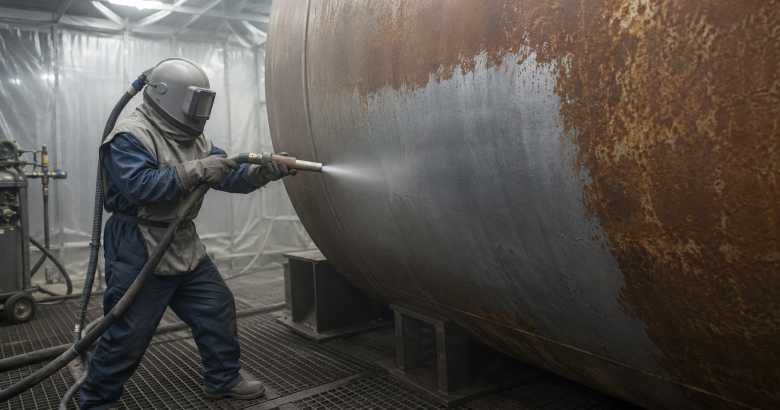
The assumption that blast time, media consumption, and equipment maintenance are the main factors dictating the life cycle cost of industrial blasting is inaccurate. Hidden factors may be contributing considerably more to total expenses. This story highlights several often-overlooked factors that significantly dictate industrial blasting life cycle costs, drawing on case studies and analysis from 10X Engineered Materials.
ConstructionCareerHub App is LIVE — built ONLY for construction careers. Don’t apply with a weak resume.
Get ATS-ready Resume Lab + Interview Copilot + Campus Placement Prep (resume screening, skill gaps, interview readiness) — in minutes & Other advanced features.
Explore Smarter Construction Career Tools →Quick check. Big impact. Start now.
Table of Contents
Breaking Down the True Cost of Industrial Blasting
The up front price of an abrasive represents a small fraction of industrial blasting life cycle costs. In a typical shot blasting operation for a four-wheel surface preparation machine, the abrasive itself accounts for only 6% of total operating expenses. Labor comprises 45% of the total cost, followed by machine depreciation at 24%, energy at 14%, and maintenance at 11%.
The abrasive accounts for only about one twentieth of the overall cost. Most expenses come from the abrasive’s performance, not its up front price, meaning the most affordable rust removal abrasive may not be the cheapest. Those that allow for faster cleaning, lower energy consumption, and reduced machine wear can substantially lower costs, even if its purchase price is higher than average.
Design Engineers Shouldn’t Overlook These Industrial Blasting Costs
Beyond labor and blast equipment expenses, six specific factors have an outsized impact on total operation costs.
1. Media Breakdown and Reclaim Rate
Standard abrasives such as baking soda, silicon carbide, and crushed glass are highly friable. These materials typically have an angular or subangular shape, increasing the likelihood of shattering on impact. Abrasive media that fracture quickly lead to higher consumption rates and zero reclaim value.
Superoxalloy abrasives feature a random particle arrangement. They are also tempered and amorphous, which makes them exceptionally tough and reduces their likelihood of shattering. Their durability and high reclaim rate make them cost-effective, even at scale.
Demonstrating this fact, the Navy increased its use of 10X superoxalloy abrasives for shipyard preparation and repainting — committing to upward of 1.5 million pounds — because they reduced dust by 80%, lowered media consumption by 79%, and accelerated work by up to 73%. According to 10X Engineered Materials, “This all added up to a more efficient, cleaner, higher visibility working environment, improved throughput, and greater usage.”
2. Air Pressure Losses
Compressed air system pressure drops force operators to spend significantly more hours blasting to clear the same surface area. Testing under controlled conditions demonstrates how pressure maintenance directly affects productivity.
In direct testing, 10X superoxalloys cleaned 53% more surface area with 10% less abrasive media than garnet in the same time frame. 10X Engineered Materials explains, “From past trials, 10X knows that with a higher pressure at the nozzle, customers will see the same amount of surface area blasted with 10X superoxalloy but complete the work in much less time.”
Particle durability maintains cutting efficiency throughout the blast cycle, while rapidly fragmenting abrasive particles underperform regardless of operating pressure.
3. Inefficient Media and Energy Waste
Particle strength directly influences both the time required and the total energy expenditure for surface preparation operations. Some blasting media, like 10X Engineered Materials, can withstand pressures exceeding 130 psi, enabling operators to increase productivity without sacrificing particle integrity.
Operations requiring weeks or months of continuous blasting multiply small efficiency gains into substantial reductions in compressed air consumption. For rust removal, abrasive media engineered to perform at elevated blasting pressures accelerate surface preparation.
4. Premature Nozzle Wear
Traditional hard minerals slice into the interior walls of blast nozzles, causing rapid orifice expansion and a drop in stream velocity. Frequent nozzle replacement results in both material costs and operational downtime.
The random, amorphous shape of superoxalloy abrasives makes them exceptionally tough but less likely to shatter or slice into blast equipment. Nozzle life extends significantly, and blast patterns remain consistent across longer operating periods.
5. Anchor Profile Rework
Microscopic particles of traditional slag often embed in the metal profile, leading to premature coating delamination and rust bloom. Embedded contaminants create failure points that compromise even premium coating systems.
Case studies demonstrate that fine blasting abrasives are ideal for surface preparation, removing rust, paint, and contaminants. 10X Engineered Materials found that, “The media was noted for leaving a very clean blast profile with minimal media embedment, which is critical for achieving a high-quality surface finish and durability.” Eliminating rework cycles reduces both material expenses and labor hours while keeping projects on schedule.
6. Waste Disposal Compliance
When mixed with removed coatings, corrosion, and other unwanted surface residues, spent abrasive media may create handling risks. Management and disposal represent substantial recurring expenses that receive less attention than the initial purchase price. Regulatory compliance for hazardous waste disposal imposes both administrative and financial burdens.
10X Engineered Materials produces the only biosoluble abrasive on the market. According to a meta-analysis conducted by 10X, “Mineral wool dust did not cause chronic beryllium disease, silicosis, cancer, or any other disease because it dissolves in lungs.” Toxicological studies also place the base material, mineral wool, in the same safety category as coffee and fluorescent lighting, according to the International Agency for Research on Cancer.
Considering the High Cost of Abrasive Materials
Design engineers evaluating premium abrasives often encounter sticker shock when comparing unit prices. A bag of engineered superoxalloy media costs more up front than conventional slag or garnet. However, this comparison ignores how abrasive performance characteristics influence every other line item in the operation budget.
Premium abrasives that reduce consumption rates, extend equipment life, and eliminate rework cycles can deliver lower total expenditure than budget alternatives. The material itself accounts for only a fraction of operational expenses, but its performance characteristics determine how efficiently the vast majority is spent.
Selecting abrasives solely on purchase price rather than total cost of ownership can lead to financial losses. An abrasive that costs less per bag but requires extended blast times drives labor expenses upward and delays project completion.
Instead, teams can select abrasives based on their ability to optimize labor productivity, energy efficiency, and surface quality. This transforms material selection from a procurement decision into an operational strategy.
What Is the Best-Value Blasting Media for Rust Removal?
Applying life cycle cost analysis to corrosion removal operations emphasizes the importance of high-quality abrasives. The right blasting media for rust removal directly impacts these operational expenses. Slow and inefficient rust remediation multiplies labor expenses and energy consumption while extending project timelines.
Generally, the best-value media is durable, efficient, clean, and safe. However, the best option for rust removal projects is the one that delays rust bloom the longest. When design engineers and project managers factor in the hidden costs of industrial blasting, the most affordable rust removal abrasive may actually cost more than its counterparts.
Standard abrasives like copper slag can embed in surfaces, potentially triggering a rust bloom that can cost more to fix. 10X Engineered Materials reports, “Our patented solution significantly reduces dust, decreases processing time, and is more cost-effective than traditional options.” Surface preparation projects benefit from lower consumption rates, reduced disposal complexity, and cleaner substrate profiles that support coating longevity.
Making Sandblasting Operations Cost-Effective
Engineers evaluating blasting media for rust removal must look beyond purchase price to analyze the total cost of ownership. These six hidden factors that dictate industrial blasting life cycle expenses interact with each other, amplifying their combined impact on operation economics.
When choosing a blasting media for rust, decision-makers should prioritize life cycle value, safety, and efficiency and other surface preparation applications. Industrial facilities that optimize this decision can improve profitability while enhancing worker safety and delivering higher-quality results.
Related Posts:
- Utilization of Steel Slag in Sustainable Construction
- An Ultimate Guide to the Phases of the Construction Project Life Cycle
- 10 Ways To Find Jobs Through The Hidden Job Market
- Unveiling the Hidden Job Market: A Comprehensive Guide for Construction Professionals
- Construction Marketing: Strategies, Tactics, and Best Practices
