
Last Updated on February 4, 2026 by Admin
The construction industry is transforming faster than most professionals realize. While headlines focus on robotics and AI, a quieter revolution is reshaping everyday work—hybrid construction roles are becoming the new standard. Planning Engineers, BIM Coordinators, Quantity Surveyors, and Project Controls specialists now split their time between physical sites and digital environments. Employers aren’t advertising this shift explicitly, but they’re actively preferring candidates who can operate in both worlds. This guide breaks down what hybrid construction roles actually mean, which skills now matter most, and how you can position yourself for career success in 2026 and beyond.
ConstructionCareerHub App is LIVE — built ONLY for construction careers. Don’t apply with a weak resume.
Get ATS-ready Resume Lab + Interview Copilot + Campus Placement Prep (resume screening, skill gaps, interview readiness) — in minutes & Other advanced features.
Explore Smarter Construction Career Tools →Quick check. Big impact. Start now.
Table of Contents
The Quiet Transformation in Construction Careers
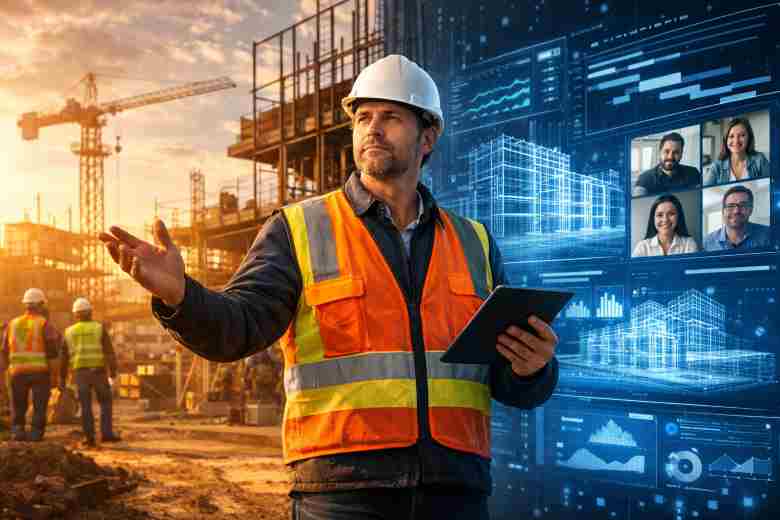
The biggest disruption in construction isn’t happening on jobsites. It’s happening on laptops.
While industry headlines focus on robotics, 3D printing, and autonomous equipment, a far more immediate transformation has already reshaped how construction professionals work every day.
The planning engineer who once spent 90% of their time walking sites now dedicates half their week to coordination calls, cloud-based schedules, and digital dashboards. The quantity surveyor who manually measured drawings is now running automated quantity extraction through BIM models.
This shift didn’t announce itself with fanfare. It simply happened. And professionals who haven’t noticed are finding their careers increasingly difficult to advance.
This comprehensive guide explores how traditional construction roles are evolving into hybrid positions, what skills now matter most, and how you can position yourself for success in the construction industry of 2026 and beyond.
Why Construction Roles Are No Longer 100% Site-Bound
Five years ago, suggesting that a construction professional could work remotely would have seemed absurd. Construction meant boots on the ground, hard hats, and physical presence. Today, hybrid arrangements have become standard operating procedure across dozens of specialized roles.
Several fundamental shifts drove this transformation:
Digital Coordination Became Non-Negotiable
BIM clash detection, 4D scheduling visualization, and cloud-based document management don’t require steel-toed boots. They demand screen time, software fluency, and the ability to communicate effectively across time zones. Projects now generate terabytes of digital data that must be managed, analyzed, and acted upon—work that happens at desks, not on scaffolding.
Reporting Migrated to Dashboards
Progress tracking, cost monitoring, and productivity analysis now flow through Power BI, Tableau, and integrated ERP systems. Raw data originates from site activities, but meaningful analysis happens elsewhere. Project controls professionals increasingly spend more time interpreting dashboards than conducting physical inspections.
Global Teams Became Structural
A major infrastructure project in Dubai might have planning support from India, cost control from the Philippines, design coordination from the UK, and procurement management from Singapore. This isn’t a pandemic-era experiment that companies are abandoning. It’s become fundamental to how large-scale construction operates economically.
AI Entered the Workflow
From automated RFI responses to AI-assisted document review, intelligent tools now handle tasks that previously required physical presence and manual effort. Professionals who leverage these capabilities deliver more value while spending less time on repetitive administrative work.
These changes affect nearly every technical role in construction: Planning Engineers, BIM Coordinators, Quantity Surveyors, QA/QC Engineers, Safety Professionals, Project Controls Specialists, and Contracts Managers. The construction site hasn’t disappeared from these jobs. But it’s no longer the only place where valuable work happens.
What Hybrid Construction Roles Actually Mean
Understanding hybrid construction roles requires clarity about what work has moved off-site and what remains firmly anchored to physical locations. The distinction isn’t always obvious, and many professionals underestimate how much their daily responsibilities have shifted toward digital environments.
Tasks That Still Require Site Presence
- Physical inspections, quality checks, and material verification
- Safety walks, toolbox talks, and hazard assessments
- Subcontractor supervision and direct coordination
- Material testing and documentation at point of installation
- Client and consultant site meetings and walkthroughs
- Equipment commissioning and handover procedures
Tasks Now Performed from Offices, Homes, or Remote Locations
- Schedule updates, look-ahead planning, and baseline revisions
- Quantity take-offs, cost tracking, and variation analysis
- BIM model reviews, clash resolution, and coordination meetings
- Daily and weekly progress reporting and executive summaries
- Vendor communication, procurement coordination, and RFQ management
- Document control, RFI management, and submittal tracking
- Team hiring, interview preparation, and performance reviews
The Hidden Expectation Shift
Here’s what most professionals miss: employers aren’t explicitly advertising “hybrid roles.” They’re quietly preferring candidates who can operate effectively in both physical and digital environments. A job description might say “Site Engineer,” but the actual expectation includes proficiency in Primavera P6, BIM 360, and the ability to present confidently in virtual coordination meetings.
The professionals who recognize this unstated requirement are getting promoted. Those who don’t are left wondering why their extensive site experience isn’t translating into career advancement.
For current opportunities that embrace this hybrid reality, explore the latest walk-in interview listings and construction job postings on our platform.
Skills That Matter More Than Job Titles in 2026
Your designation matters far less than your capability stack. A Planning Engineer who only knows how to create bar charts will consistently lose opportunities to candidates who can run Primavera P6, interpret earned value metrics, and present schedule risk analyses to stakeholders over Microsoft Teams.
The following skill categories now separate competitive candidates from those struggling to advance:
BIM and Digital Coordination Workflows
Understanding model-based coordination is no longer optional, even for roles not directly involved in modeling. Knowing how to navigate, review, extract information from, and communicate findings using BIM environments has become a baseline expectation. Professionals should be comfortable with platforms like Autodesk BIM 360, Navisworks, and emerging common data environments.
Planning and Scheduling Software Proficiency
Primavera P6, Microsoft Project, Asta Powerproject, and similar tools have moved from specialized skills to standard requirements. If your role touches project timelines in any capacity, fluency in at least one major scheduling platform is essential. Understanding critical path methodology, resource loading, and earned value concepts adds significant competitive advantage.
Digital Reporting and Dashboard Creation
Excel proficiency is now baseline—it no longer differentiates candidates. Power BI, Tableau, and even well-structured Google Data Studio dashboards separate strong candidates from average ones. The ability to transform raw project data into actionable visual insights has become highly valued across all construction roles.
Effective Communication Across Distributed Teams
Writing clear, concise emails that drive action rather than confusion. Running efficient virtual meetings that respect participants’ time. Documenting decisions properly so distributed teams maintain alignment. These “soft” skills have become hard requirements in hybrid environments where miscommunication creates costly delays.
AI-Assisted Documentation and Productivity
Using AI tools for drafting technical reports, preparing interview-ready resumes, optimizing technical documents, and summarizing complex specifications. Professionals who leverage these capabilities work faster, produce higher-quality outputs, and free time for higher-value activities.
Understanding current salary trends and in-demand skills helps you prioritize which capabilities to develop first.
Recommended Courses and Training Programs
If you’re serious about future-proofing your construction career, structured learning accelerates skill development significantly compared to ad-hoc self-study. The following platforms offer courses specifically relevant to building hybrid construction capabilities.
University-Backed Foundations
Coursera partners with leading universities to deliver courses that provide both practical skills and credentials hiring managers recognize.
- BIM Fundamentals for Engineers — Understand building information modeling concepts, workflows, and collaboration practices essential for modern construction coordination.
- Construction Project Management Specialization — Comprehensive coverage of project planning, cost management, and delivery methods from Columbia University.
- Data Analytics for Engineers — Learn to analyze construction data, create meaningful visualizations, and drive data-informed decisions.
- Google Project Management Professional Certificate — Industry-recognized credential covering project lifecycle, stakeholder management, and agile methodologies applicable to construction contexts.
Practical, Project-Focused Training
Udemy excels at hands-on, practical courses that teach specific tools and workflows used in daily construction operations.
- Primavera P6 Professional Fundamentals — Master the industry-standard scheduling software used on major infrastructure and construction projects worldwide.
- Construction Planning and Scheduling Masterclass — Comprehensive training covering critical path method, resource optimization, and schedule risk analysis.
- Quantity Surveying and Cost Estimation — Learn measurement techniques, cost planning, and modern QS software applications.
- Microsoft Power BI — Complete Guide — Build construction dashboards and reports that transform project data into actionable insights.
- Revit Architecture Fundamentals — Essential BIM modeling skills for professionals who need to understand and work with architectural models.
Deep Technical and Management Training
edX provides rigorous courses from top institutions, ideal for professionals seeking deeper expertise or leadership preparation.
- Project Management MicroMasters Programs — Advanced project management methodologies applicable to complex construction programs.
- Digital Construction and BIM Courses — Explore cutting-edge digital construction practices, data management, and technology integration.
- Engineering Management Certificate Programs — Develop leadership capabilities needed to advance into senior technical and management positions.
- Construction Industry Economics and Management — Understand the business and financial aspects of construction operations.
The investment in structured learning is modest compared to the return, measured in interview callbacks, promotion opportunities, and stronger positions in salary negotiations.
Essential Career Resources for Construction Professionals
Beyond formal courses, staying competitive in hybrid construction roles requires ongoing access to industry insights, job market intelligence, and practical career guidance.
Job Search and Interview Preparation
ConstructionPlacements.com provides comprehensive resources that complement your skill development with practical career tools:
- Walk-in Interview Listings — Stay connected to immediate opportunities across construction sectors and geographies. Updated regularly with positions from leading contractors and consultancies.
- Construction Job Role Guides — Detailed breakdowns of what employers actually expect for each role, including hybrid work components increasingly part of job specifications.
- Interview Question Banks — Prepare for technical rounds with comprehensive question collections covering planning, QS, BIM, safety, and project management roles.
- Career Pathway Articles — Map progression routes across different specializations, understand typical timelines, and identify skill gaps blocking advancement.
- Salary and Skills Trend Reports — Data-driven insights on compensation benchmarks and emerging skill requirements across markets and experience levels.
Bookmark these resources and use them regularly. Professionals who stay informed about market conditions and employer expectations make better career decisions and negotiate from positions of strength.
Building Your Hybrid Career Strategy
Here’s the fundamental reality: if your role is becoming hybrid, your career preparation must be hybrid too.
ConstructionCareerHub.com delivers exactly this capability. Think of it as a career operating system designed specifically for construction professionals navigating the industry’s digital transformation.
What ConstructionCareerHub Offers
- Job Readiness Assessments — Test your preparedness for specific roles and identify gaps before they cost you opportunities.
- ATS-Optimized Resume Building — Create resumes that pass automated screening systems and highlight the hybrid capabilities employers now prioritize.
- Interview Practice Scenarios — Prepare for both technical questions and the behavioral scenarios increasingly common in construction hiring.
- Hybrid Role Expectation Guides — Understand what employers actually expect versus what job descriptions explicitly state.
Whether you’re a fresh graduate determining your first career move or a mid-career engineer wondering why opportunities aren’t materializing despite solid experience, the tools exist to close the gap between where you are and where you want to be.
Practical Career Playbooks
For professionals who prefer structured, comprehensive career guidance, the eBooks available at digitslick.gumroad.com offer practical playbooks built for real hiring scenarios—not academic theory, but actionable strategies proven effective in today’s competitive construction job market.
Frequently Asked Questions About Hybrid Construction Roles
What are hybrid construction roles?
Hybrid construction roles combine traditional site-based responsibilities with digital and remote work capabilities. Professionals in these positions perform physical inspections, quality checks, and coordination on-site while handling planning, reporting, BIM coordination, and documentation tasks remotely using digital tools and software. The balance varies by role—a BIM Coordinator might work 70% remotely, while a Site Engineer might spend 70% on-site.
Which construction jobs are becoming hybrid?
Planning Engineers, BIM Coordinators, Quantity Surveyors, QA/QC Engineers, Safety Professionals, Project Controls Specialists, and Contracts Managers are increasingly working in hybrid arrangements. These roles now involve significant digital coordination, reporting, and remote collaboration alongside required site presence for inspections and physical coordination.
What skills do I need for hybrid construction careers?
Key skills include BIM software proficiency (Navisworks, BIM 360), planning and scheduling tools like Primavera P6, digital reporting and dashboard creation using Power BI or Tableau, effective remote team communication, and AI-assisted documentation capabilities. Professionals who master both site operations and digital workflows demonstrate the versatility employers now prioritize.
How can I prepare for hybrid construction roles?
Build technical skills through structured courses on platforms like Coursera, Udemy, and edX covering BIM, project management, and construction technology. Practice with scheduling software, develop digital reporting capabilities, and improve virtual communication skills. Career platforms like ConstructionCareerHub offer readiness assessments and interview preparation specifically designed for hybrid role requirements.
Are hybrid construction roles here to stay?
Yes. The shift toward hybrid construction work reflects fundamental changes in how projects are coordinated, documented, and managed—not temporary pandemic-era adaptations. Global team structures, cloud-based project management platforms, BIM coordination requirements, and AI-assisted workflows have become permanent features of construction operations. Professionals who develop hybrid capabilities position themselves for long-term career success.
Do hybrid roles pay more than traditional site roles?
Generally, yes. Professionals who demonstrate both site competence and digital proficiency command premium compensation because they deliver more value across the project lifecycle. According to current salary data, roles requiring hybrid capabilities typically offer 15-25% higher compensation than equivalent site-only positions, reflecting the expanded skill requirements and flexibility these professionals provide.
Final Thoughts: Mastering Both Worlds
The construction professional of 2026 doesn’t choose between site and screen. They master both.
The roles themselves haven’t fundamentally changed. Construction still requires physical infrastructure, on-site coordination, and hands-on expertise. But the way these roles are performed has transformed dramatically. The engineers getting hired, promoted, and compensated well are those who recognized this shift early and built the skills to match evolving expectations.
You can wait for job descriptions to spell this out explicitly—for postings to say “hybrid role” and list every digital tool required. Or you can start building your hybrid capability stack today, positioning yourself ahead of professionals still treating construction careers as purely site-based endeavors.
The industry isn’t waiting for permission to evolve. Neither should you.
Ready to future-proof your construction career?
- Explore current opportunities at ConstructionPlacements.com
- Assess your readiness at ConstructionCareerHub.com
Found this guide valuable? Share it with colleagues navigating their construction careers. The conversation about hybrid roles is just beginning, and the professionals who engage with it early gain lasting advantages.
Related Posts:
