

Last Updated on June 15, 2026 by Admin
The US’ construction industry is one of the strongest industries going. It is an industry built on the backs of hardworking Americans, and which showcases some of the world-leading expertise this nation has to offer – expertise all-too-easily obfuscated by failures elsewhere on the global stage. Such political and industrial shortcomings undermine what America really has to offer, not to mention the innovative ways in which US construction is futureproofing itself for a new era.
ConstructionCareerHub App is LIVE — built ONLY for construction careers. Don’t apply with a weak resume.
Get ATS-ready Resume Lab + Interview Copilot + Campus Placement Prep (resume screening, skill gaps, interview readiness) — in minutes & Other advanced features.
Explore Smarter Construction Career Tools →Quick check. Big impact. Start now.
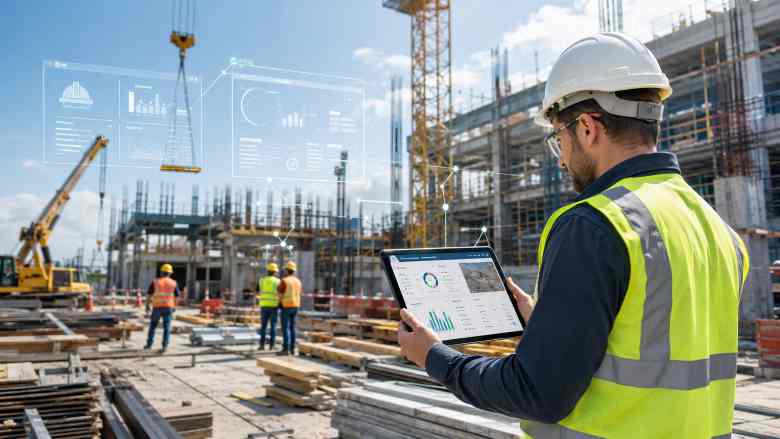
Where once, world-leading construction looked like impossible teams of fearless workers monkeying up skyscrapers to lead in the next I-beams by hand, today’s construction industry is significantly safer and significantly more tech-led, to boot. Construction businesses are rapidly embracing digital workforce tools to streamline operations, improve communication, and keep projects on schedule; here’s how.
Table of Contents
Real Time Workforce Co-ordination
Technology has improved construction in some very literal senses, on the ground, via new tools and industrial systems that facilitate more efficient teardowns and foundation-building. But it’s the logistical, behind-the-scenes technologies that have the greater impacts for business efficiency overall.
A key example of this is in workforce co-ordination, where cloud-accessible apps can be used by construction management to assign tasks and track progress instantly. This is invaluable on larger-scale projects, where team fluidity can be utilized to improve short-term outcomes.
Material Tracking
Likewise, digital tools can be used to more effectively monitor the stock and usage of materials on-site. Using a centralized project delivery app, management can track and allocate the delivery of drywall board for example both within and between projects. Usefully, the same tech can be used to create meaningful timescales for completion and next steps.
Digital Safety & Compliance Tools
Regulatory compliance is not the easiest thing to track, particularly for contracting companies spread out across a variety of sites and exposed to a variable level of risk. Digital technology serves to make safety compliance easier, by giving teams a central space in which to log and delegate health and safety risks or compliance measures. Automated checklists can be used to ensure teams meet regulatory standards, and logs for maintenance and follow-ups made to ensure execute oversight.
Mobile Time Tracking Systems
Many of the administrative headaches relating to construction come from the management of staff across the business – something already touched on with respect to workforce co-ordination. But on a broader level even than that, digital construction technology has made people management easier; app-based hours logging simplifies the creation and issuance of accurate paychecks, enabling companies to better manage both their staffing and their money.
Related Posts:
- 10 Tips on How to Hire Great Construction Workers (2026 Guide)
- Navigating Staffing and Recruitment Challenges in the Construction Sector
- The Future of Project Management in Construction: Trends to Watch in 2025 and Beyond
- Construction Recruitment Agencies: Everything You Need to Know
- Booming Construction Sector: A Closer Look at Employment Trends in the US
