

Last Updated on June 29, 2026 by Admin
Australia’s construction industry has entered a new phase of workplace safety, and if you are planning to work there, understanding the silica ban will help you stay prepared and competitive. The changes have already shaped how contractors hire workers, how materials are used on-site, and what employers expect from international talent, but the good news is that construction opportunities across Australia have remained strong. What has changed is the industry’s focus on safer work practices and better long-term protection for workers.
ConstructionCareerHub App is LIVE — built ONLY for construction careers. Don’t apply with a weak resume.
Get ATS-ready Resume Lab + Interview Copilot + Campus Placement Prep (resume screening, skill gaps, interview readiness) — in minutes & Other advanced features.
Explore Smarter Construction Career Tools →Quick check. Big impact. Start now.
Table of Contents
What Has Australia Banned?
Australia has banned the use of engineered stone products commonly used for kitchen benchtops and interior surfaces. These products became widely used because of their modern finish and durability, but they also produced very high levels of silica dust during cutting and installation. This does not mean all stone or construction work has disappeared. Natural stone, tiling, concrete work, brickwork, and many other trades are still operating across the country. The main difference is that employers now place much greater attention on dust control and worker safety. For international job seekers, this is important because many construction companies now prefer workers who already understand modern safety practices before stepping onto a job site.
Why Silica Safety Has Become So Important
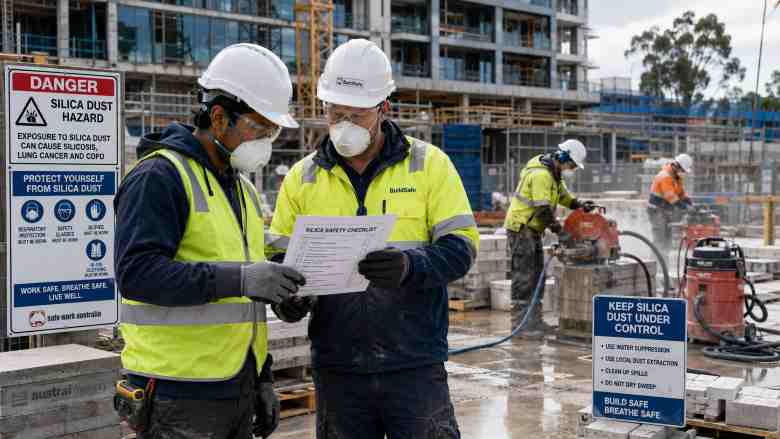
Silica is a natural mineral found in materials such as concrete, bricks, tiles, and stone. When these materials are cut or drilled, fine dust particles can enter the air. Over time, breathing in large amounts of this dust can create serious health concerns for workers. Australia has responded by introducing stronger safety rules to create healthier work environments across the industry. Construction companies have already started investing in better equipment, safer cutting methods, and improved training systems. This shift has created a new standard in the industry. Employers are no longer looking only for physical skills, but also want workers who understand how to operate safely and responsibly on-site.
The Skills Australian Employers Now Value
If you are planning to work in Australia, practical safety knowledge will strengthen your chances of getting hired. Employers have increasingly preferred workers who know how to reduce dust exposure while completing daily tasks efficiently.
Some of the most valuable skills now include:
- Using wet-cutting systems
- Working with dust extraction equipment
- Wearing respiratory protection correctly
- Following workplace safety procedures
- Understanding basic WHS requirements
These skills are useful across many construction roles, including civil construction, tiling, demolition, roadworks, and commercial building projects. Even entry-level workers who understand these practices have often stood out during recruitment because employers know they will adapt better on-site.
Why Silica Safety Training Improves Your Job Prospects
One of the smartest steps an international worker can take before arriving in Australia is completing a silica awareness course. Many employers have viewed this as a sign that a worker takes safety seriously and understands current industry expectations. The value of the course goes beyond certificates. It explains how silica dust spreads, why certain tools are used on-site, and how workers can protect themselves during daily construction tasks. For example, many new workers assume wearing a basic mask is enough protection. A proper silica awareness course explains why fitted respiratory equipment, ventilation systems, and wet-cutting methods have become essential across Australian worksites. The course also helps workers understand Australian workplace language and safety procedures, which becomes especially useful when supervisors discuss risk controls, PPE requirements, or site compliance during projects.
Mistakes International Workers Should Avoid
Many overseas workers arrive with strong technical experience, but Australia’s construction industry operates with very strict safety expectations. Small mistakes that may have been common elsewhere can quickly create problems on Australian sites. One common issue is accepting informal cash jobs where safety standards are poorly managed. While these jobs may seem convenient at first, they often lack proper dust controls and protective systems. Another mistake involves dry cutting materials without water suppression or extraction equipment. Australian employers now place strong attention on controlling airborne dust, and workers are expected to follow those procedures carefully. It is also important to avoid assuming that every employer will automatically provide complete guidance. Workers who understand safety practices themselves usually adapt faster and build stronger reputations on-site. The construction industry in Australia has become highly professional, and employers appreciate workers who arrive prepared and informed.
How the Ban Has Changed Job Opportunities
Australia’s silica ban has changed part of the construction industry, but it has also opened the door to safer work practices and new opportunities across the sector. Construction companies are increasingly looking for workers who understand modern safety standards, adapt well on-site, and arrive prepared for today’s workplace expectations. If you take the time to build your silica awareness and understand how Australian job sites operate, you will place yourself in a much stronger position as the industry continues evolving.
Related Posts:
