
Last Updated on May 15, 2026 by Admin
Mention “asset management” to a newcomer to the construction industry, and their mind may conjure up images of maintaining infrastructure and equipment after construction has been completed. In fact, placing asset management at the forefront of project management is key to capturing asset data in real time, conducting due inspections and tests, and documenting warranties throughout installation. Tracking assets as they are installed prevents the need to compile a handover book at the end of a project, when records can be forgotten or missed. In current times, technologies such as RFID tags, the Internet of Things, and AI are all working synergistically to reduce costs and improve productivity in construction projects.
ConstructionCareerHub App is LIVE — built ONLY for construction careers. Don’t apply with a weak resume.
Get ATS-ready Resume Lab + Interview Copilot + Campus Placement Prep (resume screening, skill gaps, interview readiness) — in minutes & Other advanced features.
Explore Smarter Construction Career Tools →Quick check. Big impact. Start now.
Table of Contents
The Benefits of Asset Management
Keeping track of assets throughout the project cycle brings significant benefits to both construction firms and clients, including cost reduction, by enabling effective resource management. Asset tracking is a key measure to avoid unnecessary purchases, prevent equipment loss, and improve equipment use. Another benefit is the ability to plan more effectively, as asset tracking provides the exact location of all items, enhancing scheduling efficiency and improving project workflows. At the point of turnover, well-maintained records of assets, maintenance, and usage make it easier for facility management teams to track assets and to maintain and use equipment optimally, thereby extending equipment lifespan.
Employing a Multifaceted Strategy
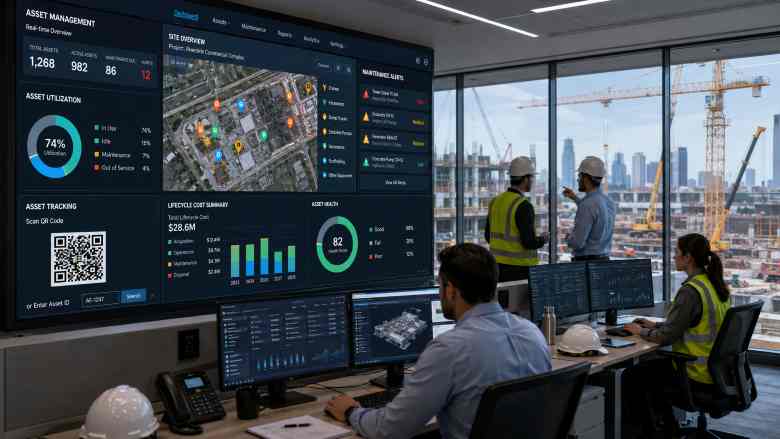
Effective asset management involves a multifaceted strategy that begins with tracking and monitoring assets via RFID tags and barcode scanners to ensure the exact location of equipment is always known. It extends to lifecycle management, which involves sticking to a maintenance schedule and replacing necessary parts before machinery breaks down. Keeping track of the state of machinery allows construction teams to reduce downtime, avoid delays, and ensure equipment is always available when needed.
Key Technologies Boosting Smart Asset Management
One technology that has boosted the effectiveness of real-time tracking is IoT-connected devices. IoT is used for a range of tasks, including data collection. Sensors are attached to construction machinery, equipment, vehicles, and inventory, capturing data about their location, usage, performance, and condition. The collected data is then transmitted across a network to a centralized platform through a dedicated communication system. The choice of system depends on distance, power consumption, and network availability, and can include Wi-Fi, 5G, and specialized technologies such as MQTT, CoAP, NB-IoT, and LTE-M. Data is ingested through streaming pipelines such as Apache Kafka or AWS Kinesis and stored on a cloud or on-premises platform, where it is aggregated and analyzed.
Vital Software Integration
IoT asset management systems can integrate with other software to keep data in a single centralized system. For instance, CMMSs can aid in scheduling and tracking maintenance work, while EAM systems track the full lifecycle of assets. ERP systems, meanwhile, manage wider operations such as inventory, finance, and purchasing.
The Role of AI in Asset Management
Machine learning and advanced analytics play a significant role in processing data to identify trends, patterns, and anomalies. AI can also predict each asset’s performance and when maintenance is required. As such, it can help companies achieve better cost control, higher utilization rates, and improved productivity across numerous projects. Artificial intelligence is also key to safety, as iit can identify potential concerns, compliance issues, and operational risks by analyzing asset data and performance trends. Its findings can help savvy businesses establish preventive measures, maintain regulatory compliance, and enhance overall project safety.
Asset management is vital in the construction industry, as it helps companies reduce costs and time while improving safety. Technologies such as RFID tags and barcode scanners ensure that the location of all equipment is known. In contrast, sensors help users assess the condition of all machinery. Through the Internet of Things, data can be gathered and, when processed by AI, patterns can be identified that help companies comply with regulatory requirements while also boosting safety and efficiency.
Related Posts:
- Property Asset Management Job Description and Salary
- 14 Best Construction Equipment Tracking Software
- A Beginner’s Guide: Top 6 Real Estate and Construction Management Courses
- Digital twin: the Age of Aquarius in Construction and Real Estate
- Top 5 AI Use Cases in Civil Engineering Projects
