
Last Updated on May 28, 2026 by Admin
Industrial businesses operate in highly demanding environments where efficiency, accuracy, and financial stability are essential for long-term success. Whether managing manufacturing facilities, warehouses, distribution operations, or large-scale industrial projects, companies constantly face pressure to reduce delays, improve productivity, and maintain healthy cash flow.
ConstructionCareerHub App is LIVE — built ONLY for construction careers. Don’t apply with a weak resume.
Get ATS-ready Resume Lab + Interview Copilot + Campus Placement Prep (resume screening, skill gaps, interview readiness) — in minutes & Other advanced features.
Explore Smarter Construction Career Tools →Quick check. Big impact. Start now.
As industries continue to evolve, businesses are increasingly turning to digital solutions and smarter operational strategies to stay competitive. Modern technology can help companies simplify workflows, improve communication, and make better financial decisions while reducing costly manual processes.
Table of Contents
Improving Workflow Automation
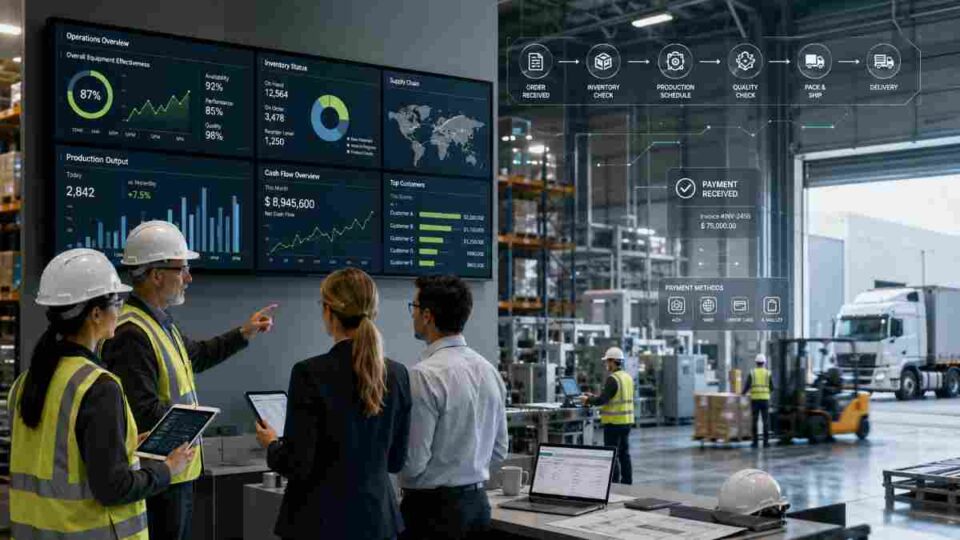
One of the most effective ways industrial businesses can improve efficiency is through workflow automation. Manual processes often slow down operations and increase the likelihood of errors, especially when dealing with scheduling, inventory management, invoicing, or production tracking.
Automated systems help businesses streamline repetitive tasks, reduce paperwork, and improve operational accuracy. Employees can then focus more on high-value responsibilities rather than spending time on administrative work. Automation also helps businesses improve communication between departments, creating a smoother and more organized operational structure overall.
Strengthening Financial Visibility
Cash flow management remains one of the biggest challenges for industrial businesses. Delayed payments, invoicing issues, and inaccurate reporting can quickly create financial strain, especially on large projects with multiple vendors and contractors involved.
Businesses that invest in better financial management systems gain clearer visibility into expenses, payment schedules, and project budgets. Real-time financial insights allow companies to identify potential problems earlier and make more informed decisions. Digital platforms can also reduce billing errors and improve payment processing speed, helping businesses maintain stronger financial stability.
Using Digital Tools for Payment Management
Managing payments across multiple projects and departments can become complicated without the right systems in place. Many industrial businesses are now adopting specialized tools to simplify financial processes and improve cash flow efficiency. Solutions such as Payment Application Software can help businesses organize payment tracking, streamline approvals, and reduce administrative bottlenecks. Digital payment management tools can also improve transparency and support more accurate financial reporting throughout large operations.
Enhancing Inventory and Supply Chain Control
Inventory management plays a major role in operational efficiency for industrial companies. Overstocking can increase storage costs, while shortages can delay production and impact customer satisfaction.
Modern inventory tracking systems allow businesses to monitor stock levels in real time, predict demand more accurately, and reduce waste. Improved supply chain visibility also helps businesses respond faster to disruptions and maintain more consistent operations. By improving inventory control, companies can reduce unnecessary spending and improve overall profitability.
Supporting Better Employee Productivity
Efficient businesses are often built around productive employees. Outdated systems and complicated processes can frustrate workers and slow down daily tasks. Digital management tools can simplify communication, improve task tracking, and reduce confusion across teams. Employees who have access to organized systems and accurate information are often able to work more effectively and complete projects faster. Training employees to use modern technology also prepares businesses for future industry demands and changing operational requirements.
Reducing Operational Delays
Delays can be extremely costly in industrial environments. Production slowdowns, communication gaps, and inaccurate reporting can all impact project timelines and customer relationships. However, technology-driven solutions help businesses monitor operations more closely and identify problems before they become major disruptions. Real-time reporting, automated notifications, and centralized data systems allow managers to respond quickly and keep projects moving efficiently. Reducing delays not only improves productivity but also strengthens customer trust and business reputation.
Final Thoughts
Industrial businesses face constant pressure to improve efficiency while maintaining healthy cash flow and operational stability. Companies that embrace smarter technologies and digital management solutions are often better positioned to adapt to changing market demands and remain competitive.
From workflow automation and inventory management to improved payment systems and financial visibility, modern tools can help businesses reduce costs, improve productivity, and support long-term growth. Investing in efficient operational systems today can create stronger foundations for future success.
Related Posts:
- The Ultimate Guide to Warehouse Inventory Systems
- Construction Finance Management: The Ultimate Guide for 2026
- 7 Benefits Of Using Business Software For Improved Productivity
- Mastering Business and Financial Modeling for Construction Projects: A Comprehensive Guide
- Construction Materials and Supply: Careers in Supply and Management
- Supply Chain Manager Job description and Salary details
