

Last Updated on June 8, 2026 by Admin
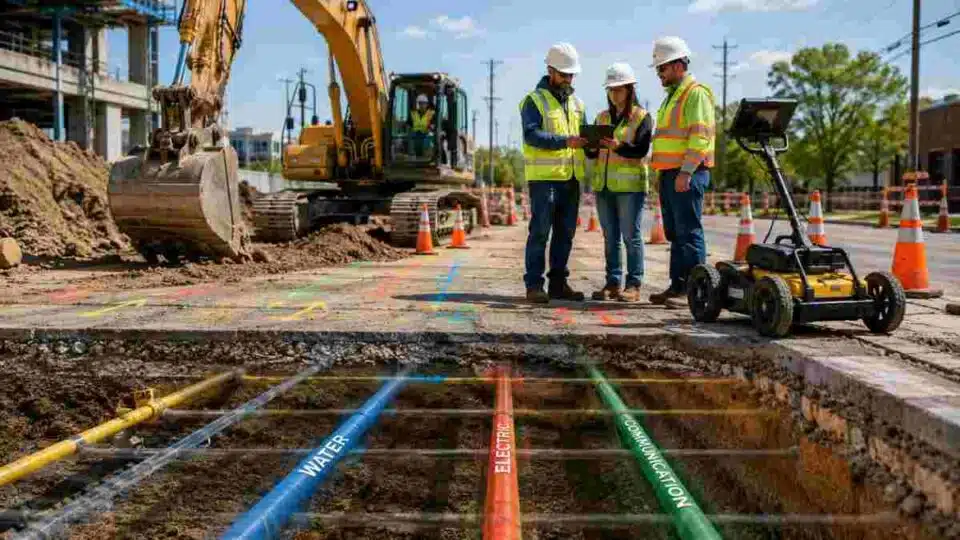
Utility strikes remain one of the most persistent risks in construction, infrastructure, and excavation projects. Despite improvements in utility locating, mapping, and excavation planning, underground utilities continue to be damaged during construction work every day. Gas lines, electrical cables, fiber optic conduits, water infrastructure, and communication systems are routinely exposed to excavation activity, often in congested urban environments where underground space is increasingly limited.
ConstructionCareerHub App is LIVE — built ONLY for construction careers. Don’t apply with a weak resume.
Get ATS-ready Resume Lab + Interview Copilot + Campus Placement Prep (resume screening, skill gaps, interview readiness) — in minutes & Other advanced features.
Explore Smarter Construction Career Tools →Quick check. Big impact. Start now.
The consequences of a utility strike extend far beyond repair costs. A single incident can stop construction work immediately, disrupt essential public services, trigger safety incidents, delay project schedules, and expose contractors to liability claims and regulatory scrutiny. In some cases, utility strikes can create life-threatening situations for workers and nearby communities.
For decades, utility strike prevention focused primarily on pre-excavation locating. Construction teams relied on utility records, field markings, and locating surveys to identify underground infrastructure before digging began. While these practices remain essential, the industry increasingly recognizes that underground risk does not disappear once excavation starts. Conditions change during construction, markings can become unreliable, and undocumented utilities are still frequently encountered in active work zones.
The Best Utility Strike Prevention Solutions
1. RodRadar – Real-Time Utility Strike Prevention During Excavation
RodRadar approaches utility strike prevention from a different angle than traditional utility detecting systems. Rather than focusing only on identifying utilities before excavation begins, the company’s technology is designed to prevent strikes during active excavation itself.
Its Live Dig Radar® technology integrates ground-penetrating radar directly into excavator buckets, allowing the system to scan the ground continuously while digging is taking place. When buried utilities are detected ahead of the bucket, operators receive immediate alerts in the cab, helping them avoid contact before a strike occurs. Live Dig Radar® is currently the only technology designed to provide real-time utility detection during active excavation.
This distinction is important because excavation is typically the highest-risk stage of utility work. Even after utilities are located, mapped, and marked before construction begins, there is no guarantee that a utility strike will not occur. Excavation conditions frequently diverge from drawings and site markings, utilities may be undocumented, and operators must often make decisions in real time while work is progressing.
RodRadar’s approach turns excavation equipment into an active utility detection system rather than relying only on pre-dig planning workflows. Each bucket pass functions as a live safety scan, helping crews identify utilities at the moment excavation risk is introduced and addressing the remaining risk that exists even after traditional locating activities have been completed.
The company recently expanded this approach with Stop Before Strike (SBS), a system designed to automatically stop the excavator bucket before contact occurs when utilities are detected. This adds an additional layer of excavation safety by combining real-time detection with automatic intervention capabilities.
Rather than positioning utility strike prevention as a separate surveying activity, RodRadar integrates detection directly into excavation operations. This makes the technology particularly relevant for trenching, earthworks, road construction, utility installation, and urban infrastructure projects where underground congestion is high and excavation risk changes continuously throughout the job. RodRadar’s solution is used in various construction and excavation projects such as:
- Commercial and civil construction projects
- Infrastructure upgrades
- Renovation projects
- Roads and Highways projects
- Utility installation work
2. GPRS – Utility Locating and Subsurface Investigation Services
GPRS focuses on utility locating and subsurface investigation services performed before excavation begins. The company uses a combination of ground-penetrating radar and electromagnetic locating to identify underground utilities and help construction teams reduce excavation risk.
This type of utility strike prevention is centered around improving underground visibility before work starts. Utility locating surveys help contractors identify underground infrastructure, mark utility locations on the ground, and plan excavation routes more safely.
One of the reasons private utility locating services remain important is that utility records are often incomplete or inaccurate, particularly on older commercial and infrastructure sites. Contractors frequently encounter undocumented utilities, abandoned infrastructure, or utility paths that differ from existing drawings.
3. USIC – Damage Prevention Through Utility Locating Programs
USIC focuses heavily on damage prevention programs designed to reduce utility strikes before excavation begins. The company works with utility providers, municipalities, and contractors to locate and mark underground utilities before excavation work takes place.
Unlike some utility locating providers that focus primarily on construction projects, USIC operates within a broader damage prevention ecosystem tied to utility infrastructure management and excavation safety compliance.
4. Blood Hound – Subsurface Utility Engineering and Utility Mapping
Blood Hound focuses on private utility locating and Subsurface Utility Engineering (SUE), a process used to locate, document, and map underground utilities before construction begins.
Subsurface Utility Engineering differs from standard utility locating because it is closely integrated into the engineering and planning phases of construction and infrastructure projects. The goal is not only to identify utilities, but to provide project teams with accurate subsurface information that can influence design decisions, construction sequencing, and excavation planning.
5. Radiodetection – Utility Detection Equipment for Damage Prevention
Radiodetection provides equipment used by contractors, utility locating professionals, and infrastructure companies to detect underground utilities before excavation begins. The company’s equipment is widely used in utility locating workflows and damage prevention programs across construction and utility industries.
Electromagnetic locating equipment is commonly used to detect metallic infrastructure such as electrical cables and metal pipes. Ground-penetrating radar systems can also be used to detect non-metallic utilities, including plastic pipes and fiber optic conduits that may not be detectable through electromagnetic locating alone.
This combination of technologies helps contractors improve subsurface visibility before excavation starts, particularly in environments where underground infrastructure is congested or poorly documented.
Choosing the Right Utility Strike Prevention Approach
Different projects require different utility strike prevention strategies. A utility locating approach that works well on a suburban utility installation project may not be sufficient for dense urban excavation or large infrastructure work.
Construction companies should evaluate utility strike prevention methods based on several factors.
Project Environment
Urban construction sites often contain dense and overlapping underground infrastructure, increasing the likelihood of utility conflicts. Infrastructure and transportation projects may involve long utility corridors and multiple utility owners.
Type of Excavation
Some projects involve shallow trenching, while others require deep excavation around critical infrastructure. The excavation method influences the level of utility strike risk.
Existing Utility Documentation
Projects with incomplete utility records often require additional locating and verification efforts before excavation begins.
Timing of Detection
Some utility strike prevention methods focus on planning and pre-excavation surveys, while others provide visibility during excavation itself.
Utility Types
Different locating methods are better suited for different utility materials. Metallic utilities are often detected using electromagnetic locating, while non-metallic pipes may require ground-penetrating radar.
The most effective utility strike prevention strategies typically combine multiple methods rather than relying on a single technology or workflow.
FAQs
What is a utility strike in construction?
A utility strike occurs when excavation or construction equipment damages underground infrastructure such as gas lines, electrical cables, water pipes, sewage systems, or communication conduits. Utility strikes can lead to service outages, project delays, repair costs, safety incidents, and regulatory penalties. They are one of the most common underground risks in excavation and infrastructure projects, particularly in urban environments with dense underground utility networks.
Why do utility strikes still happen even after utilities are marked?
Utility strikes still occur because utility markings and records are not always fully accurate. Underground infrastructure may be undocumented, incorrectly mapped, or installed differently from existing drawings. In addition, excavation conditions can change during construction, and markings may become difficult to see over time. Because of this, many contractors use multiple layers of utility strike prevention rather than relying only on pre-excavation locating and surface markings.
What technologies are used for utility strike prevention?
Utility strike prevention uses several technologies depending on the project and excavation conditions. Common methods include ground-penetrating radar, electromagnetic locating, utility mapping, vacuum excavation, and subsurface utility engineering. Some technologies are used before excavation begins to locate underground infrastructure, while others are designed to detect utilities during active excavation and provide real-time alerts to equipment operators.
What is the difference between utility locating and utility strike prevention?
Utility locating is the process of identifying and marking underground utilities before excavation begins. Utility strike prevention is a broader process focused on reducing underground risk throughout the construction project. It may include utility locating, mapping, field verification, excavation safety procedures, and technologies used during excavation. In other words, utility locating is one part of utility strike prevention, but not the entire process.
Why is utility strike prevention becoming more important in urban construction?
Urban construction projects operate around increasingly dense underground infrastructure networks that include electrical systems, telecommunications, water infrastructure, gas lines, and fiber optic conduits. As underground congestion increases, so does the likelihood of excavation conflicts and accidental utility damage. Utility strike prevention has become more important because construction companies must manage underground risk while maintaining project schedules, protecting workers, and avoiding service disruptions in highly populated areas.
Related Posts:
- Preventing Costly Delays Through Early Site Testing
- Important Services for Businesses to Track
- Impact of Lightning on Buildings and Remedial Measures
- The Role Of Training In Construction Accident Prevention
