
Last Updated on January 20, 2026 by Admin
A QA/QC Engineer ensures construction projects meet rigorous quality standards, safety requirements, and client specifications. With the construction industry projected to grow 3.3% globally in 2026, qualified quality professionals are in unprecedented demand.
ConstructionCareerHub App is LIVE — built ONLY for construction careers. Don’t apply with a weak resume.
Get ATS-ready Resume Lab + Interview Copilot + Campus Placement Prep (resume screening, skill gaps, interview readiness) — in minutes & Other advanced features.
Explore Smarter Construction Career Tools →Quick check. Big impact. Start now.
This comprehensive guide covers everything you need to know about becoming a QA/QC engineer in the construction industry—from salary expectations and daily responsibilities to certifications and career advancement opportunities.
Table of Contents
What is a QA/QC Engineer?
A Quality Assurance/Quality Control (QA/QC) Engineer serves as the guardian of construction quality, responsible for developing, implementing, and monitoring quality management systems throughout the entire project lifecycle. These professionals bridge the gap between theoretical quality standards and practical construction execution.
According to Bureau of Labor Statistics data, quality engineering roles are projected to grow 11.2% from 2022 to 2032—significantly faster than the average for all occupations. This growth reflects the construction industry’s increasing focus on compliance, safety, and client satisfaction.
QA/QC engineers work across diverse project types including:
- Commercial and residential building construction
- Infrastructure projects (roads, bridges, tunnels)
- Industrial facilities and manufacturing plants
- Oil and gas installations
- Power plants and renewable energy projects
- Data center construction (a rapidly growing sector in 2026)
Related: Top Construction Companies in the World
QA vs QC: Understanding the Difference
The distinction between Quality Assurance and Quality Control is fundamental to understanding this role:
Quality Assurance (QA)
QA is process-oriented and focuses on defect prevention through systematic procedures:
- Developing quality management systems
- Creating method statements and procedures
- Establishing Inspection and Test Plans (ITPs)
- Implementing preventive measures
- Training construction teams on quality standards
Quality Control (QC)
QC is product-oriented and focuses on defect identification through inspection and testing:
- Conducting site inspections
- Testing materials and workmanship
- Identifying non-conformances
- Verifying compliance with specifications
- Documenting quality records
Most modern construction companies have integrated QA/QC departments where engineers handle both aspects, ensuring comprehensive quality coverage from project inception to handover.
Related: What is Building Information Modeling (BIM)?
QA/QC Engineer Job Description
A QA/QC engineer is responsible for ensuring that products, services, and construction work meet established quality standards and regulatory requirements. The role involves developing quality assurance plans, conducting inspections, managing testing protocols, and reporting findings to project management.
Primary Objectives
- Ensure Compliance: Verify all work meets project specifications, building codes, and industry standards
- Prevent Defects: Implement proactive quality systems that catch issues before they become problems
- Document Quality: Maintain comprehensive records for audits, certifications, and project handover
- Coordinate Testing: Manage material testing and third-party inspections
- Drive Improvement: Identify opportunities to enhance quality processes
Daily Activities
QA/QC engineers typically spend their time:
- Reviewing technical documents and drawings
- Conducting site inspections and audits
- Coordinating with contractors and subcontractors
- Managing non-conformance reports (NCRs)
- Attending project coordination meetings
- Preparing quality documentation and reports
Related: Civil Engineering Interview Questions and Answers
Core Responsibilities of QA/QC Engineers
1. Quality Documentation Management
QA/QC engineers maintain comprehensive documentation systems that serve as the backbone of project quality:
- Quality manuals aligned with ISO 9001:2015 standards
- Method statements and work procedures
- Inspection and Test Plans (ITPs) for all construction activities
- Non-Conformance Reports (NCRs) and corrective action tracking
- Calibration certificates and test results
- As-built documentation for project handover
2. Material Quality Control
Every material entering the construction site undergoes rigorous evaluation:
- Technical data sheet review against project specifications
- Vendor qualification and supplier audits
- Receiving inspection protocols
- Material testing coordination with certified laboratories
- Storage and handling compliance monitoring
3. Construction Quality Assurance
QA/QC engineers oversee all construction activities to ensure compliance with:
- Building codes and local regulations
- Project specifications and drawings
- Industry standards (ISO 9001, ISO 14001, ISO 45001)
- Client requirements and contractual obligations
4. Inspection and Testing Coordination
- Daily quality inspections of ongoing work
- Third-party testing coordination for critical elements
- Progress monitoring against quality milestones
- Defect identification and corrective action implementation
5. Risk Management and Compliance
Modern QA/QC engineers embrace risk-based thinking as emphasized in ISO 9001:2015:
- Risk assessment for quality-related issues
- Preventive action implementation
- Regulatory compliance monitoring
- Audit coordination (internal and external)
Related: Eco-Friendly Technologies in Construction
QA/QC Engineer Salary (2026 Data)
QA/QC engineer salaries vary significantly based on location, experience, industry sector, and certifications. Here’s updated salary data compiled from multiple authoritative sources:
United States Salary Data
| Experience Level | Annual Salary Range | Average |
|---|---|---|
| Entry-Level (0-2 years) | $66,000 – $84,000 | $75,000 |
| Mid-Level (3-5 years) | $84,000 – $107,500 | $99,216 |
| Senior-Level (5+ years) | $107,500 – $133,750 | $120,000 |
| Top Earners (10+ years) | $133,750 – $173,825 | $150,000+ |
Source: Glassdoor, ZipRecruiter, PayScale – January 2026
According to Glassdoor’s 2026 salary data, the average QA/QC engineer salary in the United States is $99,216 per year, with top earners making up to $173,825 annually. The construction sector specifically pays a median of $93,029 for QC engineers.
Global Salary Comparison
| Country | Average Annual Salary | Entry-Level | Senior-Level |
|---|---|---|---|
| United States | $99,216 | $75,000 | $133,750 |
| Canada | CAD 88,000 | CAD 70,000 | CAD 115,000 |
| United Kingdom | £62,000 | £48,000 | £82,000 |
| Australia | AUD 95,000 | AUD 72,000 | AUD 125,000 |
| UAE/Middle East | AED 180,000 | AED 120,000 | AED 280,000 |
| India | ₹4,50,000 | ₹3,40,000 | ₹7,22,750 |
Sources: Talent.com India, PayScale India
Highest-Paying Industries for QA/QC Engineers
According to Glassdoor industry data:
- Pharmaceutical & Biotechnology: $114,745 median
- Construction, Repair & Maintenance: $93,029 median
- Oil & Gas: $95,000+ median
- Aerospace & Defense: $115,453 median
Salary Influencing Factors
- Certifications: ASQ CQE holders earn 15-20% more on average
- Location: High cost-of-living areas pay significantly more
- Industry: Specialized sectors (oil & gas, pharmaceuticals) offer premium pay
- Project Size: Mega-projects often come with higher compensation packages
Recommended Salary Research Tools:
Related: Construction Business Ideas for Beginners
Essential Skills and Qualifications
Educational Requirements
Minimum Qualifications:
- Bachelor’s degree in Civil Engineering, Mechanical Engineering, or related field
- Understanding of construction methods and materials
- Knowledge of quality management principles
Preferred Qualifications:
- Master’s degree in Engineering or Quality Management
- Professional engineering license (PE)
- Relevant industry certifications
Technical Competencies
Quality Management Systems:
- ISO 9001:2015 implementation and auditing
- ISO 14001 Environmental Management
- ISO 45001 Occupational Health & Safety
Construction Knowledge:
- Building codes and regulations
- Construction materials and testing methods
- Reading technical drawings and specifications
- Non-destructive testing (NDT) principles
Software Proficiency:
- Quality management software (Procore, Aconex)
- Document control systems
- Microsoft Office Suite
- BIM software familiarity
Soft Skills
- Attention to Detail: Critical for identifying defects and non-conformances
- Communication: Clear reporting to stakeholders at all levels
- Problem-Solving: Developing practical solutions to quality issues
- Leadership: Guiding teams toward quality objectives
- Negotiation: Working with contractors on corrective actions
Related: Personal Development for Construction Professionals
Certifications and Professional Development
Globally Recognized Certifications
American Society for Quality (ASQ) Certifications:
| Certification | Best For | Requirements |
|---|---|---|
| Certified Quality Engineer (CQE) | Industry gold standard | 8 years of experience or a degree + 3 years |
| Certified Manager of Quality (CMQ/OE) | Senior positions | 10 years of experience or degree + 5 years |
| Certified Quality Auditor (CQA) | Audit specialists | 8 years experience or degree + 3 years |
ISO-Based Certifications:
- ISO 9001 Lead Auditor – Essential for quality system audits
- ISO 14001 Environmental Management – For sustainable construction
- ISO 45001 Safety Management – Critical for construction safety
Specialized Certifications:
- Certified QA/QC Engineer programs
- Non-Destructive Testing (NDT) certifications
- Welding Inspector (CWI) certifications
Recommended Online Courses
For Quality Management Fundamentals:
- Quality Improvement and Management (Coursera) – Covers ISO 9001, SPC, and quality tools
- ISO 9001:2015 Quality Management System (Udemy) – Step-by-step implementation guide
- Certified Quality Engineer Training (Udemy) – 38+ hours covering complete CQE body of knowledge
For Construction-Specific QA/QC:
- Civil QA/QC – Construction Quality Control Masterclass (Udemy) – Real-world project experience with ITPs, NCRs, and checklists
- Quality Control & Assurance for Construction Project Managers (Udemy) – Practical construction QA/QC strategies
- Concrete QA/QC & Inspection (Udemy) – Specialized concrete inspection skills
For Construction Management:
- Construction Management Professional Certificate (edX – University of Maryland) – Comprehensive construction management skills
- ISO, CMMI & Project Quality Certification Mastery (Coursera) – Master quality frameworks and certification preparation
- Introduction to Continuous Improvement Process (Coursera) – PDCA, SPC, and ISO implementation
Related: Top Construction Management Online Courses
Career Path and Growth Opportunities
Typical Career Progression
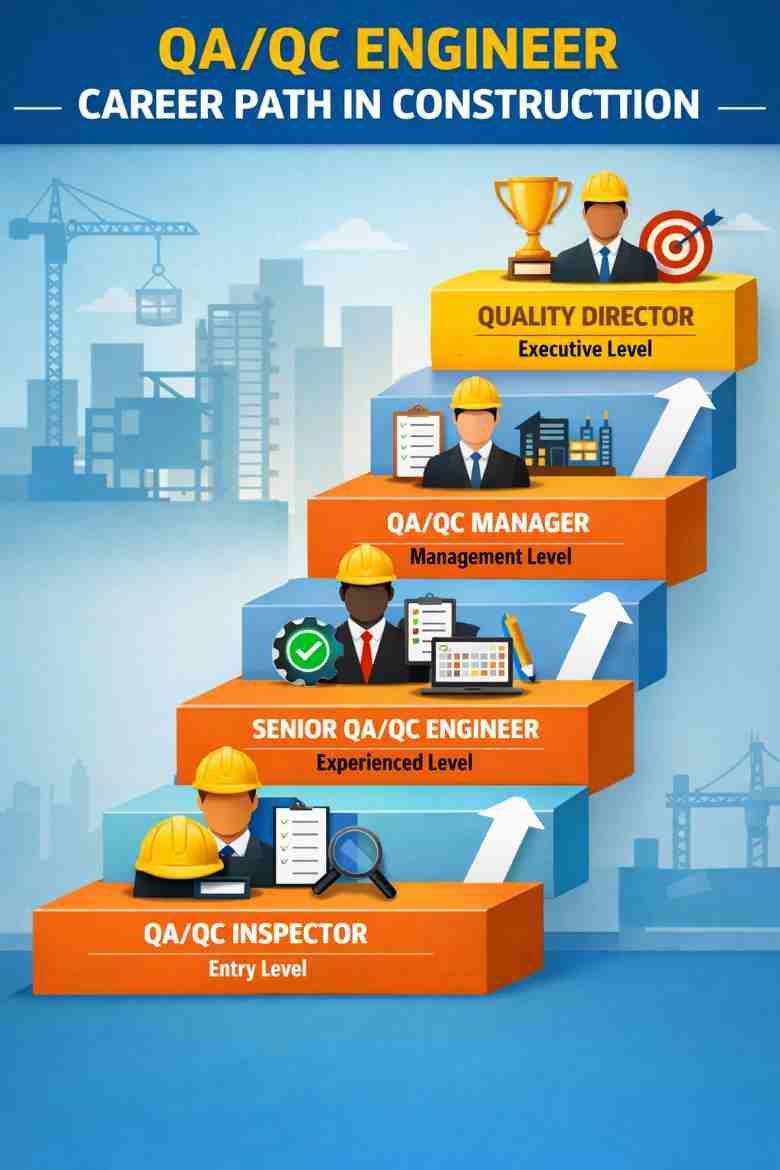
QA/QC Inspector → QA/QC Engineer → Senior QA/QC Engineer → QA/QC Manager → Quality Director1. QA/QC Inspector (Entry Level)
- 0-2 years experience
- Focus on site inspections and documentation
- Salary range: $50,000-$65,000
2. QA/QC Engineer (Mid Level)
- 2-5 years experience
- Manages quality systems for projects
- Salary range: $75,000-$100,000
3. Senior QA/QC Engineer
- 5-8 years experience
- Oversees multiple projects or complex single projects
- Salary range: $100,000-$125,000
4. QA/QC Manager
- 8-12 years experience
- Leads quality departments
- Salary range: $120,000-$150,000
5. Quality Director / Head of Quality
- 12+ years experience
- Strategic quality leadership
- Salary range: $150,000-$200,000+
Alternative Career Paths
- Project Management: Transition to PM roles leveraging quality expertise
- Quality Consulting: Independent consulting for multiple clients
- Training & Development: Quality training specialist roles
- Regulatory Compliance: Specialized compliance officer positions
- HSE Integration: Combined Quality, Health, Safety, Environment roles
Job Outlook
According to Bureau of Labor Statistics projections, quality assurance roles show strong growth:
- 11.2% growth projected from 2022-2032
- 24,100 job openings annually on average
- Engineering employment overall growing faster than average
The 2026 Engineering and Construction Outlook from Deloitte indicates persistent demand driven by:
- Data center construction expansion
- Renewable energy projects
- Infrastructure modernization
- Stricter regulatory requirements
Related: Career News in Construction
Technology and Digital Transformation in QA/QC
The construction industry is undergoing rapid digital transformation, and QA/QC processes are at the forefront of this change.
Key Technology Trends for 2026
1. AI-Powered Quality Analytics
According to Deloitte’s 2026 Construction Outlook, AI agents are moving beyond experimentation to impact real-world construction workflows. For QA/QC, this means:
- Automated defect detection from site photos
- Predictive analytics for quality issues
- Natural language processing for documentation
2. Digital Twins
Digital twins are becoming standard practice, enabling:
- Real-time quality monitoring
- Virtual inspections and verifications
- Historical quality data integration
3. Mobile-First Quality Management
Cloud-based construction software is projected to reach $5.8 billion by 2032. QA/QC benefits include:
- Field-based inspection apps
- Real-time documentation capture
- Instant NCR generation and tracking
4. IoT and Sensor Integration
Internet of Things devices transform quality monitoring:
- Concrete curing sensors
- Environmental monitoring
- Equipment calibration tracking
5. BIM Integration
Building Information Modeling enhances QA/QC through:
- 3D model-based inspection planning
- Clash detection before construction
- As-built verification against design models
Skills for the Digital Age
Modern QA/QC engineers should develop proficiency in:
- Quality management software platforms
- Data analysis and reporting tools
- Mobile inspection applications
- Basic programming/automation concepts
Related: Digital Construction Technology
Global Job Market Opportunities
High-Demand Regions for QA/QC Engineers
Middle East (UAE, Saudi Arabia, Qatar)
- Mega-infrastructure projects
- Premium salaries with tax advantages
- Projects: NEOM, Dubai developments, World Cup legacy
North America
- Data center construction boom
- Infrastructure modernization
- Renewable energy projects
Southeast Asia
- Rapid urbanization
- Manufacturing facility construction
- Infrastructure development
Australia
- Mining and resources sector
- Commercial construction growth
- Strict quality regulations
Requirements for International Work
- Professional engineering licenses
- International certifications (ISO, ASQ)
- Visa and work permit eligibility
- Cultural adaptability and language skills
Related: Construction Companies in Dubai UAE, Job Search Tips for Construction Professionals
Conclusion
The role of QA/QC engineers in construction has never been more vital. With construction technology advancing rapidly and quality expectations increasing, skilled professionals who can blend technical expertise with digital capabilities are in high demand.
Whether you’re starting your career or looking to advance, investing in professional development through certifications, staying current with industry trends, and building practical experience will position you for success in this rewarding field.
The construction industry’s commitment to quality, safety, and sustainability ensures that QA/QC engineers will remain essential to successful project delivery for years to come.
Ready to start your QA/QC career? Explore our construction job listings or browse interview preparation resources to land your dream role.
Download: Construction Jobs Interview: An Ultimate Interview Preparation Guide
Related Resources
- Top Construction Companies in India
- Civil Engineering Companies in the US
- Best Civil Engineering Software
- Construction Management Courses
- Building Information Modeling (BIM) Career Guide
How to Become a QA/QC Engineer
Step-by-Step Career Guide
- Step 1: Educational Foundation
Obtain a bachelor’s degree in Civil, Mechanical, or related engineering
Focus on courses covering materials, construction methods, and quality principles - Step 2: Gain Field Experience
Start as a site engineer or QA/QC inspector
Learn practical construction processes
Develop documentation and reporting skills - Step 3: Build Technical Knowledge
Study ISO 9001 and quality management systems
Learn material testing standards (ASTM, BS EN)
Understand building codes and regulations - Step 4: Obtain Certifications
Start with ISO Lead Auditor certification
Progress to ASQ certifications (CQE, CQA)
Consider specialized certifications (NDT, welding inspection) - Step 5: Develop Soft Skills
Improve communication and reporting abilities
Build leadership capabilities
Enhance problem-solving skills - Step 6: Expand Your Network
Join professional organizations (ASQ, ASCE)
Attend industry conferences
Connect with professionals on LinkedIn
Frequently Asked Questions
QA/QC stands for Quality Assurance/Quality Control. Quality Assurance (QA) focuses on preventing defects through systematic processes and procedures, while Quality Control (QC) involves inspecting and testing to identify defects. Together, they ensure construction projects meet required quality standards, safety regulations, and client specifications.
Essential skills for QA/QC engineers include:
Strong understanding of quality control principles and ISO standards
Knowledge of construction materials, methods, and testing procedures
Excellent attention to detail and problem-solving abilities
Effective communication skills for stakeholder coordination
Proficiency in quality management software and documentation systems
Familiarity with relevant building codes and regulations
The most rewarding aspect is knowing that your work directly contributes to safe, high-quality construction that protects public safety. QA/QC engineers play a critical role in preventing structural failures, ensuring regulatory compliance, and delivering projects that meet or exceed client expectations.
To become a QA/QC engineer, you typically need:
Bachelor’s degree in Civil Engineering, Mechanical Engineering, or related field
2-5 years of construction industry experience
Knowledge of quality management systems (ISO 9001)
Professional certifications (ASQ CQE, ISO Lead Auditor) are highly valued
Understanding of relevant building codes and construction standards
According to 2026 salary data, QA/QC engineer salaries vary by location:
United States: $99,216 average (Glassdoor)
India: ₹4,50,000 average (Talent.com)
UAE: AED 180,000 average
Senior professionals can earn $130,000-$175,000+ in the US
Typically, it takes 4-6 years to become a fully qualified QA/QC engineer:
4 years for a bachelor’s degree
1-2 years of entry-level experience as inspector or junior engineer
Additional time for certifications (6-12 months)
Yes, QA/QC engineering offers excellent career prospects:
Strong job growth (11.2% projected through 2032)
Competitive salaries with growth potential
Opportunities for international work
Clear career advancement paths
High job satisfaction from meaningful work
