

Last Updated on April 4, 2026 by Admin
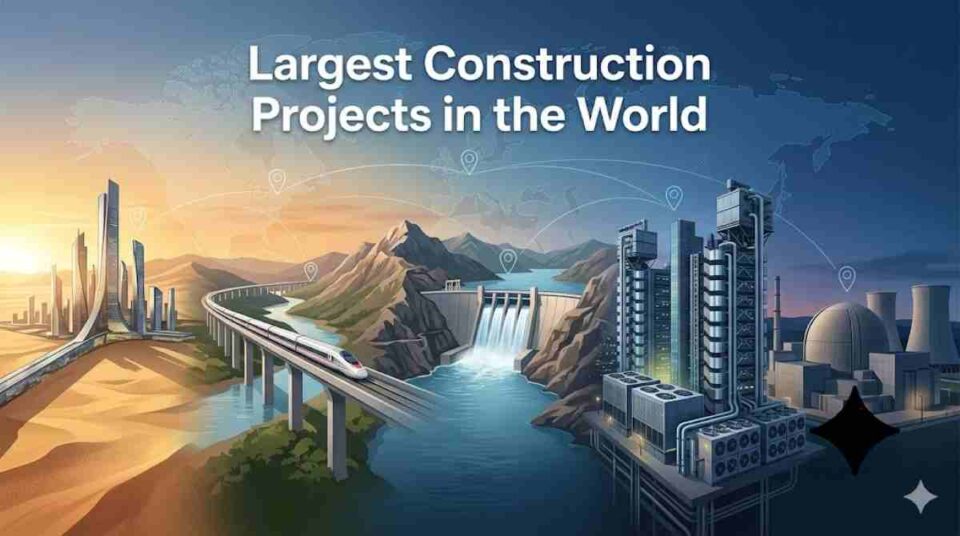
The scale of global construction in 2026 is unlike anything the world has seen before. From trillion-dollar smart cities in the Arabian desert to continent-spanning rail networks and AI data center campuses consuming more power than small nations, the largest construction projects in the world are redefining what is physically and financially possible in the built environment.
ConstructionCareerHub App is LIVE — built ONLY for construction careers. Don’t apply with a weak resume.
Get ATS-ready Resume Lab + Interview Copilot + Campus Placement Prep (resume screening, skill gaps, interview readiness) — in minutes & Other advanced features.
Explore Smarter Construction Career Tools →Quick check. Big impact. Start now.
Whether you are a civil engineer exploring international career opportunities, a construction management professional tracking industry trends, or a student planning your future in the AEC sector, understanding these megaprojects gives you a strategic edge. These projects are not just engineering marvels — they are employment engines, technology testbeds, and economic catalysts that shape career trajectories for hundreds of thousands of construction professionals worldwide.
In this comprehensive guide, we profile the top 20 largest construction projects currently underway or recently completed around the world in 2026, covering their budgets, technical scope, workforce requirements, current status, and what they mean for the future of the global construction industry.
Table of Contents
What Qualifies as a Megaproject?
A megaproject is generally defined as a large-scale construction or infrastructure initiative costing more than US $1 billion, involving complex engineering, multi-year timelines, and significant public or governmental attention. These projects typically span transportation, energy, urban development, industrial, and digital infrastructure sectors.
The defining characteristics of megaprojects include massive capital investment (often running into tens or hundreds of billions of dollars), multi-stakeholder coordination across governments, private firms, and international bodies, cutting-edge engineering techniques, and transformative socioeconomic impact on the regions they serve. Megaprojects also carry elevated levels of risk related to cost overruns, schedule delays, regulatory challenges, and workforce management — making experienced construction project managers essential to their success.
Top 20 Largest Construction Projects in the World 2026
The following megaprojects represent the most ambitious construction undertakings on the planet as of 2026, ranked by estimated total project cost.
1. NEOM (Saudi Arabia) — Estimated Cost: $500 Billion to $8.8 Trillion
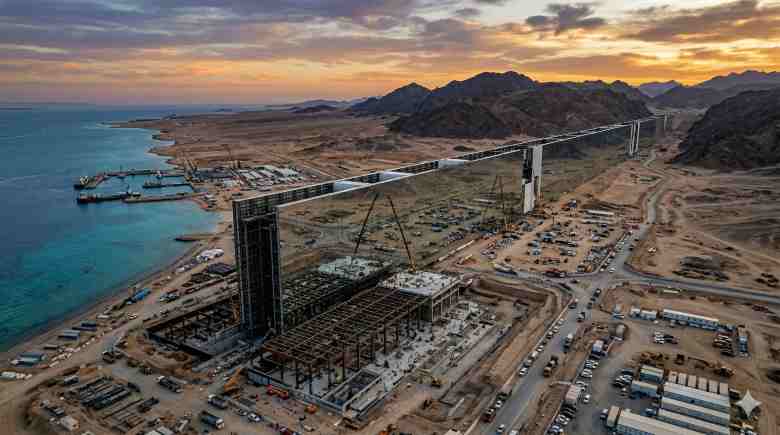
NEOM remains the world’s single largest megaproject by any measure. Located in Saudi Arabia’s northwest Tabuk Province along the Red Sea coast, NEOM is the flagship initiative of Crown Prince Mohammed bin Salman’s Vision 2030 economic diversification strategy. The development encompasses several sub-projects including The Line (a planned 170-kilometre linear city), Trojena (a mountain resort and ski village), Oxagon (a floating industrial port), and Sindalah (a luxury island resort).
2026 Status: NEOM has entered a significant phase of recalibration. Construction on The Line was suspended in September 2025 after approximately 2.4 kilometres of foundation work had been completed and roughly $50 billion spent. An internal audit reported by the Wall Street Journal projected total costs could reach $8.8 trillion with a realistic completion timeline extending to 2080. The Asian Winter Games planned for Trojena in 2029 were postponed indefinitely in January 2026. Several major contracts have been terminated, including Hyundai’s tunnel contract, Eversendai’s steel contract for Trojena, and Webuild’s dam construction contract.
However, NEOM is not entirely stalled. The Oxagon Green Hydrogen plant is approximately 80% complete at a cost of $8.4 billion and is on track for mid-2026 delivery. Sindalah island is proceeding toward a soft public opening in late 2026. The project is pivoting toward AI data centre infrastructure, with a $5 billion DataVolt partnership announced in February 2026.
Career Relevance: Despite the scale-backs, NEOM continues to employ thousands of construction professionals. Roles in green hydrogen infrastructure, data centre construction, and hospitality development remain active. International contractors including Bechtel, Fluor, and AECOM have been involved at various stages. For professionals interested in working on Saudi Vision 2030 projects, expertise in construction management and digital construction tools is highly valued.
2. Stargate AI Infrastructure Project (USA and Global) — Estimated Cost: $500 Billion+
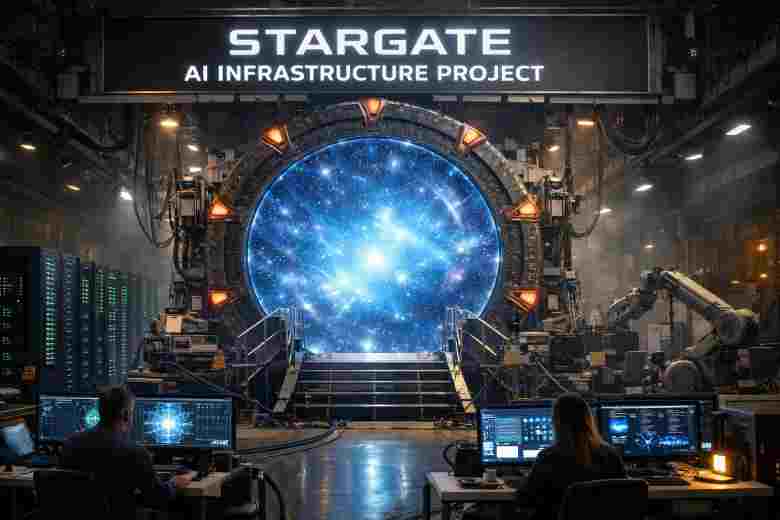
The Stargate Project is a joint venture between OpenAI, SoftBank, Oracle, and Abu Dhabi’s MGX, announced at the White House in January 2025 by President Donald Trump. It represents the largest AI infrastructure buildout in history, with plans to invest $500 billion in data centre construction across the United States and internationally by 2029, targeting 10 gigawatts of total AI compute capacity.
2026 Status: The flagship Stargate campus in Abilene, Texas covers approximately 4 million square feet with a planned capacity of 1.2 GW. The first two buildings became operational in September 2025 with NVIDIA GB200 AI racks delivered and early training workloads running. Over 6,400 construction workers are employed at the Abilene site alone. Five additional US sites have been announced including locations in Shackelford County (Texas), Doña Ana County (New Mexico), Lordstown (Ohio), Milam County (Texas), and a $7 billion, 1 GW facility in Saline Township, Michigan. International expansion includes projects in the UAE, South Korea, Canada, the UK, Germany, Norway, and Argentina.
Career Relevance: Stargate is creating an unprecedented volume of construction jobs across the United States. Data centre construction requires specialized expertise in electrical systems, cooling infrastructure, structural engineering for heavy equipment loads, and MEP coordination. The project has already created thousands of jobs spanning electricians, equipment operators, technicians, and construction managers from more than 20 states. Learn more about the companies involved in our guide to top industrial construction companies in the USA.
3. California High-Speed Rail (USA) — Estimated Cost: $135 Billion+
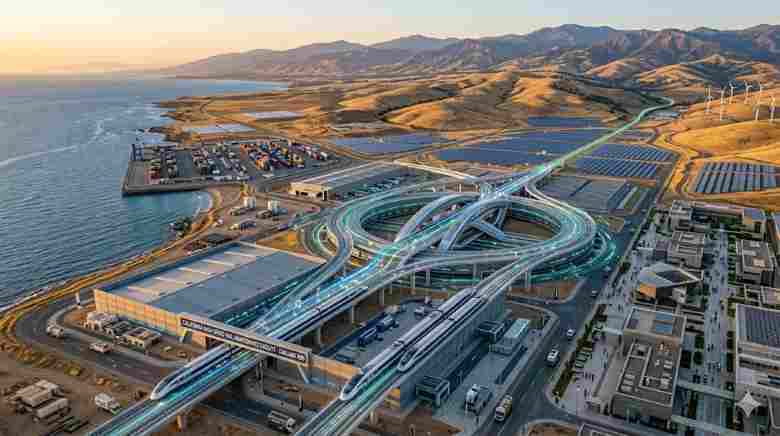
The California High-Speed Rail (CHSR) project is the largest active transportation megaproject in North America. The fully electric rail system aims to connect San Francisco and Los Angeles (Phase 1), with extensions planned to San Diego and Sacramento (Phase 2). Designed for speeds up to 200 miles per hour, the system will link eight of California’s ten largest urban centres.
2026 Status: Construction is underway along 119 miles in the Central Valley, with 86 of 92 structures in progress or completed, 70 miles of guideway finished, and 99% of required property secured. Some 463 of the 494 miles in the Phase 1 corridor have received environmental clearance. The project has generated over 16,100 construction jobs with up to 1,700 workers on site daily. California committed $1 billion annually from cap-and-trade revenues and Governor Newsom’s 2026 budget proposal could provide a major additional funding boost. Design revisions released in 2025 reduce tunnels and adjust alignments to cut costs.
Career Relevance: CHSR offers long-term career opportunities for civil engineers, tunnel boring specialists, rail infrastructure engineers, and project managers. Hundreds of small and minority-owned businesses participate in the project’s supply chain.
4. Trans-European Transport Network — TEN-T (European Union) — Estimated Cost: €500 Billion+

The Trans-European Transport Network is a continent-wide infrastructure programme connecting the entire European Union through an integrated system of railways, roads, ports, inland waterways, airports, and logistics hubs. TEN-T is designed to eliminate bottlenecks, improve cross-border connectivity, and facilitate the movement of people and goods across national boundaries.
2026 Status: Projects must align across national borders, follow shared technical standards, and meet major completion targets set for 2030 and 2040 depending on the corridor and funding availability. Active construction spans multiple countries simultaneously, making TEN-T one of the most complex multi-stakeholder megaprojects ever undertaken.
Career Relevance: TEN-T creates sustained demand for transportation engineers, infrastructure planners, BIM professionals, and multilingual project managers across Europe. The programme’s scale means construction opportunities will persist for decades.
5. Grand Ethiopian Renaissance Dam — GERD (Ethiopia) — Cost: $4.8 Billion
The Grand Ethiopian Renaissance Dam is Africa’s largest hydroelectric project, situated on the Blue Nile near Ethiopia’s border with Sudan. The dam spans 1.8 kilometres in width, stands 145 metres high, and can hold up to 74 billion cubic metres of water. At full capacity, it generates over 5,150 megawatts of electricity — more than doubling Ethiopia’s previous power output.
2026 Status: GERD was officially inaugurated on 9 September 2025, and Prime Minister Abiy Ahmed confirmed full completion in February 2026. The dam was built entirely with domestic funding through government bonds and citizen contributions, without any external aid or loans. Ethiopia now positions itself as a potential energy exporter across East Africa, having signed a power purchase agreement with Kenya for 200–400 MW over 25 years. Diplomatic tensions with Egypt and Sudan over Nile water sharing remain unresolved.
Career Relevance: GERD demonstrates that developing nations can execute world-class infrastructure independently. The project has built a generation of Ethiopian dam engineers, hydrologists, and construction managers. Similar large-scale hydropower opportunities exist across Africa as the continent pursues electrification.
6. Brightline West High-Speed Rail (USA) — Estimated Cost: $21 Billion+
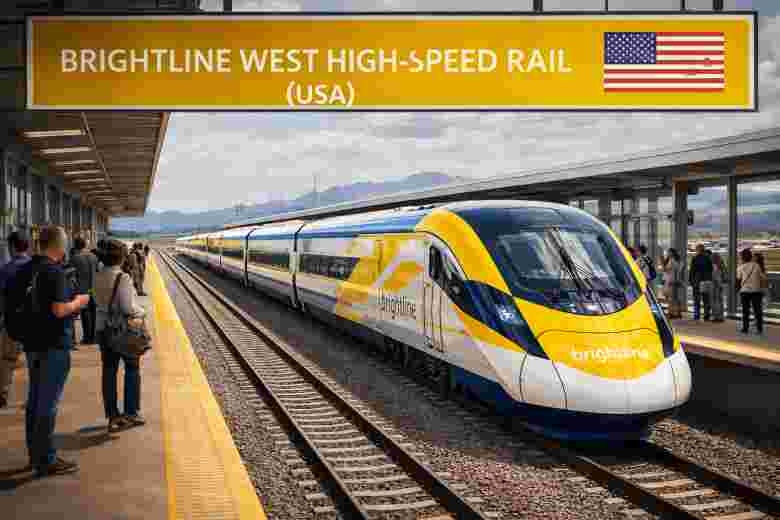
Brightline West is building a high-speed rail service connecting Las Vegas, Nevada to Southern California. The project promises faster travel between the two regions, reduced highway congestion, and significant environmental benefits by removing an estimated three million cars annually from Interstate 15.
2026 Status: Construction is actively underway with tens of thousands of jobs being generated across the project’s lifecycle. The rail line is one of the marquee transportation megaprojects breaking ground in 2026.
Career Relevance: Brightline West creates opportunities for civil engineers, rail construction specialists, heavy equipment operators, and construction managers in the rapidly growing US high-speed rail sector.
7. Chūō Shinkansen Maglev Line (Japan) — Estimated Cost: $90 Billion+
Japan’s Chūō Shinkansen is a magnetic levitation railway being built by JR Central to connect Tokyo and Osaka via Nagoya. Trains are designed to travel at extreme speeds using maglev technology, requiring highly precise guideways, power systems, and safety controls. Much of the line runs underground, including long tunnel sections beneath mountains and dense metropolitan areas.
2026 Status: Tunnelling remains the project’s defining engineering challenge. Crews are boring deep below urban neighbourhoods, rivers, and existing rail lines while minimising surface disruption. Underground stations are being carved out at depths of hundreds of feet below ground, integrated with existing transit systems. The initial Tokyo-Nagoya segment faces delays related to water table concerns in the Shizuoka Prefecture, but JR Central continues advancing construction on other segments.
Career Relevance: The Chūō Shinkansen represents the cutting edge of tunnel boring technology, underground station construction, and maglev system engineering. Professionals with tunnel construction and underground rail experience are in high demand on this project.
8. Al Maktoum International Airport Expansion (Dubai, UAE) — Estimated Cost: $35 Billion+
Dubai is building one of the world’s largest airport expansions at Al Maktoum International Airport (Dubai World Central). When completed, the airport is designed to handle over 260 million passengers annually, making it the busiest airport on Earth and a central hub for global aviation.
2026 Status: Major construction phases are underway with terminal buildings, runway systems, and supporting infrastructure progressing. The project reflects Dubai’s continued investment in positioning itself as a global aviation and logistics hub.
Career Relevance: Airport construction is among the most complex project types, requiring expertise in structural engineering, MEP systems, runway engineering, and logistics coordination. The Dubai expansion creates career opportunities for professionals from top global construction companies already operating in the Gulf region.
9. Gulf Railway (GCC Countries) — Estimated Cost: $250 Billion+
The Gulf Railway is a planned 2,177-kilometre rail network connecting all six Gulf Cooperation Council member states: Saudi Arabia, the UAE, Bahrain, Qatar, Oman, and Kuwait. The railway will carry both passengers and freight, transforming regional connectivity and trade logistics across the Arabian Peninsula.
2026 Status: Individual country segments are at various stages of planning and construction. Saudi Arabia’s segment connects with its broader national rail programme, while the UAE’s Etihad Rail has made significant progress on its domestic network. Geopolitical dynamics and funding coordination among the six member states continue to influence the project’s overall timeline.
Career Relevance: The Gulf Railway creates long-term demand for railway engineers, signalling specialists, and heavy civil construction professionals across the Middle East. The project also drives demand for construction management and logistics expertise.
10. South-North Water Transfer Project (China) — Estimated Cost: $80 Billion+
China’s South-North Water Transfer Project is one of the most ambitious water infrastructure undertakings in human history. The project diverts water from the Yangtze River in southern China to the arid northern regions, serving hundreds of millions of people through three separate route systems: the Eastern Route, the Central Route, and the planned Western Route.
2026 Status: The Eastern and Central Routes are operational and delivering water to northern China. The Western Route, which involves the most challenging engineering through the Tibetan Plateau, remains in the planning and feasibility study phase. The project continues to expand and optimize its existing infrastructure.
Career Relevance: Water infrastructure engineering is one of the world’s most critical and growing construction specialisations. The South-North Water Transfer Project has trained a generation of Chinese hydraulic engineers and tunnel construction specialists.
11. Kashagan Oil Field Development (Kazakhstan) — Estimated Cost: $55 Billion+
The Kashagan oil field in Kazakhstan’s section of the Caspian Sea is one of the world’s most expensive and technically complex oil and gas construction projects. Instead of traditional offshore platforms, much of the field was developed using artificial islands designed to withstand shallow water, ice formation, and extreme temperature swings.
2026 Status: Ongoing upgrades and technical adjustments continue as operators respond to harsh environmental conditions and evolving production requirements. Billions of dollars in additional investment are planned for expansion phases.
Career Relevance: Kashagan demonstrates the extreme engineering challenges of Arctic and sub-Arctic oil and gas construction. Professionals with experience in offshore construction, pipeline engineering, and process facilities are well positioned for opportunities on similar megaprojects globally.
12. Hinkley Point C Nuclear Power Station (United Kingdom) — Estimated Cost: £33 Billion+ ($42 Billion+)
Hinkley Point C in Somerset, England is the first new nuclear power station to be built in the UK in over two decades. Being constructed by EDF Energy, the plant will feature two European Pressurized Reactor (EPR) units with a combined capacity of 3.2 GW — enough to power approximately six million homes.
2026 Status: Construction is well advanced with thousands of workers on site. The project has experienced significant cost escalations and schedule delays since its original approval, but remains a cornerstone of the UK’s low-carbon energy strategy. The first reactor unit is expected to begin generating power in the late 2020s.
Career Relevance: Nuclear construction requires specialised skills in radiation protection, quality assurance, heavy civil works, and regulatory compliance. Hinkley Point C is creating a new generation of nuclear construction professionals in the UK.
13. Mumbai–Ahmedabad High-Speed Rail (India) — Estimated Cost: ₹1.1 Lakh Crore ($15 Billion+)
India’s first bullet train corridor will connect Mumbai and Ahmedabad across a distance of 508 kilometres. Based on Japan’s Shinkansen technology, the train will operate at speeds up to 350 km/h, reducing travel time between the two cities from over seven hours to approximately two hours.
2026 Status: The project is being executed with Japanese technical and financial collaboration through the Japan International Cooperation Agency (JICA). Construction of viaducts, stations, and a 21-kilometre undersea tunnel beneath the Thane Creek is progressing. The Gujarat segment is more advanced than the Maharashtra segment due to earlier land acquisition completion.
Career Relevance: This project represents India’s entry into high-speed rail construction and is creating thousands of engineering and construction jobs. Indian construction professionals are gaining exposure to Japanese Shinkansen technology, quality standards, and project management practices. For Indian engineers seeking career growth, explore tools at ConstructionCareerHub.com.
14. HS2 High-Speed Railway (United Kingdom) — Estimated Cost: £66 Billion+ ($85 Billion+)
HS2 is the UK’s most significant rail infrastructure project in a generation, designed to connect London with Birmingham (Phase 1), and originally planned to extend to Manchester and Leeds. The railway is designed for speeds of up to 360 km/h and aims to reduce intercity travel times while increasing rail capacity.
2026 Status: Phase 1 construction between London Euston and Birmingham is actively underway. Tunnel boring machines are operating on the project’s extensive tunnel sections. However, the project has faced significant budget increases and the northern legs (Phase 2) were cancelled by the UK government in 2023, reducing the overall scope.
Career Relevance: HS2 employs thousands of construction workers and engineers and has invested heavily in apprenticeship programmes and skills development. The project is a major employer for tunnel engineers, structural engineers, and rail construction specialists in the UK.
15. New Administrative Capital (Egypt) — Estimated Cost: $58 Billion+
Egypt is building an entirely new administrative capital city approximately 45 kilometres east of Cairo. The new capital is designed to house government ministries, diplomatic missions, a central business district with Africa’s tallest building (the Iconic Tower at 385 metres), residential areas for 6.5 million people, and a monorail system.
2026 Status: Government ministries have begun relocating to the new capital. The Iconic Tower and surrounding skyscrapers in the Central Business District are nearing completion. Infrastructure including roads, utilities, and public transport is progressing rapidly. The project is being constructed primarily by Egyptian military-linked construction firms and Chinese contractors.
Career Relevance: Egypt’s new capital is creating massive demand for construction professionals across all disciplines. The project offers exposure to large-scale urban development, high-rise construction, and infrastructure engineering.
16. Istanbul Canal (Turkey) — Estimated Cost: $15–25 Billion
The Istanbul Canal is a proposed 45-kilometre artificial sea-level waterway in Istanbul, Turkey, designed to connect the Black Sea to the Sea of Marmara, running parallel to the Bosporus Strait. The project aims to reduce maritime traffic congestion in the Bosporus and create a new urban development corridor.
2026 Status: Preliminary construction activities and land preparation have commenced, though the project remains politically controversial within Turkey and faces environmental opposition. The canal’s completion would represent one of the most significant artificial waterway constructions since the Suez Canal expansion.
Career Relevance: Maritime and hydraulic engineering, dredging operations, and environmental impact management are key skills required for this project.
17. Amazon Data Centre Expansion — Indiana (USA) — Estimated Cost: $15 Billion
Amazon is constructing Indiana’s largest-ever data centre project as part of its massive cloud computing infrastructure expansion. The investment is designed to significantly boost AWS cloud computing capabilities and regional technology growth.
2026 Status: Construction is creating more than 1,000 construction roles and hundreds of permanent technology positions. The project is part of the broader megaproject boom driven by AI and cloud computing demand across the United States.
Career Relevance: Data centre construction is the fastest-growing segment in US commercial construction, with the market valued at $69.56 billion and growing at 6.3% annually. Professionals with MEP engineering, electrical infrastructure, and commercial construction experience are in exceptional demand.
18. Meta Hyperion Data Centre — Louisiana (USA) — Estimated Cost: $7.5 Billion
Meta is building a cutting-edge data centre spanning over 1.4 million square feet in Louisiana, comprising multiple buildings. The Hyperion facility will enhance Meta’s cloud services and support its growing AI and digital infrastructure requirements.
2026 Status: Construction is actively underway. The project is one of the largest single-site technology infrastructure investments in Louisiana’s history, generating significant construction employment.
Career Relevance: Like other hyperscale data centre projects, Meta Hyperion requires specialised construction skills in large-scale MEP systems, precision concrete work, and advanced cooling technologies.
19. Amtrak Northeast Corridor — Frederick Douglass Tunnel (USA) — Estimated Cost: $5.9 Billion
The Frederick Douglass Tunnel project in Maryland is a major modernisation of Amtrak’s Northeast Corridor. The upgrade includes replacing the 150-year-old Baltimore & Potomac Tunnel with a new twin-bore tunnel, adding four new tracks, and installing upgraded signalling and ventilation systems to improve capacity and reliability for millions of passengers.
2026 Status: Construction is advancing as one of the key megaprojects breaking ground in the US rail infrastructure sector. The project addresses critical capacity bottlenecks on America’s busiest passenger rail corridor.
Career Relevance: Tunnel boring, rail engineering, signalling systems, and heavy civil construction skills are essential for this project. The Northeast Corridor modernisation represents a long-term source of infrastructure construction employment.
20. Three Gorges Dam — Ongoing Operations and Expansion (China) — Original Cost: $31 Billion+
The Three Gorges Dam on the Yangtze River remains the world’s largest hydroelectric power station by installed capacity at 22,500 MW. While the dam’s primary construction was completed in 2006 and it became fully operational in 2012, ongoing maintenance, flood management operations, and associated infrastructure development continue to represent a significant construction and engineering commitment.
2026 Status: The dam continues to operate as a critical flood control, power generation, and navigation infrastructure asset. Ongoing construction and maintenance work includes sediment management, power system upgrades, and downstream infrastructure improvements.
Career Relevance: Large dam operations and maintenance require specialised dam engineering, hydrological monitoring, and infrastructure lifecycle management skills.
Key Trends Shaping Global Megaprojects in 2026
Several transformative trends are reshaping how the world’s largest construction projects are planned, financed, and delivered:
AI and Data Centre Construction Boom: The surge in artificial intelligence demand has made data centre construction the fastest-growing megaproject category globally. Projects like Stargate, Amazon Indiana, and Meta Hyperion collectively represent hundreds of billions in investment. This trend is creating acute demand for MEP engineers, electrical infrastructure specialists, and construction managers with experience in mission-critical facilities.
Digital Construction Technology: BIM, digital twins, AI-driven scheduling, and drone-based surveying are now standard on megaprojects. Construction managers who lack proficiency in these tools face a significant competitive disadvantage. Explore digital construction career opportunities through our guide on high-demand careers in BIM, tech management, and drone operations.
Sustainability and Green Energy: From GERD’s renewable hydropower to NEOM’s green hydrogen pivot and the electrification of high-speed rail networks, sustainability is no longer optional in megaproject planning. Green building certifications, carbon-neutral construction methods, and renewable energy integration are becoming standard requirements.
Skilled Labour Shortage: The global construction industry faces a critical labour gap. The US alone needs approximately 500,000 additional workers in 2026, according to Deloitte’s Engineering & Construction Industry Outlook. This shortage is driving up compensation, accelerating technology adoption, and creating urgent career opportunities for qualified professionals at all experience levels.
Geopolitical and Fiscal Realities: NEOM’s dramatic scale-back demonstrates that even the most well-funded megaprojects are vulnerable to oil price fluctuations, geopolitical disruptions, and fiscal constraints. Risk management, phased delivery, and realistic scope planning are increasingly valued skills in megaproject management.
Career Opportunities in Global Megaprojects
The megaprojects listed above collectively employ hundreds of thousands of construction professionals worldwide. The most in-demand roles on these projects include senior project managers with megaproject experience, tunnel boring and underground construction specialists, MEP engineers for data centres and industrial facilities, BIM managers and digital construction coordinators, rail and transportation infrastructure engineers, sustainability consultants and green building specialists, quantity surveyors and cost engineers, and health, safety, and environment (HSE) managers.
For construction professionals looking to position themselves for megaproject careers, developing expertise in construction project management certification is an excellent starting point. Additionally, building proficiency in digital construction tools and pursuing a construction management degree can open doors to leadership positions on major projects globally.
For personalised career tools including ATS-ready resume building, interview preparation, and skill gap analysis specifically designed for construction professionals, visit ConstructionCareerHub.com.
Recommended Courses for Megaproject Careers
Building the right skills is essential for working on the world’s largest construction projects. The following online courses from leading platforms can help you develop megaproject-relevant expertise:
- Construction Management Specialization — Columbia University (Coursera) — Covers project planning, scheduling, cost estimation, and risk management for complex construction projects.
- Project Management MicroMasters — edX — Provides advanced project management competencies applicable to infrastructure and megaproject environments.
- BIM and Revit for Beginners — Udemy — A practical introduction to Building Information Modeling, the digital backbone of modern megaproject coordination.
Recommended Ebooks for Construction Professionals
Supplement your knowledge with these targeted digital resources:
- Construction Job Interview Guide — Prepare for interviews with top megaproject employers using 300+ industry-specific questions and expert answers.
- Civil Engineering Career Ebook — Comprehensive career planning resource for civil engineers targeting infrastructure and megaproject roles.
- Construction Career Bundle — The complete career toolkit including resume templates, interview guides, and career planning frameworks for construction professionals at every level.
FAQ — Largest Construction Projects in the World 2026
What is the largest construction project in the world in 2026?
NEOM in Saudi Arabia remains the world’s largest construction project by estimated total cost, though it has been significantly scaled back. The Line’s construction was suspended in September 2025, and the project is pivoting toward AI data centres and green hydrogen infrastructure. In terms of active construction spending, the Stargate AI Infrastructure Project in the United States ($500 billion) is the most actively funded megaproject in 2026.
How many jobs do megaprojects create?
Individual megaprojects can create thousands to tens of thousands of construction jobs. The Stargate project alone employs over 6,400 construction workers at its Abilene, Texas campus and expects to create over 100,000 total jobs. California’s High-Speed Rail has generated over 16,100 construction jobs. Collectively, the world’s active megaprojects employ hundreds of thousands of construction professionals.
What skills are most in demand for megaproject construction careers?
The most sought-after skills for megaproject careers include construction project management, BIM and digital construction tools, tunnel boring and underground construction, MEP engineering for data centres and industrial facilities, rail and transportation infrastructure engineering, cost estimation and quantity surveying, and health, safety, and environment management.
Which countries have the most megaprojects under construction in 2026?
The United States leads in active megaproject investment, driven primarily by AI data centre construction (Stargate, Amazon, Meta) and transportation infrastructure (California HSR, Brightline West, Amtrak Northeast Corridor). Saudi Arabia, China, the United Kingdom, India, Japan, Egypt, and the European Union collectively also have significant megaproject activity.
Is the construction industry growing globally in 2026?
Yes. The global construction market is valued at approximately $13.4 trillion in 2025 and is projected to reach $20.6 trillion by 2033 at a CAGR of 5.51%. Megaproject investment is a significant driver of this growth, particularly in data centres, semiconductor facilities, transportation infrastructure, and renewable energy.
What is a megaproject in construction?
A megaproject is a large-scale construction or infrastructure initiative typically costing more than US $1 billion, involving complex engineering, multi-year timelines, and significant public or governmental attention. Megaprojects span sectors including transportation, energy, urban development, industrial, and digital infrastructure.
How can I get hired for a megaproject construction job?
To position yourself for megaproject employment, develop specialised skills in high-demand areas such as BIM, project management, or MEP engineering. Obtain industry-recognised certifications like PMP, CCM, or BIM certification. Build your professional network through industry events and associations. Prepare thoroughly for interviews using targeted resources, and consider leveraging AI-powered career tools at ConstructionCareerHub.com for resume optimisation and interview preparation.
This article was researched and written by the editorial team at ConstructionPlacements.com, drawing on verified industry reports, government announcements, and expert analysis from leading construction and infrastructure publications. For the latest construction career opportunities and industry insights, visit www.constructionplacements.com.
