

Last Updated on April 7, 2026 by Admin
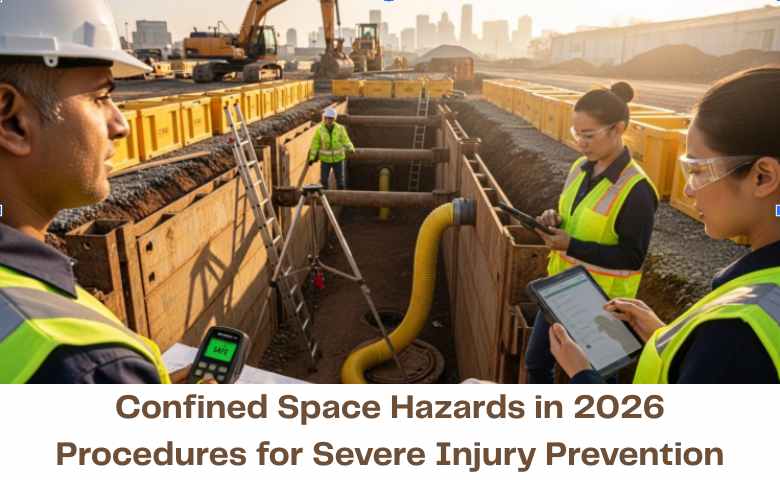
Confined Space Hazards encompass the severe physical and atmospheric hazards present in confined industrial areas such as sewers, manholes, and trenches. Site managers must implement rigorous safety procedures to prevent fatalities and severe injuries among infrastructure and municipal workers. The fatality rate for waste and recycling collection workers reached 37.4 per 100,000 employees in 2024, making it the fifth deadliest occupation in the nation. This guide outlines the critical protocols for toxic gas detection, trench wall security, and the implementation of an emergency rescue plan.
ConstructionCareerHub App is LIVE — built ONLY for construction careers. Don’t apply with a weak resume.
Get ATS-ready Resume Lab + Interview Copilot + Campus Placement Prep (resume screening, skill gaps, interview readiness) — in minutes & Other advanced features.
Explore Smarter Construction Career Tools →Quick check. Big impact. Start now.
Table of Contents
Identifying and Assessing Confined Space Hazards in 2026
Site managers must identify toxic environments and physical risks before authorizing any task within restricted zones. Comprehensive hazard assessments ensure safety teams recognize specific dangers before workers enter potentially lethal conditions.
Atmospheric Hazards and Toxic Gas Detection
Invisible atmospheric threats, including toxic sewer gas containing hydrogen sulfide and carbon monoxide, present immediate, life-threatening risks to underground workers. Oxygen deficiency can rapidly incapacitate personnel without warning. OSHA recently fined Construction Labor Services Inc. $258,707 following two fatalities from sewage gas in a Mobile, Alabama manhole. The federal agency determined the company lacked acceptable entry condition procedures and failed to maintain proper atmospheric testing protocols.
Physical Hazards: Trench Walls and Engulfment Risks
Unstable earth and sudden trench collapses present severe physical hazards during excavation operations. Soil displacement traps personnel under thousands of pounds of dirt within seconds, making immediate escape impossible. OSHA is currently investigating an incident in Cape Coral where a construction worker remained trapped inside a 12-foot trench for hours. The construction site lacked a mandatory trench box, and the managing company had a history of previous safety fines.
Establishing Safe Entry Conditions and Mitigation Protocols
Safety professionals establish strict entry conditions and deploy specialized equipment to neutralize identified workplace threats. Mandatory mitigation protocols prevent accidents by completely isolating the hazardous environment from external energy sources.
Required Safety Equipment and Personal Protective Gear
Project managers mandate the use of specific personal protective equipment based on the site’s unique hazard category. The following table details the mitigation protocols and essential safety equipment required for safe operations.
| Table 1: Comparison of Confined Space Hazard Categories and Mitigation Requirements | |||
|---|---|---|---|
| Hazard Category | Specific Risk Factor | Primary Mitigation Protocol | Essential Safety Equipment |
| Atmospheric | Toxic Sewer Gas / Oxygen Deficiency | Continuous Pre-entry Air Monitoring | 4-Gas Monitor, SCBA |
| Physical | Trench Collapse / Engulfment | Shoring, Shielding, and Sloping | Trench Box, Hydraulic Shores |
| Mechanical | Accidental Machine Activation | Complete Energy Isolation | Lockout/Tagout (LOTO) Devices |
Step-by-Step Confined Space Entry Procedure
Industry regulations require a universally accepted protocol for entering hazardous zones to ensure worker safety. Implementing tools like the Energy Wheel model during pre-task briefings helps workers identify 45% more hazards before work begins.
- Conduct pre-entry atmospheric testing using calibrated direct-reading instruments.
- Isolate the space by deploying Lockout/Tagout (LOTO) protocols on surrounding machinery.
- Install continuous forced air ventilation to eliminate atmospheric contaminants.
- Implement the Hierarchy of Energy Control to manage high-energy hazards prior to entry.
- Station a dedicated attendant outside the confined space to monitor entry conditions.
Emergency Rescue Plans and Proactive Risk Management
Actionable contingency plans and a strong culture of hazard reporting form the foundation of proactive risk management. Safety teams rely on these systems to prevent minor incidents from escalating into severe workplace tragedies.
Developing an Effective Non-Entry Rescue Strategy
A non-entry rescue strategy is the mandated first choice to retrieve incapacitated workers and prevent secondary fatalities. Safety personnel utilize mechanical tripods, heavy-duty winches, and full-body harnesses to extract victims without entering the hazardous zone themselves. Project supervisors must thoroughly document and physically rehearse these rescue plans before the construction project commences.
The Role of Consistent Incident Reporting
Outdated paper-based reporting systems create dangerous lag times, preventing safety managers from addressing hazards promptly. During the 2026 Construction Safety and Operations Forum, experts demonstrated that digitizing near-miss reporting helps site managers spot deteriorating conditions before severe harm occurs. Real-time digital documentation ensures safety officers can implement corrective measures instantly across multiple job sites.
Pursuing Legal Recourse After a Sanitation Worker Injury
Despite strict OSHA trench-safety protocols, third-party negligence frequently results in severe injuries to municipal personnel. The total recordable illness rate for solid waste collection workers surged to 13.8 per 100 FTE workers in 2023, highlighting the extreme dangers of the occupation. When manufacturers produce defective gas monitors or property owners fail to secure access points, affected employees face catastrophic losses. Injured personnel have the right to look beyond standard municipal benefits to cover their extensive medical damages and lost wages.
The Law Offices of Dennis P. Ryan stands as a trusted advocate for municipal workers facing these devastating workplace scenarios. The firm applies its deep knowledge of New York casework to hold negligent property owners and manufacturers fully accountable. Their attorneys successfully gather essential evidence and document safety breaches to build strong claims against responsible third parties. Dedicated legal representation proves vital for protecting your rights after a sanitation worker injury and securing maximum financial recovery.
The Future of Site Safety Practices
Comprehensive hazard identification, strict protocol enforcement, and legal accountability remain essential components of modern construction safety. Industry leaders continually update protective measures to shield personnel from invisible atmospheric hazards and structural failures. Strict adherence to confined space protocols is mandatory to ensure every worker’s safety on the job site.
The information provided in this article is for educational purposes only. Always consult with a licensed safety professional and adhere to local OSHA regulations.
Related Posts
- The Environments Best Suited for Corrosion Protection
- Best Heating Repair in Phoenix, AZ: 7 Companies Ranked for Speed, Price & Service
- Maximizing Safety in Construction Management
- 6 Most Common Construction Injuries
- Construction Site Safety Tips
