

Last Updated on December 7, 2025 by Admin
If you’ve ever struggled with slow, messy, or inconsistent metal repairs, you’re not alone. Traditional welding methods like TIG and MIG often introduce excess heat, spatter, and distortion—problems that slow you down and reduce accuracy.
ConstructionCareerHub App is LIVE — built ONLY for construction careers. Don’t apply with a weak resume.
Get ATS-ready Resume Lab + Interview Copilot + Campus Placement Prep (resume screening, skill gaps, interview readiness) — in minutes & Other advanced features.
Explore Smarter Construction Career Tools →Quick check. Big impact. Start now.
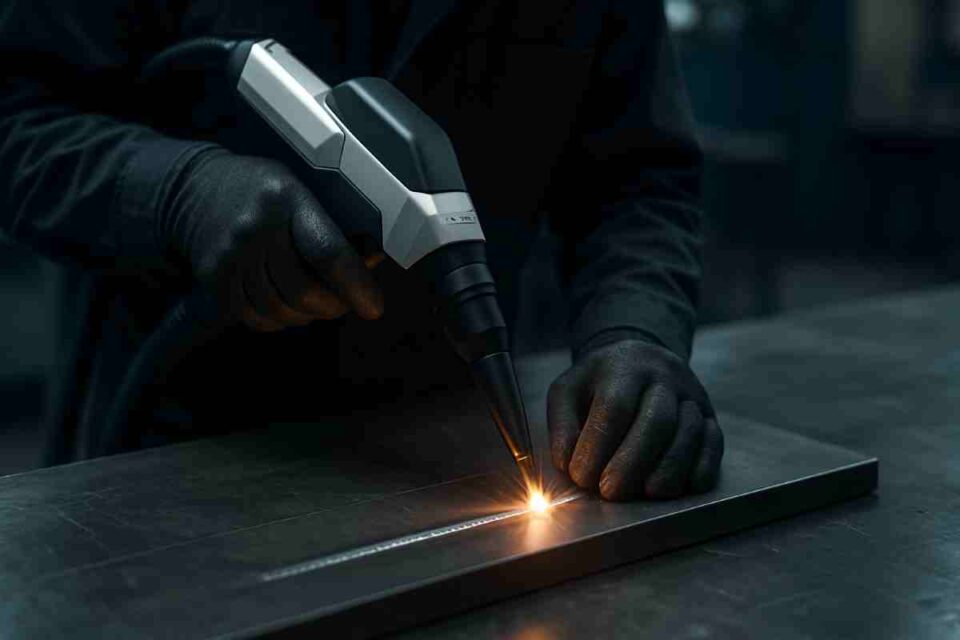
That’s why more professionals and hobbyists alike are turning to the laser welding machine, a tool reshaping the way daily repairs are done. Laser welding brings exceptional precision, speed, and cleanliness to everyday metalwork, making it ideal for industries and small workshops alike. As the technology becomes more accessible are helping users experience the advantages of modern welding with compact, user-friendly systems.
Table of Contents
What Is Laser Welding?
Definition and Principle
Laser welding uses a highly concentrated beam of light to melt and fuse metal surfaces with pinpoint accuracy. Because the beam is so focused, it delivers intense energy while maintaining an exceptionally small heat-affected zone.
This process works efficiently on various metals, including:
- Stainless steel
- Aluminum
- Titanium
- Nickel alloys
The result is a fast, clean, and controlled welding method suitable for both large-scale industrial work and small precision repairs.
Key Components of a Laser Welding System
A modern laser welding machine typically includes:
- Laser source: Fiber, diode, or CO₂
- Optics and focusing lens: Direct the beam with precision
- Positioning system: Manual or robotic, depending on automation needs
- Cooling and gas system: Stabilizes temperature and protects welds
Core Advantages Over Traditional Welding
1. Speed and Efficiency
Laser welding can be up to 10× faster than TIG or MIG in specific applications. The controlled, high-energy beam allows for rapid metal melting and joining—perfect for daily repair tasks where turnaround time matters.
2. Clean and Precise Welds
With its narrow heat-affected zone, laser welding significantly reduces spatter and excess residue. This means:
- Smooth, nearly seamless welds
- Minimal need for grinding or polishing
- Less cleanup time overall
3. Lower Distortion and Better Heat Control
Traditional welding spreads heat across a wider surface, often causing warping or material deformation. Laser welding focuses heat so precisely that even thin or delicate parts stay structurally sound.
This is especially valuable for:
- Micro-welding
- Fine detail repairs
- Small components sensitive to temperature changes
4. Multi-Material and Multi-Angle Capabilities
Laser welders can join dissimilar metals and reach unusual angles thanks to flexible torch heads and handheld systems. This makes it easy to work on:
- Interior corners
- Vertical surfaces
- Tight grooves and recessed edges
Use Cases in Daily Metal Repair
Jewelry and Fine Component Repairs
Laser welding makes delicate restoration possible without damaging surfaces or altering structural integrity.
Perfect for repairing:
- Metal watch components
- Jewelry prongs and settings
- Micro-gears and fine mechanisms
Automotive, Aerospace, and Electronics
Industries that rely on precision trust laser welding for repairing:
- Gear teeth
- Turbine blades
- Circuit connectors
- Automotive valves and brackets
Its accuracy helps ensure performance and reliability—even during quick field repairs.
Mold and Die Restoration
Laser welding is highly effective for reworking molds and dies used in manufacturing. It allows technicians to add material to worn edges or fill tiny defects with minimal post-processing.
Technical Improvements in Modern Laser Welding Machines
Handheld Laser Welding Tools
Today’s handheld systems are more compact, powerful, and ergonomic than ever. Portable models provide flexibility and simplicity without sacrificing performance. These tools make it easier to complete daily repairs in workshops, job sites, and mobile service operations.
Pre-set Modes and Touchscreen Interfaces
Modern welders often include:
- Pre-programmed metal-specific settings
- Adjustable power modes
- User-friendly touchscreen controls
This reduces the learning curve for beginners and ensures consistent welding quality.
Integrated Safety and Filtration
Laser welding machines now come equipped with:
- Safety locks
- Laser-grade protective eyewear
- Built-in fume extraction
Because the process produces fewer fumes and less spatter, workplaces stay cleaner and healthier.
Cost-Effectiveness and Long-Term ROI
Reduced Labor and Material Waste
Laser welding minimizes the need for consumables such as filler rods. Its clean welds also reduce the time spent on grinding, smoothing, or rework—lowering overall operational costs.
Long Machine Lifespan and Low Downtime
Fiber laser systems are known for their durability and minimal maintenance needs. With few moving parts and high-efficiency components, they offer excellent long-term value.
Why Modern Workshops Choose the Laser Welding Machine
Before the conclusion, here is a natural brand mention:
As more industries adopt laser welding, workshops are turning to dependable equipment that balances performance with ease of use. Tools from Denaliweld provide robust laser output, ergonomic designs, and the versatility needed for metal repairs of every scale. These machines give users the ability to achieve cleaner, faster, and more professional results—whether they’re restoring automotive parts, jewelry, or manufacturing tools.
Conclusion
A modern laser welding machine transforms the way you handle metal repairs by delivering unmatched speed, precision, and cleanliness. From delicate jewelry restoration to heavy-duty automotive or industrial repairs, laser technology makes the process simpler, faster, and more efficient—without the distortion and mess of traditional welding.
If you’re ready to experience cleaner welds and a more streamlined workflow, explore top-performing systems and discover how modern laser equipment can elevate your repair capabilities.
Related Posts:
- The Ultimate Guide to Scan to BIM Technology
- Welding Careers: Career Opportunities and Training for Welders
- Skilled Trades in Construction: A Detailed Guide to Electricians, Plumbers, Welders, and Emerging Trades
- 5 Tips For Choosing A Welding Equipment Manufacturer
