

Last Updated on April 3, 2026 by Admin
New York’s construction industry employs over 300,000 workers across the state, with the vast majority concentrated in New York City’s five boroughs. It is also one of the deadliest industries in the state. According to the New York Committee for Occupational Safety and Health (NYCOSH), 30 construction workers died on the job in New York City in 2023 alone — the highest annual total in a decade. In 2024, the city recorded 20 construction fatalities, and falls, slips, and struck-by incidents continue to dominate the injury reports coming out of the NYC Department of Buildings.
ConstructionCareerHub App is LIVE — built ONLY for construction careers. Don’t apply with a weak resume.
Get ATS-ready Resume Lab + Interview Copilot + Campus Placement Prep (resume screening, skill gaps, interview readiness) — in minutes & Other advanced features.
Explore Smarter Construction Career Tools →Quick check. Big impact. Start now.
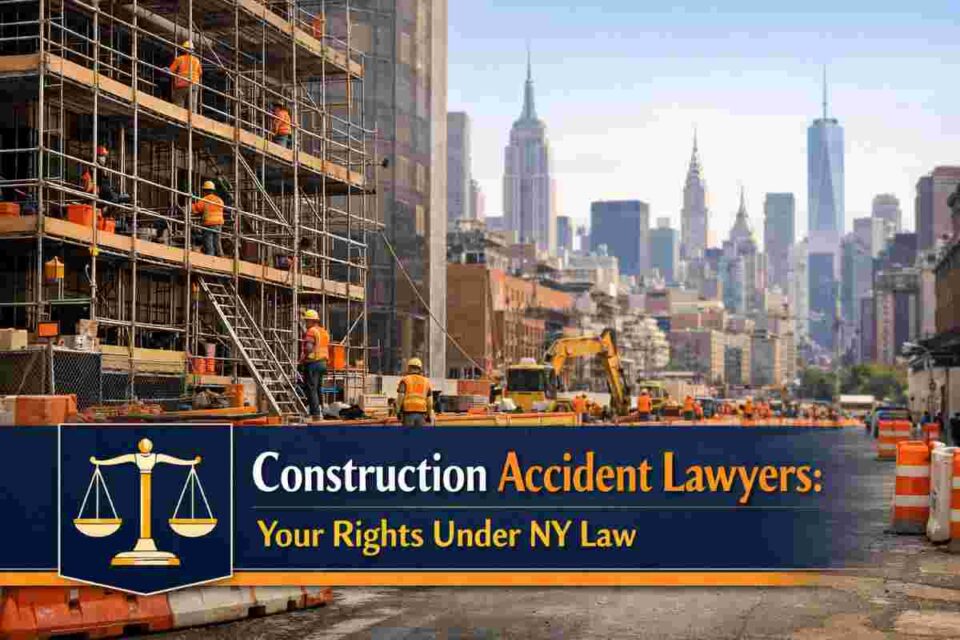
If you or a loved one has been injured on a construction site in New York, understanding your legal rights is not optional — it is essential. Unlike most other states, New York has some of the strongest worker protection statutes in the country, including the landmark Scaffold Law (Labor Law §240), which imposes strict liability on property owners and contractors for gravity-related accidents. But navigating these laws requires a construction accident lawyer who specializes in New York labor law, not a general personal injury attorney.
This guide covers everything you need to know: the types of construction accidents most common in New York, the specific state laws that protect workers, how to choose the right attorney, what compensation you can pursue, and the critical steps to take immediately after an accident.
Disclaimer: This article is for informational and educational purposes only. It does not constitute legal advice. If you have been injured in a construction accident, consult a qualified New York construction accident attorney for guidance specific to your situation.
Table of Contents
Most Common Types of Construction Accidents in New York
Construction sites in New York — particularly in New York City — involve unique hazards due to the density of urban construction, high-rise work, underground excavation, and the sheer volume of concurrent projects. Understanding the most common accident types helps workers recognize when employer negligence may be a factor.
Falls from Heights
Falls remain the single leading cause of construction worker fatalities in New York. Data from the NYC Health Department shows that falls accounted for approximately 58% of fatal construction injuries over a multi-year study period. These include falls from scaffolding, ladders, roofs, elevator shafts, and open floor holes. OSHA’s national data confirms that falls account for roughly 38% of all construction deaths nationwide, and New York’s numbers consistently meet or exceed this average.
Struck-By Incidents
Being hit by falling objects, swinging equipment, or construction vehicles is the second leading cause of serious injuries and fatalities. On crowded urban job sites in Manhattan, Brooklyn, and Queens, cranes, hoists, and overhead work create constant struck-by hazards. Falling debris from scaffolding and improperly secured materials are common triggers.
Caught-In or Caught-Between Accidents
Trench collapses, machinery entrapment, and being caught between heavy equipment and fixed structures account for a significant share of severe and fatal injuries. Excavation work across New York City — particularly for infrastructure projects funded by the Infrastructure Investment and Jobs Act — has increased the risk profile for this category.
Electrocutions
Contact with exposed power lines, improperly grounded temporary wiring, and faulty electrical equipment causes electrocution injuries that range from severe burns to cardiac arrest and death. These accidents are especially common during demolition, renovation, and utility relocation work.
Scaffolding Collapses
New York City has more active scaffolding than virtually any other city in the world. Scaffold collapses due to improper assembly, overloading, or lack of maintenance remain a persistent and deadly hazard. Approximately 2.3 million construction workers nationally work on scaffolds regularly, and scaffolding-related incidents cause roughly 4,500 injuries and 60–80 deaths annually across the United States.
Crane Accidents
Tower crane collapses, mobile crane tip-overs, and rigging failures cause catastrophic injuries. New York City has seen several high-profile crane accidents in recent years. The NYC DOB has specific crane safety regulations, but enforcement gaps and operator error continue to contribute to incidents.
Other Common Injuries
Construction workers in New York also frequently suffer from repetitive stress injuries, chemical and toxic substance exposure (including asbestos and silica dust), burns, hearing loss, and traumatic brain injuries. Proactive construction site safety measures can prevent many of these incidents — but when employers fail to implement them, workers have legal recourse.
New York Labor Laws That Protect Construction Workers
New York provides construction workers with some of the strongest legal protections in the United States. Three key sections of New York Labor Law form the backbone of construction accident claims. Every injured worker — and anyone considering a career in construction jobs in the USA — should understand these provisions.
Labor Law §200: General Duty of Care
This section codifies the common-law negligence standard. It requires all property owners and contractors to provide a reasonably safe working environment. To succeed under §200, the injured worker must prove that the owner or contractor had control over the work and either knew or should have known about the hazardous condition. While §200 applies broadly, it is typically harder to win compared to the stricter liability provisions of §240 and §241.
Labor Law §240: The Scaffold Law
First enacted in 1885, the Scaffold Law is one of the most powerful worker protection statutes in the country. It imposes strict liability on property owners and general contractors for gravity-related construction accidents. This means that if a worker is injured in a fall from height or is struck by a falling object due to inadequate safety equipment, the owner or contractor is liable — even if the worker was partially at fault.
Key features of Labor Law §240:
- Applies to construction, demolition, repair, alteration, painting, and cleaning work
- Covers falls from scaffolds, ladders, roofs, platforms, and any elevated work surface
- Also covers injuries caused by falling objects from elevation devices
- The defendant cannot argue comparative negligence — the only defense is “sole proximate cause” (that the worker’s own actions were the only cause of the accident), which is extremely difficult to prove
- Applies regardless of immigration status or union membership
- One- and two-family homeowners who do not direct or control the work are generally exempt
The Scaffold Law has produced some of New York’s largest construction accident verdicts and settlements, with multi-million-dollar outcomes in scaffold fall, ladder accident, and suspended platform cases.
Labor Law §241(6): Specific Safety Code Violations
Section 241(6) requires owners and contractors to provide reasonable and adequate safety measures in compliance with the New York Industrial Code. Unlike §240, this section requires the injured worker to identify a specific Industrial Code provision that was violated. However, once a code violation is established, the defendant’s liability is often clear.
Common §241(6) violations include missing guardrails, inadequate trench shoring, insufficient lighting, equipment safety failures, and lack of proper flooring reinforcement. This section is often combined with §240 claims to create multiple paths to recovery.
Workers’ Compensation vs. Third-Party Lawsuits
A critical point many injured workers miss: filing a workers’ compensation claim does not prevent you from also filing a Labor Law lawsuit against the property owner, general contractor, or other negligent third parties. Workers’ comp provides limited benefits (medical expenses and partial lost wages), while a Labor Law claim can recover full lost earnings, pain and suffering, future medical costs, and loss of quality of life. A skilled construction accident lawyer will typically pursue both tracks simultaneously.
How to Choose the Right Construction Accident Lawyer in New York
Not all personal injury attorneys are equipped to handle construction accident claims in New York. The intersection of OSHA regulations, New York Labor Law, workers’ compensation, and the Industrial Code creates a highly specialized legal landscape. Here is what to look for.
Construction-Specific Experience
Ask prospective attorneys how many construction accident cases they have handled and what outcomes they have achieved. Firms with a track record of multi-million-dollar verdicts and settlements in Labor Law §240 and §241(6) cases demonstrate the depth of expertise needed. A lawyer who primarily handles car accidents or medical malpractice will lack the technical knowledge required for construction site litigation.
Knowledge of OSHA and Industrial Code Regulations
Your lawyer must be able to identify specific OSHA violations and New York Industrial Code provisions that apply to your accident. This requires familiarity with health and safety standards in construction and the ability to work with safety engineers and expert witnesses.
Resources for Investigation and Expert Testimony
Strong construction accident cases require site inspections, accident reconstruction, review of OSHA inspection reports, analysis of safety plans, and expert testimony from engineers and safety professionals. Choose a firm with the resources to invest in thorough case development.
Contingency Fee Arrangement
Most reputable construction accident lawyers in New York work on a contingency fee basis, meaning you pay nothing upfront and the attorney takes a percentage (typically 33%) only if they win your case. Be wary of any firm that requests payment upfront for a construction accident claim.
Client Communication and Transparency
Your attorney should keep you informed at every stage, explain your options clearly, and be accessible when you have questions. Read online reviews and ask for references from past clients.
Free Initial Consultation
Nearly all construction accident lawyers in New York offer a free initial consultation. Use this meeting to assess their expertise, ask about similar cases they have handled, and determine whether they are the right fit for your situation.
What Compensation Can You Recover?
Depending on the specifics of your case, an injured construction worker in New York may be entitled to recover compensation under multiple legal channels:
Through Workers’ Compensation
- Medical expenses (full coverage for work-related injuries)
- Temporary disability benefits (partial wage replacement)
- Permanent disability benefits
- Death benefits for families of fatally injured workers
Through a Labor Law Lawsuit (Third-Party Claim)
- Full lost wages (past and future)
- Pain and suffering
- Emotional distress
- Loss of enjoyment of life
- Future medical and rehabilitation costs
- Loss of consortium (for spouses)
- Wrongful death damages (for families)
Construction accident settlements in New York frequently reach six and seven figures. Cases involving permanent disability, traumatic brain injury, spinal cord injury, or wrongful death regularly result in multi-million-dollar recoveries.
Steps to Take Immediately After a Construction Accident
The actions you take in the hours and days following a construction accident can significantly impact your legal claim. Here is a step-by-step guide:
- Seek medical attention immediately. Even if injuries seem minor, get a full medical evaluation. Some injuries (traumatic brain injury, internal bleeding, spinal damage) may not present symptoms immediately.
- Report the accident to your supervisor or employer. New York law requires timely reporting. Document the report in writing if possible.
- Document the scene. Take photographs and videos of the accident location, any safety hazards, equipment involved, and your injuries. Get contact information from witnesses.
- Do not give recorded statements to insurance companies or the property owner’s legal team without speaking to your attorney first.
- File a workers’ compensation claim. You have 30 days to notify your employer and two years to file a formal claim with the New York Workers’ Compensation Board.
- Contact a construction accident lawyer. The statute of limitations for a Labor Law claim in New York is three years from the date of the accident, but early legal involvement ensures critical evidence is preserved.
- Preserve all documents. Keep medical records, pay stubs, accident reports, photographs, and any correspondence related to the incident.
The Role of OSHA and NYC Department of Buildings
Two regulatory bodies play key roles in construction safety oversight in New York:
OSHA (Federal Level)
The Occupational Safety and Health Administration sets federal safety standards for construction sites nationwide. OSHA inspections can result in citations and fines for violations. Importantly, OSHA inspection records and violation history can serve as powerful evidence in construction accident lawsuits. OSHA training and certification is a fundamental requirement for construction workers, and employers who fail to ensure compliance may face heightened legal exposure.
However, it is worth noting that federal OSHA enforcement has faced challenges in recent years. Staffing shortages, reduced penalty amounts, and policy shifts have raised concerns among worker safety advocates. In New York, this makes state and local enforcement — along with the strong Labor Law framework — even more important for protecting workers.
NYC Department of Buildings (Local Level)
The NYC DOB oversees building construction safety within the five boroughs. The DOB conducted a record 416,290 inspections in 2024 and reported a 30% drop in construction-related injuries and a 24% reduction in incidents compared to the prior year. Despite these improvements, fatalities continue, and DOB records — including violation history and stop-work orders — are valuable evidence in accident claims.
Special Considerations for Immigrant and Non-Union Workers
New York’s construction workforce includes a large number of immigrant workers, many of whom are undocumented. It is critically important for these workers to know:
- Labor Law §240 protections apply regardless of immigration status. Undocumented workers have the same legal rights under the Scaffold Law as any other worker in New York.
- Workers’ compensation benefits are available regardless of immigration status in New York.
- Non-union workers have the same legal protections as unionized workers under New York Labor Law.
- Language barriers should not prevent you from seeking legal help. Many construction accident law firms in New York offer consultations in Spanish, Mandarin, Polish, and other languages commonly spoken by construction workers.
- Workers have the right to refuse unsafe work without retaliation. If you have been retaliated against for reporting safety concerns, this strengthens your legal claim.
Worker safety organizations like the New York Committee for Occupational Safety and Health (NYCOSH) provide free resources, safety training, and advocacy specifically for immigrant and non-union construction workers.
2026 Construction Safety Trends Affecting Legal Claims in New York
Several developments in 2026 are shaping the landscape for construction accident claims in New York:
Increased Construction Activity
Major infrastructure investment under the IIJA, continued data center construction, and ongoing residential development across the five boroughs mean more workers on more sites — and statistically, more opportunities for accidents. New York’s construction management job market continues to expand, but the worker shortage means less experienced crews are sometimes deployed on complex projects.
Evolving Federal Enforcement
Shifts in federal OSHA enforcement policy — including reduced penalties and suspended rulemaking on workplace heat safety — have increased reliance on state and local enforcement mechanisms. For injured workers, this makes New York’s Labor Law protections more important than ever as a legal safety net when federal oversight is diminished.
Technology and Safety
Wearable safety technology, drone-based site inspections, AI-powered hazard detection, and improved Building Information Modeling (BIM) coordination are reducing certain categories of risk. However, the legal standard under Labor Law §240 remains strict liability — technological improvements do not relieve owners and contractors of their statutory obligations to provide adequate safety equipment. Understanding the evolving intersection of construction safety protocols and technology trends is valuable context for both workers and legal professionals.
Rising Settlements and Verdicts
New York juries have shown an increasing willingness to award substantial damages in construction accident cases, particularly those involving permanent disability and wrongful death. This trend, combined with the strict liability framework of the Scaffold Law, means that strong claims supported by thorough evidence and expert testimony are achieving record-level outcomes.
Construction Safety Certifications That Reduce Risk and Strengthen Claims
While no certification can eliminate risk entirely, construction workers who maintain current safety credentials are better positioned both to avoid accidents and to demonstrate their own compliance in the event of a claim.
Key certifications relevant to New York construction workers include:
- OSHA 10-Hour and 30-Hour Construction Safety — The baseline safety training required on most New York job sites. NYC specifically mandates the Site Safety Training (SST) card for workers on certain project types.
- OSHA 500/501 Trainer Certification — For safety professionals and supervisors.
- BCSP Certifications (CSP, ASP, CHST) — Recognized professional credentials for construction safety careers.
- First Aid/CPR Certification — Required on many construction sites.
- Equipment Operator Certifications — Including crane, forklift, and aerial lift certifications from organizations like NCCCO and OSHA-accredited programs. Learn more about important construction safety certifications.
For construction professionals looking to advance their safety knowledge, these online courses provide structured learning:
Career Impact of Construction Injuries: Salary and Employment Considerations
A serious construction accident does not just cause physical pain — it can permanently alter a worker’s earning capacity. Understanding the financial stakes strengthens both the emotional and legal case for full compensation.
Construction workers in New York earn among the highest wages in the country. Median construction worker pay nationally reaches approximately $22.47/hour, but top earners in union metros like New York City frequently exceed $40+/hour. Construction managers in New York earn an average of $148,360 annually.
When a construction accident results in permanent disability or reduced capacity, the lifetime lost earnings can easily reach seven figures. A skilled construction accident lawyer will work with economists and vocational rehabilitation experts to quantify these losses accurately for your claim.
If you are exploring construction career options or recovering from an injury and considering a career pivot within the industry, tools like the ConstructionCareerHub platform offer AI-powered resume building, interview preparation, and career direction tools tailored specifically for construction professionals.
How Construction Accident Lawsuits Work in New York: The Process
Understanding the litigation timeline helps injured workers set realistic expectations:
1. Initial Consultation and Case Evaluation
Your attorney reviews the facts of the accident, identifies applicable Labor Law provisions, and determines the strength of your claim. This is typically free and confidential.
2. Investigation and Evidence Gathering
The legal team conducts site inspections, obtains OSHA and DOB records, secures witness statements, reviews employer safety plans, and retains expert witnesses. This phase is critical and can take several months.
3. Filing the Lawsuit
A complaint is filed against the property owner, general contractor, and any other responsible parties. In New York, you generally have three years from the date of the accident to file.
4. Discovery Phase
Both sides exchange documents, conduct depositions (sworn testimony), and consult expert witnesses. This is often the longest phase and can take one to two years.
5. Settlement Negotiations
The majority of construction accident cases in New York settle before trial. Your attorney will negotiate with the defense to reach a fair settlement. If the offer is insufficient, the case proceeds to trial.
6. Trial
If no settlement is reached, the case is tried before a jury. New York juries in construction accident cases have increasingly awarded substantial verdicts, particularly in cases involving Labor Law §240 strict liability.
7. Appeals (If Applicable)
Either party may appeal the verdict. The appeals process can add additional months or years to the timeline.
From start to finish, a construction accident lawsuit in New York typically takes two to four years, though some complex cases may take longer. Having an experienced attorney who understands this timeline and manages your case aggressively can significantly shorten the process.
Frequently Asked Questions
What does a construction accident lawyer in New York do?
A construction accident lawyer represents injured workers in claims under New York Labor Law (§200, §240, §241), workers’ compensation, and third-party negligence lawsuits. They investigate the accident, identify responsible parties, gather evidence, and negotiate settlements or litigate the case in court to secure maximum compensation.
How much does a construction accident lawyer cost in New York?
Most construction accident lawyers in New York work on a contingency fee basis. This means you pay no upfront fees. The attorney receives a percentage of your settlement or verdict — typically around 33% — only if they win your case.
Can I sue if I was partially at fault for my construction accident?
Yes. Under New York Labor Law §240 (the Scaffold Law), property owners and contractors face strict liability for gravity-related accidents even if the worker was partially at fault. Under general negligence claims, New York follows a comparative negligence system, meaning your compensation may be reduced by your percentage of fault but is not eliminated.
Can undocumented workers file construction accident claims in New York?
Yes. New York Labor Law protections — including the Scaffold Law — apply to all construction workers regardless of immigration status. Undocumented workers are also eligible for workers’ compensation benefits in New York.
What is the statute of limitations for a construction accident lawsuit in New York?
In most cases, you have three years from the date of the accident to file a personal injury lawsuit under New York Labor Law. For workers’ compensation, you must notify your employer within 30 days and file a claim within two years. Acting quickly is important to preserve evidence and protect your rights.
What is New York’s Scaffold Law?
The Scaffold Law (Labor Law §240) is a New York state statute that imposes strict liability on property owners and general contractors for gravity-related construction accidents. If a worker falls from a height or is struck by a falling object due to inadequate safety equipment, the owner or contractor is legally responsible — regardless of the worker’s own negligence.
How long does a construction accident case take in New York?
Most construction accident cases in New York take two to four years from initial filing to resolution, whether through settlement or trial. Complex cases involving severe injuries, multiple defendants, or disputed liability may take longer.
Can I file both a workers’ compensation claim and a lawsuit?
Yes. In New York, filing a workers’ compensation claim does not prevent you from filing a separate Labor Law lawsuit against the property owner, general contractor, or other third parties. A lawsuit can recover damages — such as pain and suffering — that workers’ compensation does not cover.
Recommended Resources for Construction Workers and Safety Professionals
For construction professionals looking to deepen their safety knowledge, advance their careers, or prepare for roles in the New York market, these resources are highly recommended:
- Guide to Construction Safety Management — Comprehensive overview of safety management systems in construction.
- Maximizing Safety in Construction Management — Strategies for construction managers to prioritize safety on every project.
- The Role of Inspections in Meeting Construction Safety Standards — Understanding how inspections prevent accidents and reduce legal liability.
- The Ultimate Construction Site Safety Checklist — Actionable checklist for maintaining safe worksites.
- Job Requirements for Construction Workers — Skills, certifications, and requirements for construction roles.
- Highest Paying Construction Jobs in the US — Career planning guide with salary data across specializations.
For career tools built specifically for construction professionals — including an AI-powered resume lab, interview copilot, and career direction assessments — explore ConstructionCareerHub.com.
For downloadable career resources, including interview preparation guides and career planning ebooks, visit the Construction Interview Preparation Guide and the Civil Engineering Career eBook on our Gumroad store.
Final Thoughts
Construction work in New York is among the most physically demanding and financially rewarding careers in the country. But the risks are real — falls, struck-by incidents, scaffold collapses, and electrocutions continue to injure and kill workers every year despite improving safety technology and stronger enforcement.
New York’s Labor Law framework, particularly the Scaffold Law, gives injured construction workers powerful legal tools that do not exist in most other states. But these protections only work when workers understand their rights and act quickly to secure qualified legal representation.
If you have been injured on a construction site in New York, do not rely solely on workers’ compensation. Consult a construction accident lawyer who specializes in Labor Law §240, §241(6), and §200 claims. The right attorney can make the difference between a minimal payout and the full compensation you deserve for your injuries, lost wages, and future well-being.
This article is published by ConstructionPlacements.com — a global construction career platform serving over 300,000 monthly readers. For the latest construction industry news, career resources, and safety updates, explore our full library of construction career guides.
Related Posts:
- Expert Construction Accident Attorney Services – Get the Compensation You Deserve
- Top 10 Construction Accident Attorneys in New York City (2026 Update)
- Why Buying a Scaffold Is a Smarter Long-Term Investment Than Hiring
- When Things Go Wrong on the Job Site: Understanding the Causes and Consequences of Scaffolding Injuries
