


Last Updated on December 24, 2025 by Admin
This article covers 5 ways construction management courses help students learn risk management techniques. Keep reading to explore them.
ConstructionCareerHub App is LIVE — built ONLY for construction careers. Don’t apply with a weak resume.
Get ATS-ready Resume Lab + Interview Copilot + Campus Placement Prep (resume screening, skill gaps, interview readiness) — in minutes & Other advanced features.
Explore Smarter Construction Career Tools →Quick check. Big impact. Start now.
Constructing a home or a building is like solving a giant puzzle, where one wrong piece can cause a multi-million-dollar project to crumble. From sudden storms to rising material costs, every risk associated with construction can lead to dangerous accidents or expensive delays.
This is where construction management courses become highly valuable. These courses teach students how to identify problems before they happen and create backup plans to stay on track. In this article, we will describe how these programs teach students effective risk management techniques that allow them to manage the unexpected and maintain progress. Let’s delve into it.
Table of Contents
What You Will Explore in This Article
- Construction is a vulnerable process that can be affected by even minor inconveniences or external factors.
- Managing risk is a crucial aspect of construction projects because unmanaged risk causes delays and cost overruns.
- Construction management courses help students identify risks and categorize them effectively.
- During these programs, students learn the difference between qualitative and quantitative analysis.
- Students gain an understanding of risk response strategies and the correct use of technology.
- Through case studies and real-life examples, students grasp practical risk management techniques.
The Importance of Risk Management in Construction Projects
According to a study by ResearchGate, “Nine out of ten construction projects experience cost overruns because of the unexpected risks that occur during the completion of the work. The cost of these risks can range from 2.71% to 8.67% of the total construction cost.”
To mitigate these costs, it is vital to identify issues before they occur through a proper management framework. It is not an exaggeration to say that risk management is the foundation of a successful construction project. It is the process of identifying, evaluating, and mitigating risks that can impact the project’s progress.
Here are the consequences a poor risk management system can bring:
- Project Delays: Unforeseen risks can cause unplanned delays in the completion of construction projects, resulting in missed deadlines.
- Cost Overruns: If unexpected risks are not managed properly, they incur additional costs for materials and labour.
- Project Failure: In the worst-case scenarios, poor risk management can lead to the total failure of the project.
Due to its significance, students often choose to write their dissertations on ‘Risk Management Techniques’ during their construction management degrees. However, understanding the technicalities of these methods and translating them into an academic narrative is difficult for many. Consequently, many students hire an authentic assignment writing service to assist them in writing a well-structured dissertation.
5 Ways Construction Management Courses Help Students in Learning Risk Management
Construction management courses are based on a perfect blend of theoretical models and hands-on training. These courses empower students to transform from passive observers into proactive risk managers.
Check out how these programs teach effective risk management strategies.
1. Help Students in Identifying and Categorising Risks
Typically, construction management courses start by teaching students to identify dangers. This risk identification is not limited to physical hazards but also includes unforeseen challenges that can interrupt the overall project.
During these programs, students also learn the systematic categorisation of risks into different domains, including:
- Financial Risks: Evaluating cost overruns, instability in cash flows, and inflation in the cost of materials.
- Operational Challenges: Managing labour shortages, equipment failure, and disruptions in the supply chain.
- Legal Hurdles: Identifying the impacts of different possession routes and allocation risks.
- Environmental Risks: Analysing extreme weather consequences on the workflow of the construction project.
2. Learn the Difference Between Qualitative and Quantitative Analysis
Once a risk is identified, the next stage is to learn how to measure it. Qualitative and quantitative analysis are two fundamental processes for assessing these risks. The curriculum of construction management courses relies heavily on these two analysis processes.
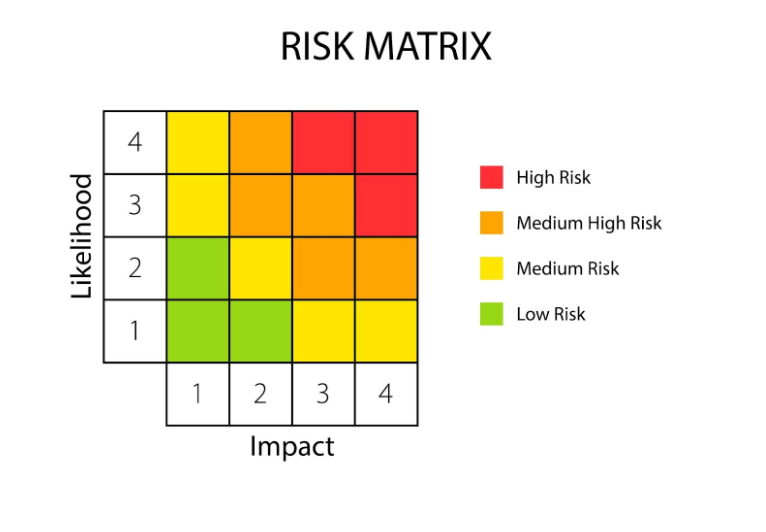
Here is a brief overview of quantitative and qualitative analysis:
- Qualitative Analysis: Students learn to use risk matrices to rank risks based on potential impact. This evaluation helps them decide which issues require immediate action.
- Quantitative Analysis: Advanced construction management programs include data-driven modelling structures that assist students in analysing quantitative aspects of the project, such as budget and time constraints.
3. Teach Students the Use of High-Tech Mitigation Tools
In today’s digital world, incorporating technology is essential to save a project from failure. Construction management courses prioritise student proficiency in the latest digital tools. During these programs, students get hands-on experience with various software platforms that help them identify and mitigate risks early.
Some of the most popular tools include:
- Building Information Modeling (BIM)
- Project Management Information Systems (PMIS)
- Oracle Primavera Cloud
- Autodesk Construction Cloud
- SafetyCulture (iAuditor)
- InEight
- HammerTech
4. Empower Students to Learn Strategic Response Planning
Identifying risks is only half the job; the real task is learning how to respond when an issue occurs. Construction management courses are specifically designed to teach students the “5 T’s” of risk response:
- Treat: Implement safety protocols to reduce the potential impact of risks.
- Transfer: Shift potential risks to third parties through insurance or contract clauses.
- Tolerate: Recognise the lowest stage where risk is no longer mitigatable and provide a contingency budget for this minimal risk.
- Terminate: Alter the project plan or location in case of high-level danger associated with the risk.
- Take: Identify risks that can become rewarding opportunities for a construction project if managed well.
5. Build Practical Skills Through Case Studies and Real-Life Examples
Construction management courses provide numerous case studies and real-world examples to help Students Bridge the gap between theory and reality. Students analyse high-profile cases of construction project failures during these programs. These case studies allow them to understand warning signs that were missed during the process.
Some courses also conduct simulated drills where students are involved in group exercises, requiring them to respond to a hypothetical crisis within a limited timeframe. These exercises build confidence in making high-pressure decisions and provide an overview of the unpredictable nature of the construction industry.
Construction management is a complex subject that teaches students valuable skills, including project planning, budgeting, and risk management. Because of this complexity, students often find it hard to write a dissertation on these topics. In such cases, approaching a professional dissertation writing service can help them structure a thesis according to academic guidelines.
Conclusion
Construction management courses serve as a vital training ground for students who want to learn risk management via proactive strategies. During these programs, students use advanced technology and models for risk breakdown. Furthermore, students are equipped with an analytical mindset that helps them thrive in their professional careers.
The best part of these programs is that they teach students the right way to respond to significant dangers, empowering them to bring a proactive approach to their response. Students also learn to connect theory with practical examples, polishing their problem-solving skills. Thus, construction management courses are the best way for students to master risk management techniques.
Frequently Asked Questions About Construction Management Courses
What Entry Requirements Do Most Construction Management Courses Have for Non‑Engineers?
The entry requirements for a construction management course differ for undergraduate and master’s levels:
- Undergraduate Level:
- A-levels or equivalent Level 3 qualifications are standard.
- Good grades in subjects like Mathematics, Science, English, Business, or IT-related subjects.
- Apprenticeships.
- Master’s Level:
- Undergraduate Degree.
- Relevant Experience.
- Professional Qualifications.
- Foundational Knowledge.
How Important is Learning Contracts and Contract Administration in Modern Construction Management Courses?
Learning contracts and contract administration is crucial for advanced construction management courses. These skills ensure the successful delivery of the project within time constraints and legal standards.
Reasons why learning contract administration is important include:
- Provides the foundation for the project.
- Gives financial control.
- Helps in risk mitigation.
- Ensures compliance.
- Provides accountability.
- Prevents and resolves disputes.
Which Construction Management Courses are Best for Site Engineers Who Want to Move into Project Manager Roles?
For students or site engineers wanting to move into project manager roles, the following courses are recommended:
- Professional Body Diplomas/Certificates:
- CIOB (Chartered Institute of Building)
- APM (Association for Project Management)
- PMI (Project Management Institute)
- University Degrees (Postgraduate):
- MSc in Construction Project Management
Related Posts
- Private Wells: Economical Bargains or A Hidden Danger?
- GMAT or GRE: Which Exam Is Right for Engineers?
