

Last Updated on April 10, 2026 by Admin
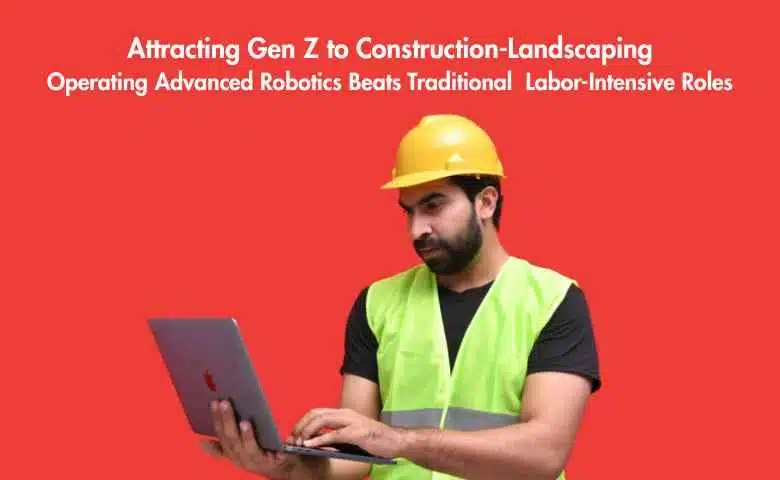
Demand for skilled workers in the construction and landscaping sectors continues to grow, with employment projected to rise steadily throughout the coming years. Attracting Gen Z to fill the labor gap requires more than high wages or better benefits. It requires a shift in how industry careers are framed, from physically demanding, manual labor roles to technology-driven construction robotics opportunities.
ConstructionCareerHub App is LIVE — built ONLY for construction careers. Don’t apply with a weak resume.
Get ATS-ready Resume Lab + Interview Copilot + Campus Placement Prep (resume screening, skill gaps, interview readiness) — in minutes & Other advanced features.
Explore Smarter Construction Career Tools →Quick check. Big impact. Start now.
Table of Contents
Labor Shortage Meets a New Generation
Construction and landscaping companies compete for talent in a tight labor market. Simultaneously, Gen Z workers prioritize flexibility, technology and meaningful work. Many still associate the building industry with manual labor, long hours and limited advancement.
That perception no longer reflects reality, as modern jobsites rely on advanced tools, automation and data. The challenge lies in communicating that shift clearly to attract skilled technicians and staff to keep up with an increasingly mechanized industry. Employers who reposition opportunities as technology-focused construction careers, rather than just labor positions, are more likely to connect with this market, unlike the 92% of companies that find job placements challenging.
Redefining “Construction Work” From Manual to Technical
Modern construction roles are shifting from repetitive physical tasks to operating advanced machinery and analyzing data. Robotics and automation have changed the way that daily work looks on building sites, with the global market in these machines set to more than double to $3.66 billion by 2030. Traditional roles centered on repetitive physical tasks are evolving to operating machines, analyzing performance data and managing equipment remotely.
In a changing industry, equipment operators are becoming technicians, and laborers transition into system managers. Jobsites continue to adapt to environments dominated by heavy equipment technology. These new opportunities more closely align with how Gen Z already interacts with technology in everyday life.
Refining What Construction Technology Jobs Are
The lack of industry knowledge sharing about new careers and what these entail is the biggest disconnect in current hiring efforts. Many vacancy postings reference “technology” without explaining what that means in practice. A modern construction and landscaping job might include the following tasks and skills:
- Operating remote-controlled robotic equipment from a tablet
- Monitoring machine performance and adjusting workflows
- Using drones for site surveys and inspections
- Managing digital models through building information modeling software
Instead of physical strain, these jobs emphasize coordination, decision-making and technical skill. That shift toward mechanized and robotic tools makes the work more accessible and appealing to the new generation of job seekers.
Landscaping Careers With Advanced Robotics
Industries like landscaping are among the clearest examples of how technology and robotics have changed perceptions of jobs and careers. Tasks that once required large crews and significant physical effort can now be handled by a single operator using advanced equipment. For example, a task on a steep slope that previously required three workers for eight hours can now be completed in only two hours by one operator using a remote-controlled mower.
This type of efficiency highlights how technology changes the pace and nature of work, potentially reducing staffing requirements and costs, as a third of the workforce can perform the required tasks with the right automated and robotic tools. The impact extends beyond saving on labor and time spent on tasks. Additional benefits include:
- Improved safety: Operators can now handle hazardous terrain from a distance.
- Expanded capabilities: Machines easily access areas that were previously unsafe or unreachable.
- Higher-value roles: Workers focus on developing technical and operational skills rather than performing repetitive tasks.
- Business growth: Technology enables expansion, as companies invest in robotic equipment to expand their service offerings.
Developing Strategies to Recruit and Retain Gen Z Talent
Recruitment strategies must reflect the reality of modern building and erection work. Small changes in language and presentation can make a measurable difference.
Update Job Titles and Descriptions
Rephrase terms like “laborer” and use titles such as “equipment operator,” “robotics technician” or “site specialist” instead. These better describe the evolution of roles and the modern duties of each job.
Highlight Technology in Recruitment
Showcase real examples of equipment and workflows on company sites. Videos, case studies and job previews help candidates understand what the work involves.
Invest in Training Pathways
Structured onboarding and skills development programs create long-term opportunities, attracting Gen Z job seekers who, like the 75% of Americans who value learning, appreciate skills development as much as compensation.
Emphasize Safety and Efficiency
Technology reduces physical risk and improves working conditions. That message resonates strongly with younger candidates.
Frequently Asked Questions
Attracting Gen Z to the construction or landscaping industry requires answering their questions and reassuring them that they don’t have to swing a hammer or shovel as part of their regular duties.
Are construction jobs still mostly manual labor?
Many roles now focus on operating equipment, using software and managing systems rather than physical labor, making them more appealing to Gen Z and those with physical disabilities.
What skills do I need for a career in construction robotics?
Basic tech skills, equipment operation, problem-solving and the ability to read data and coordinate with a team are valuable abilities to cultivate.
Is construction a good career for someone who likes technology?
Absolutely. Modern construction includes robotics, drones and digital tools, making it a strong fit for tech-focused workers.
Constructing a Future Now
Construction continues to evolve as technology becomes central to operations. Robotics, automation and data-driven tools are not replacing workers — they are redefining their roles and options.
Companies that embrace this change and communicate it clearly will stand out in a competitive hiring landscape. Framing civil work as a technology-driven career path aligns with industry needs and the expectations of the next generation. It’s an opportunity to fill vacancies and reshape how the industry shows up in job searches.
Related Posts
- Here’s How You Can Attract Gen Z to Construction Careers
- Attracting Generation Z to Construction Careers: Embracing New Values and Expectations
- How Gen Z Can Thrive in the Gig Economy with Freelance Construction Jobs
- From Silent to Beta (2025): Unraveling the Mysteries of Human Generation Types
- The Ultimate Guide to Crafting Effective Construction Job Advertisements
