

Last Updated on January 14, 2026 by Admin
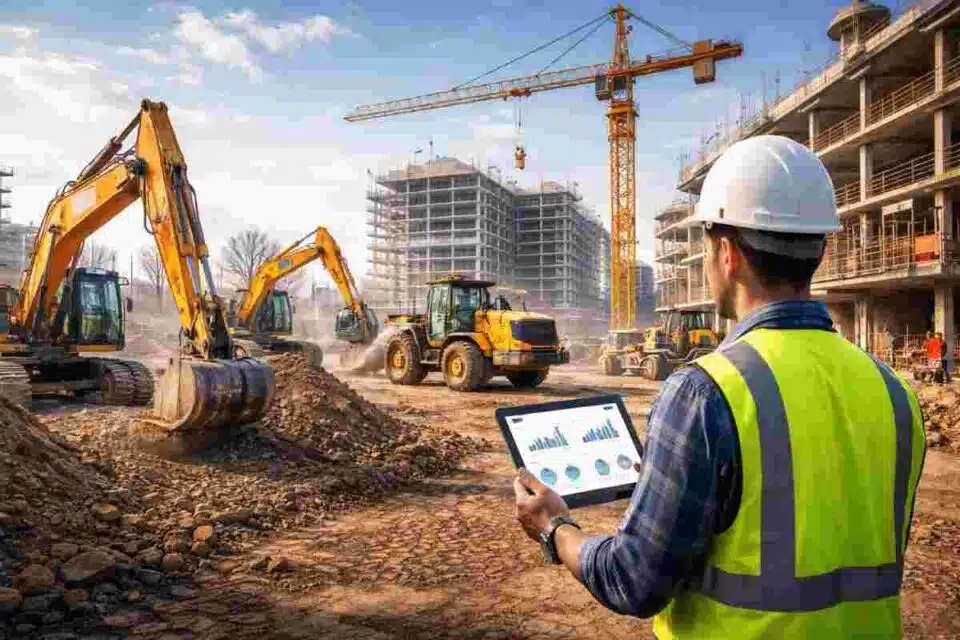
Construction in 2026 looks vastly different from what it did a decade ago. High interest rates, rapid technological evolution, and tight project margins have forced general contractors and fleet managers to rethink their capital expenditures. The age-old debate of equipment rental vs purchase is no longer a matter of preference; it is a calculation of cash flow, risk management, and operational agility.
ConstructionCareerHub App is LIVE — built ONLY for construction careers. Don’t apply with a weak resume.
Get ATS-ready Resume Lab + Interview Copilot + Campus Placement Prep (resume screening, skill gaps, interview readiness) — in minutes & Other advanced features.
Explore Smarter Construction Career Tools →Quick check. Big impact. Start now.
For years, ownership signaled stability. A yard full of yellow iron meant a company had assets. Today, agility signals strength. With equipment costs rising and lead times for new machinery fluctuating, the strategic balance between maintaining a core fleet and using heavy equipment rental has shifted.
This analysis explores the financial and operational realities facing contractors in 2026, providing a framework for making smarter fleet decisions.
Table of Contents
Economic Landscape of 2026

To understand the decision matrix, we must look at the market conditions. According to recent data from the American Rental Association, construction equipment rental revenue continues to climb, projected to exceed previous benchmarks this year.
Several factors drive this shift:
- Capital cost: Interest rates have stabilized but remain higher than the near-zero rates of the 2010s. Financing a $300,000 excavator carries a heavier debt service burden, impacting monthly cash flow.
- Machine complexity: Tier 4 Final engines and emerging electric powertrains require specialized maintenance. Ownership now implies hiring specialized mechanics and purchasing proprietary diagnostic software.
- Project uncertainty: While infrastructure spending remains robust, private commercial development fluctuates. Contractors hesitate to commit to 60-month financing terms for projects lasting only eight months.
Case for Ownership: Building Equity
Despite the rise in rentals, buying remains the correct strategy for some scenarios. Ownership offers total control. When you own the machine, you dictate its schedule, maintenance, and modification.
Utilization Rule
The standard metric for the buy decision remains the utilization rate. In 2026, financial advisors generally recommend the 65% rule. If a piece of equipment sees use more than 65% of the time over a calendar year (roughly 8 months), purchase usually beats rental.
For core fleet items — machinery essential to your daily operations — buying makes sense. For an earthmoving company, this means 20-ton excavators and dozers. For a utility contractor, this means backhoes.
Tax Incentives and Section 179
The United States tax code continues to favor equipment investment. Section 179 allows businesses to deduct the full purchase price of qualifying equipment financed or purchased during the tax year. In 2026, these limits remain generous, allowing contractors to lower their taxable income significantly.
However, the benefit of depreciation must outweigh the cost of ownership.
Resale Value
Used equipment values have held steady. Owning a machine allows a contractor to recoup capital upon divestment. If a contractor maintains a machine well, the resale market provides a significant return on investment, lowering the total cost of ownership over the asset’s lifecycle.
Case for Heavy Equipment Rental: Operational Agility
On the other side of the ledger, heavy equipment rental offers flexibility that ownership cannot match. The shift toward rental is not merely about avoiding down payments; it is about offloading risk.
Eliminating Hidden Costs
The sticker price of a machine is only the beginning. Ownership incurs storage fees, insurance premiums, transportation logistics, and maintenance costs. When a hydraulic pump fails on an owned machine, the project stops, and the owner pays for the repair. When a rental unit fails, the provider swaps it out.
Access to Technology
Construction technology moves fast. Telematics, grade control systems, and safety sensors improve effective job site management. Buying a machine locks you into the technology of that year. Construction equipment rental grants access to the latest models featuring the newest efficiency upgrades without the risk of obsolescence.
“Try Before You Buy” Strategy
Many contractors now use rental as a vetting process. Before committing a quarter-million dollars to a new brand of articulated dump truck, fleet managers rent the unit for a month. This real-world stress test reveals fuel economy and operator comfort levels that a brochure cannot convey.
Financial Breakdown for 2026
To visualize the decision, consider the cost structure of a standard 35,000 lb excavator over a three-year period.
| Cost Category | Ownership (Buy) | Rental (Long-term) |
| Upfront capital | High (down payment + taxes) | Low (first month + deposit) |
| Monthly cost | Fixed (loan/lease payment) | Variable (stops when returned) |
| Maintenance | You pay parts & labor | Included in rental rate |
| Storage/transport | Your responsibility | Included or fee-per-haul |
| Depreciation | Asset loses value | No impact |
| Balance sheet | Liability (debt) + asset | Operating expense |
For a project lasting six months, heavy machinery rental is almost mathematically superior. The rental expense is a 100% write-off as an operating expense, keeping the balance sheet clean of long-term debt liabilities. This preserves borrowing power for other needs, such as materials or payroll.
Rise of Digital Marketplaces
Sourcing equipment used to involve calling five different local yards to check availability. In 2026, the industry relies on digital aggregation and specialized platforms.
Efficiency in sourcing is critical. When a project manager needs a specific boom lift or a trench roller, they cannot afford to wait days for a quote. Modern digital marketplaces have streamlined this process, allowing fleet managers to locate specific heavy machinery options without the friction of traditional phone-tag sourcing. Platforms like JumboBee aggregate heavy equipment availability across regions, helping contractors compare options, timelines, and sourcing strategies more efficiently.
The digital shift supports the rental model, too. If you can rely on finding a machine within hours via a platform, you feel less pressure to own it “just in case.”
Hybrid Fleets
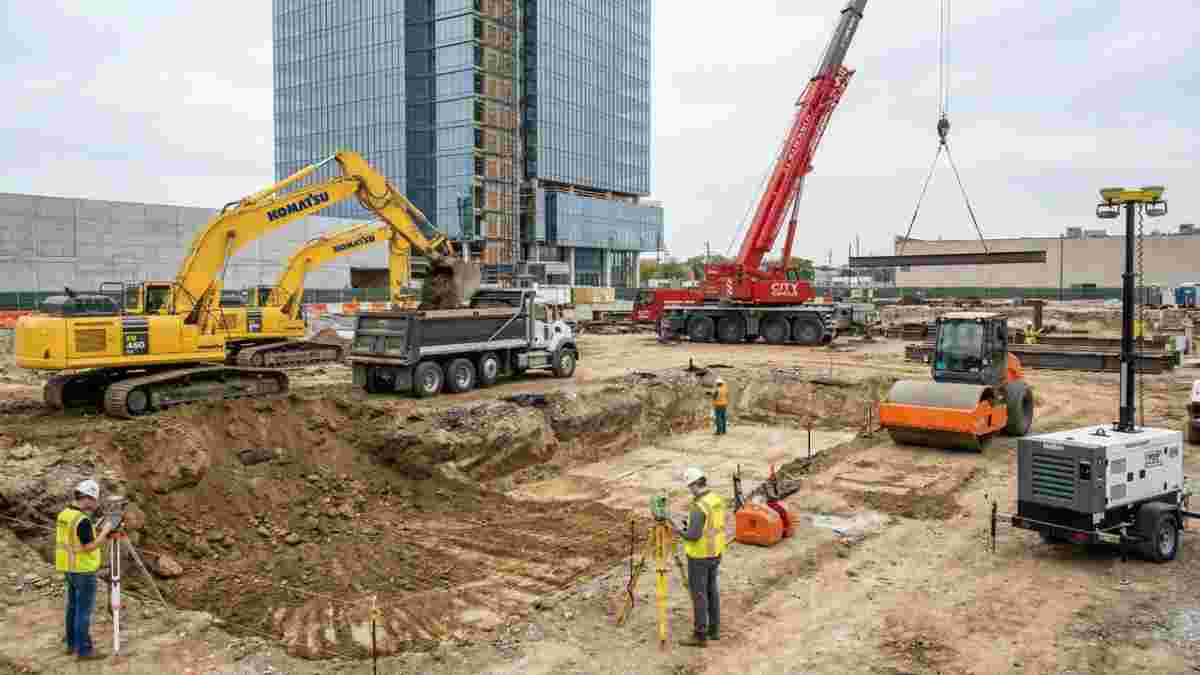
The most successful contractors in 2026 do not strictly rent or strictly buy. They employ a hybrid strategy.
Core vs. Context Model
- Core fleet (owned): Machines used daily. The bread and butter. High utilization, operators are familiar with the specific unit, customized with company logos and attachments.
- Context fleet (rented): Equipment needed for specific phases: cranes for tilt-up days, extra dozers for massive grading phases, or generators for remote sites.
With this approach, you maximize equity in frequently used assets and maintain the ability to scale up or down based on the project backlog. During a boom, the rental portion of the fleet expands. During a slowdown, the rentals return to the yard, and you carry only the cost of the core fleet.
For construction projects that require moving large or specialized equipment between regions or countries, transportation logistics become a critical part of the rental versus purchase decision. In such cases, contractors often work with experienced project cargo providers like Atlantic Project Cargo, who specialize in handling oversized construction equipment and complex delivery scenarios. This allows project managers to factor realistic transport timelines and costs into their fleet strategy without overcommitting to ownership.
Environmental Regulations and EV Adoption
Environmental regulations influence the equipment rental vs purchase debate in 2026. California and parts of Europe have stringent emissions standards, and federal projects increasingly incentivize low-carbon operations.
Electric heavy equipment is expensive. The premium for an electric compact track loader can be 30-50% higher than its diesel counterpart. Plus, battery degradation remains a concern for resale value.
Consequently, many contractors choose construction equipment rental for electric vehicles (EVs). It allows them to bid on green projects and meet emissions mandates without assuming the risk of battery replacement costs or uncertain resale markets five years down the road. Rental companies absorb the technology risk, so contractors can operate compliant fleets.
Decision Matrix for Project Managers
When faced with a new project start, use this checklist to determine the path forward:
- Project duration: Is the job under 8 months? If yes, lean toward rental.
- Job site location: Is the project out of state? Transporting owned fleet is expensive. Renting local equipment saves logistics costs and ensures local service support.
- Specialization: Is this a standard machine or a niche tool? Never buy a niche tool unless you have three years of guaranteed work for it.
- Cash position: Does the company need to preserve working capital? Renting helps avoid the down payment.
- Market volatility: Is the backlog solid for 24 months? If the future is hazy, avoid long-term debt.
Maintenance Talent Gap
A less discussed but vital factor is the shortage of skilled diesel technicians. In 2026, finding and retaining qualified mechanics is difficult and expensive.
Owning a fleet requires a maintenance infrastructure: a shop, tools, fluids, and labor. If a contractor cannot staff a workshop, their owned equipment will deteriorate, leading to downtime.
Heavy machinery rental shifts this burden to the rental provider. The rental agency is responsible for ensuring the equipment runs correctly. For many mid-sized contractors, this labor saving alone justifies the rental premium.
Conclusion
The decision to rent or buy heavy equipment in 2026 is not binary. It is a dynamic strategy that balances financial health with operational capability. While ownership builds equity and guarantees availability, the rental market offers the agility required to navigate a fluctuating economy.
Contractors who succeed this year will likely adopt a sophisticated hybrid approach. They will own their daily drivers, rent their project-specific needs, and utilize digital marketplaces to source machinery. By treating equipment acquisition as a flexible portfolio rather than a fixed asset list, construction firms can protect their bottom line and ensure they have the iron required to get the job done.
Related Posts:
- Effective Ways To Cut Costs In The Logistics Industry
- Construction Fleet Management Software: Optimize Operations for Maximum ROI
- 6 Essential Skills for Managing Heavy Equipment Fleets in the Construction Industry
- The Ultimate Guide to Used Construction Equipment: Maximizing Value and Minimizing Costs in 2026
- Construction Equipment Renting Comprehensive Guide
