

Last Updated on December 24, 2025 by Admin
Table of Contents
ConstructionCareerHub App is LIVE — built ONLY for construction careers. Don’t apply with a weak resume.
Get ATS-ready Resume Lab + Interview Copilot + Campus Placement Prep (resume screening, skill gaps, interview readiness) — in minutes & Other advanced features.
Explore Smarter Construction Career Tools →Quick check. Big impact. Start now.
Work Undertaken in Early Site Testing
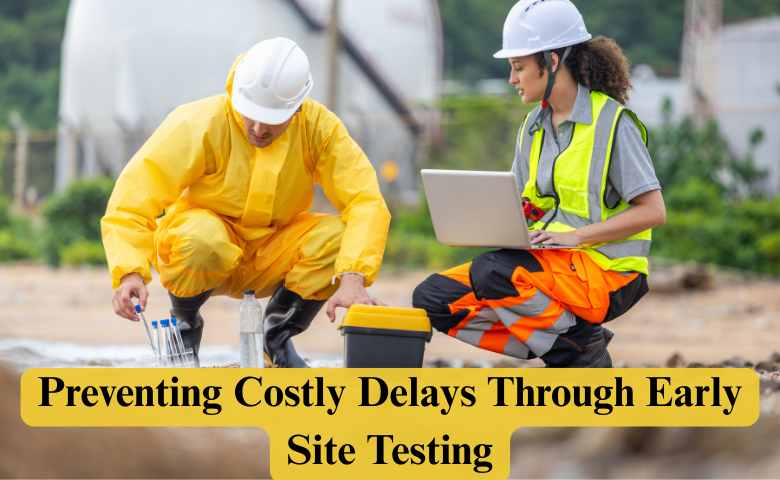
Early site testing includes tasks such as soil testing, checking groundwater levels, searching for contamination, locating buried utilities, verifying survey and site levels, and digging test pits or drilling boreholes. As stated by early testing specialists, the MATECO Drilling company, cutting-edge technologies such as rotary sonic drilling allow companies to gather vital information by collecting soil and rock cores; investigating soil layers, bedrock depth, and groundwater; and conducting environmental sampling. What makes rotary sonic drilling so useful is that it is faster than traditional drilling, yields purer samples, and requires less drilling fluid, making it more sustainable.
Making Significant Cost Savings
From a budget perspective, early site investigation is a key investment for construction companies, as the cost of geotechnical and environmental testing typically accounts for less than 1% of a typical construction budget. However, research suggests that up to 50% of project delays and cost impacts are linked to insufficient subsurface exploration. Case studies also show that failure to identify key subsurface issues can lead to repair costs exceeding 2% of the total project budget; in some cases, this can increase costs by over 10% when all impacts and costs associated with redesigning and reworking the project are considered.
Implementing Early Site Testing While Respecting Project Deadlines
To keep construction on schedule, construction companies must integrate testing into preconstruction and schedule work such as drilling early. The process works best when it is divided into phases. Phase one should focus on readily accessible information, such as historical records, utility maps, prior reports, and on-site visits. Phase two involves targeted testing, such as drilling a specified number of boreholes, monitoring groundwater, and digging test pits. Phase three involves confirmatory testing, which must occur before the issuance of final foundation and construction packages. The results can then inform design decisions, construction methods, and bid documents. Geotechnical experts should be involved early. Their role should be that of risk managers, helping teams prevent problems rather than simply documenting them when they occur.
Reducing Risks, Claims, and On-Site Disruption
Early site testing can also help reduce project risk and minimize disputes during the construction stage. When subsurface conditions are shrouded in mystery, teams may make assumptions that prove incorrect, leading to safety risks, work stoppages, and claims for additional time and compensation. Early testing enables informed decisions on foundation systems, excavation methods, and construction sequencing. Insights from testing can help contractors set more accurate pricing for their work. It can also reduce the likelihood of change orders and limit the need for problem-solving under pressure. Early testing enhances communication among clients, contractors, and designers by ensuring all stakeholders work from the same dataset. Accurate geotechnical information can additionally be used to determine fair risk allocation in contracts. As such, the risk of disputes is reduced, while momentum for safety and productivity is enhanced.
The construction industry is known for frequent delays, high costs, and tight margins, which is why early site testing is a smart, effective way to improve certainty and control risk. Companies wishing to reduce the likelihood of design changes, rework, and costly disruptions once work is underway can reduce insecurity by investing in high-quality subsurface investigations. Early testing provides the data companies need to make informed decisions about design, construction methods, and sequencing, while also supporting more accurate pricing and fairer risk allocation across contracts. Just as importantly, it helps teams address sustainability goals by minimizing unnecessary excavation, material waste, and inefficient construction practices. Rather than being considered an optional preliminary step, early site testing should be recognized as a vital component of successful project planning; one that helps stakeholders feel more confident about their time and money investments.
Related Posts
- How Brisbane Homes Can Benefit From Regular Plumbing Maintenance
- What is Core Drilling?
- Finding the Right Balance: On-Site vs. Office Work for Civil Engineers
- Is a Professional HVAC Inspection Worth The Investment Before Purchase?
