

Last Updated on December 23, 2025 by Admin
It’s not a lack of skills—it’s how project work, exposure, and roles are wrongly framed.
ConstructionCareerHub App is LIVE — built ONLY for construction careers. Don’t apply with a weak resume.
Get ATS-ready Resume Lab + Interview Copilot + Campus Placement Prep (resume screening, skill gaps, interview readiness) — in minutes & Other advanced features.
Explore Smarter Construction Career Tools →Quick check. Big impact. Start now.
Most construction resumes fail before anyone reads the second line.
Not because the candidates are weak.
Not because they lack site experience.
But because, at first glance, they look exactly like hundreds of others.
When you remove the name at the top, most construction resumes become interchangeable. Same format. Same phrases. Same project descriptions. Same tools listed in the same order. To a recruiter scanning dozens in a sitting, they blur into one long, indistinguishable document.
And in hiring, indistinguishable equals risky. Risky gets ignored.
Table of Contents
What Recruiters Actually See (But Rarely Say Out Loud)
A typical recruiter or hiring manager doesn’t read construction resumes line by line. They scan. Fast.
Six to ten seconds per resume is common—sometimes less. In that short window, they’re subconsciously asking three questions:
- Can I quickly understand what this person actually did?
- Do I see responsibility, or just presence?
- Does this resume reduce my hiring risk—or increase it?
When resumes look the same, the answer to all three questions is usually “no.”
After the tenth resume that reads “Worked on residential project, involved in site execution, coordination with contractors,” the brain switches off. Cognitive fatigue sets in. The recruiter starts looking for anything that feels clearer, sharper, more intentional.
That’s when most resumes quietly fall out of consideration—without feedback, without rejection emails, without explanation.
The Pattern Recruiters See Every Day
If you’ve reviewed enough construction resumes, a pattern becomes obvious:
- Identical section headings
- Copy-paste project descriptions
- Long lists of tools with no context
- Roles described using offer-letter language
- Exposure mistaken for achievement
Individually, none of these feels like a mistake. Collectively, they make resumes invisible.
And the most frustrating part? Many of these candidates are genuinely capable engineers.
The Three Silent Resume Killers in Construction
❌ Mistake #1: Project Descriptions Without Meaning
“Worked on G+12 residential project.”
This is one of the most common lines in construction resumes—and one of the least useful.
It tells the recruiter:
- Nothing about scale
- Nothing about project value
- Nothing about the phase you were involved in
- Nothing about your responsibility
Were you there during the excavation? Finishing? Only snag lists? Did you coordinate trades? Handle drawings? Track quantities? Support billing? Or simply observe?
From the recruiter’s perspective, this line could describe a final-year trainee or a project engineer with five years of experience. When clarity is missing, assumptions default to the lowest level.
❌ Mistake #2: Confusing Exposure With Capability
Many resumes rely heavily on phrases like:
- “Involved in site activities.”
- “Exposure to planning and billing”
- “Worked with senior engineers.”
Exposure sounds impressive to candidates. To recruiters, it sounds passive.
Being present in meetings isn’t the same as contributing. Watching coordination isn’t the same as managing it. Exposure tells a story of proximity—not ownership.
Hiring decisions are based on trust. Trust comes from evidence that someone can handle responsibility, not just observe it.
When resumes overuse exposure language, recruiters struggle to assess readiness—and move on to safer profiles.
❌ Mistake #3: Role Framing That Keeps You Junior Forever
Another common issue is role framing copied directly from appointment letters.
Titles like “Graduate Engineer Trainee” or “Junior Site Engineer” stay untouched. Responsibilities are listed without progression, decision-making, or accountability.
Even after years on site, many resumes still read like day-one roles.
This traps candidates psychologically—and professionally. They may have grown, learned, and handled real pressure, but their resume doesn’t reflect it. Recruiters don’t guess growth. They need to see it.
Why Even Good Engineers Don’t Get Interview Calls
Here’s the uncomfortable truth recruiters rarely explain:
When resumes feel unclear, they feel risky.
Recruiters are not rewarded for taking chances. They’re rewarded for making safe, defensible shortlists. When faced with ambiguity, they choose clarity—even if it comes from a less experienced candidate who communicates better.
This is why capable engineers often hear:
- “Your profile is good, but we’re moving ahead with other candidates.”
- Or worse, nothing at all.
It’s not a rejection of skill. It’s a rejection of uncertainty.
What Strong Construction Resumes Do Differently
Strong construction resumes don’t look flashy. They look intentional.
They help recruiters visualize:
- The scale of work handled
- The stage of the projects involved
- The decisions supported or owned
- The interfaces managed—drawings, contractors, vendors, consultants
Instead of listing everything done on site, they signal how the candidate thinks.
The difference isn’t more experience. It’s better translation.
The Real Problem No One Talks About
Construction professionals don’t struggle because they lack experience.
They struggle because they don’t know how to translate site work into recruiter language.
Most resume tools are built for corporate roles—marketing, IT, and finance. They don’t understand EPC environments, site hierarchies, or how responsibility actually flows on a construction project.
So candidates end up copying templates, borrowing phrases from peers, and repeating what everyone else is doing. The result is uniformity—and invisibility.
Where ConstructionCareerHub Fits In
ConstructionCareerHub exists because this gap is real.
It’s built specifically for construction professionals—students, freshers, and working engineers—who need help framing real project work clearly.
Not exaggeration. Not fake metrics. Just structured clarity:
- What to highlight
- How to frame responsibility vs exposure
- How to present project involvement in a way recruiters understand
It doesn’t assume you lack experience. It helps you communicate the experience you already have.
That distinction matters.
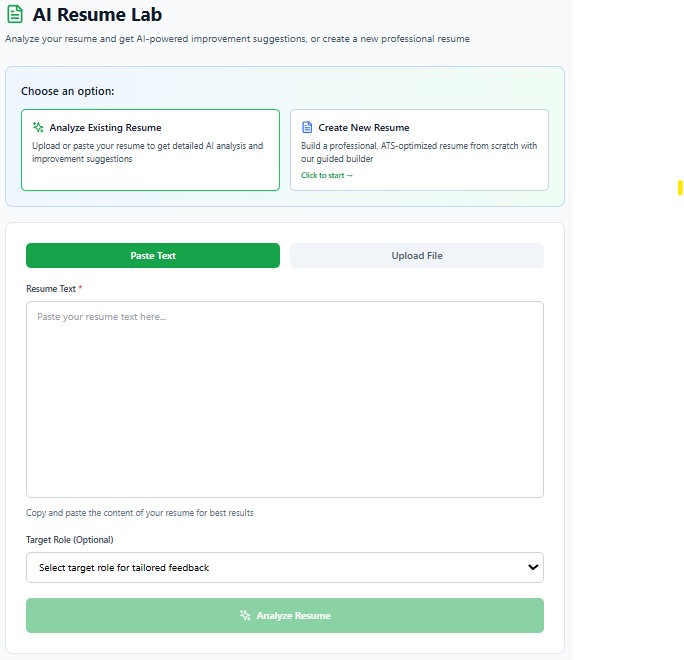
ConstructionCareerHub Resume Lab — Key Features
1. ATS-Optimized Resume Creation
Resume Lab helps you build resumes that are compatible with Applicant Tracking Systems so your application doesn’t get filtered out before recruiters see it.
2. Career Positioning Tools
It includes tools not just for formatting but for aligning your resume with the specific construction role you’re targeting (e.g., Site Engineer, QS, BIM).
3. Multiple Download Formats
You can download your customized professional resume in PDF and Word (DOCX) formats.
4. Integrated With Career Planning Tools
Resume Lab is part of the broader Construction Career Hub ecosystem—so your resume work ties in with career planning, interview prep, salary insights, and job alerts.
5. Custom Design & Layout Options
Although not detailed on the Hub page, tools like Resume Lab typically allow designing layouts that look professional and recruiter-friendly. (This is consistent with common features in online resume builders.)
Resume Lab helps you craft ATS-friendly, role-focused construction resumes, download them in common formats, and integrate them seamlessly with your career planner on ConstructionCareerHub.
Who This Matters Most For
If you’re a:
- Final-year construction student unsure how to present internships
- Fresher struggling to stand out despite site exposure
- Engineer stuck in repetitive site roles without interview calls
- A professional whose resume hasn’t changed in years
This isn’t about rewriting your career.
It’s about rewriting how your career is seen.
A Thought to Leave You With
Recruiters don’t ignore construction resumes because candidates are replaceable.
They ignore them because the resumes don’t show thinking—only presence.
Your experience isn’t weak.
It’s just speaking the wrong language.
When that language changes, attention follows.
Related Posts:
- AI Civil Engineering Career Simulator – Create Your Career Roadmap
- How to Get Your First Construction Job Through LinkedIn
- Top 15 Construction Companies for Fresh Civil Engineers in India: Complete Career Guide
- How to Explain Employment Gaps on Your Construction Resume (Without Lying)
